Close-ups
Framed and on the wall


Frame and rooms are illustrations of how the print could look, drawn to its real size; it is sold unframed unless the description says otherwise.
Peoples and Costume
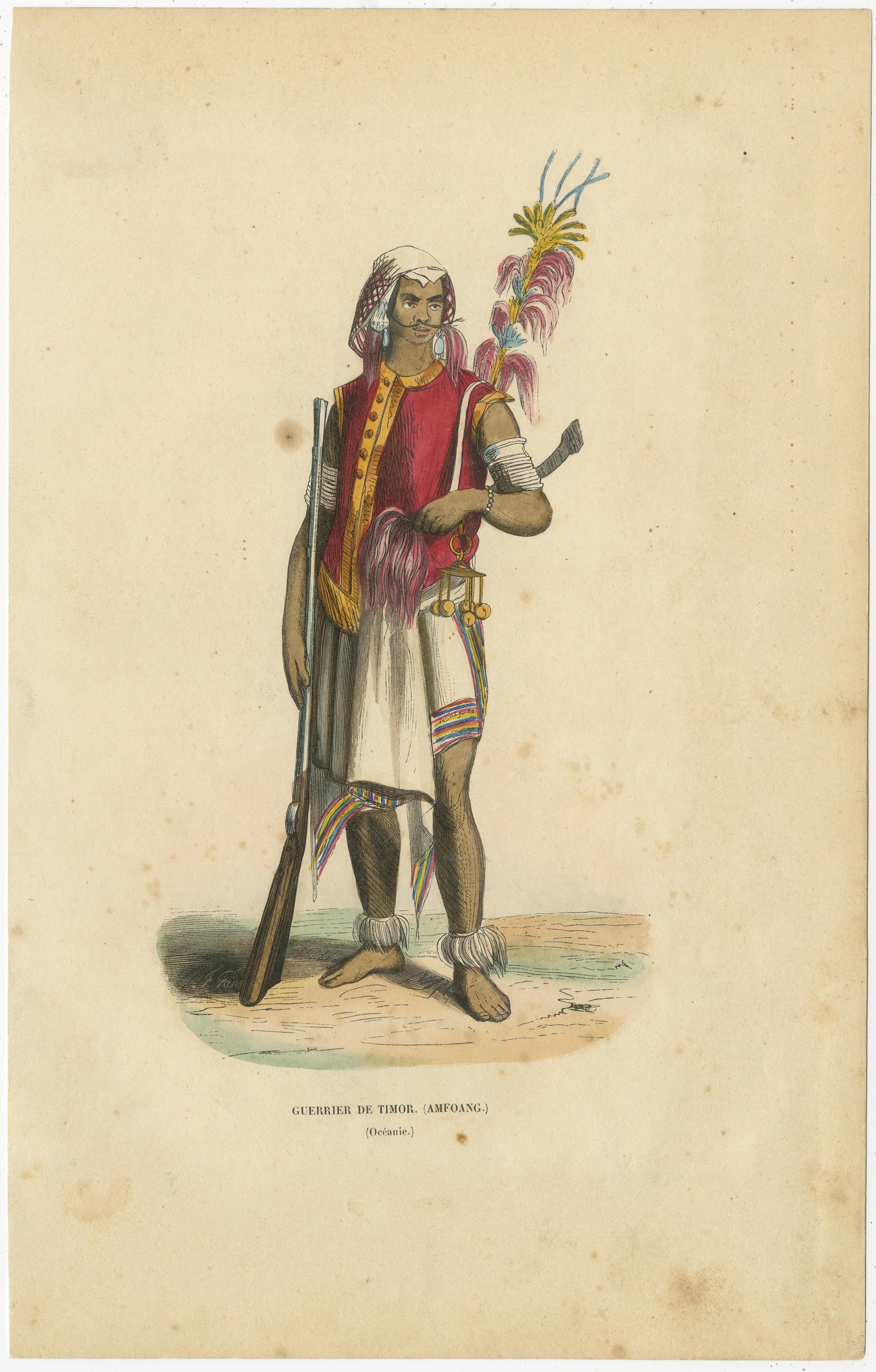
"Warrior of Timor: A Handcolored Glimpse into Indonesian Culture, 1845
$200
€180 · £150
Original print, not a reproduction
Ships worldwide from the Netherlands, insured and tracked. 14-day returns.
- Date
- 1845
- Sheet size
- 10.2 × 6.5 in (26 × 16.5 cm)
- Condition
- Fair. General age-related toning. Shows some wear and soiling/foxing, blank verso. Two pieces of tape on verso. Please study image carefully.
- Island
- Lesser Sunda
- Collection
- Peoples and Costume
- Period
- Raffles to the Cultivation System, 1800 to 1849
- Stock no.
- f_34416062
- Color
- Hand colored
What the condition grades mean
- Excellent
- Bright and clean, with no faults worth mentioning.
- Very good
- Only light signs of age, such as faint toning.
- Good
- Normal signs of age for a sheet of this period: toning, some foxing, small marks or neat old repairs.
- Fair
- Clear faults such as staining, tears or repairs, priced to match.
Every fault we see is written in the condition note, and the whole sheet is shown uncropped in the photos.
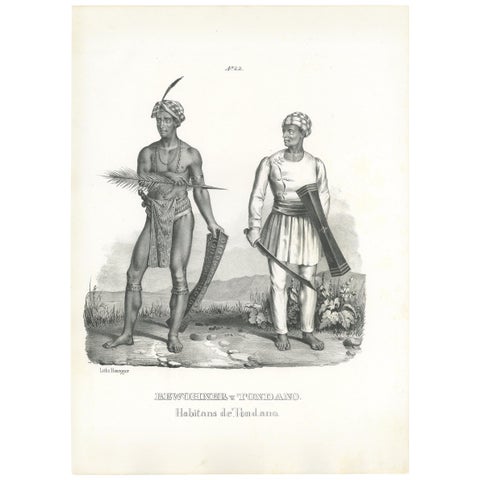
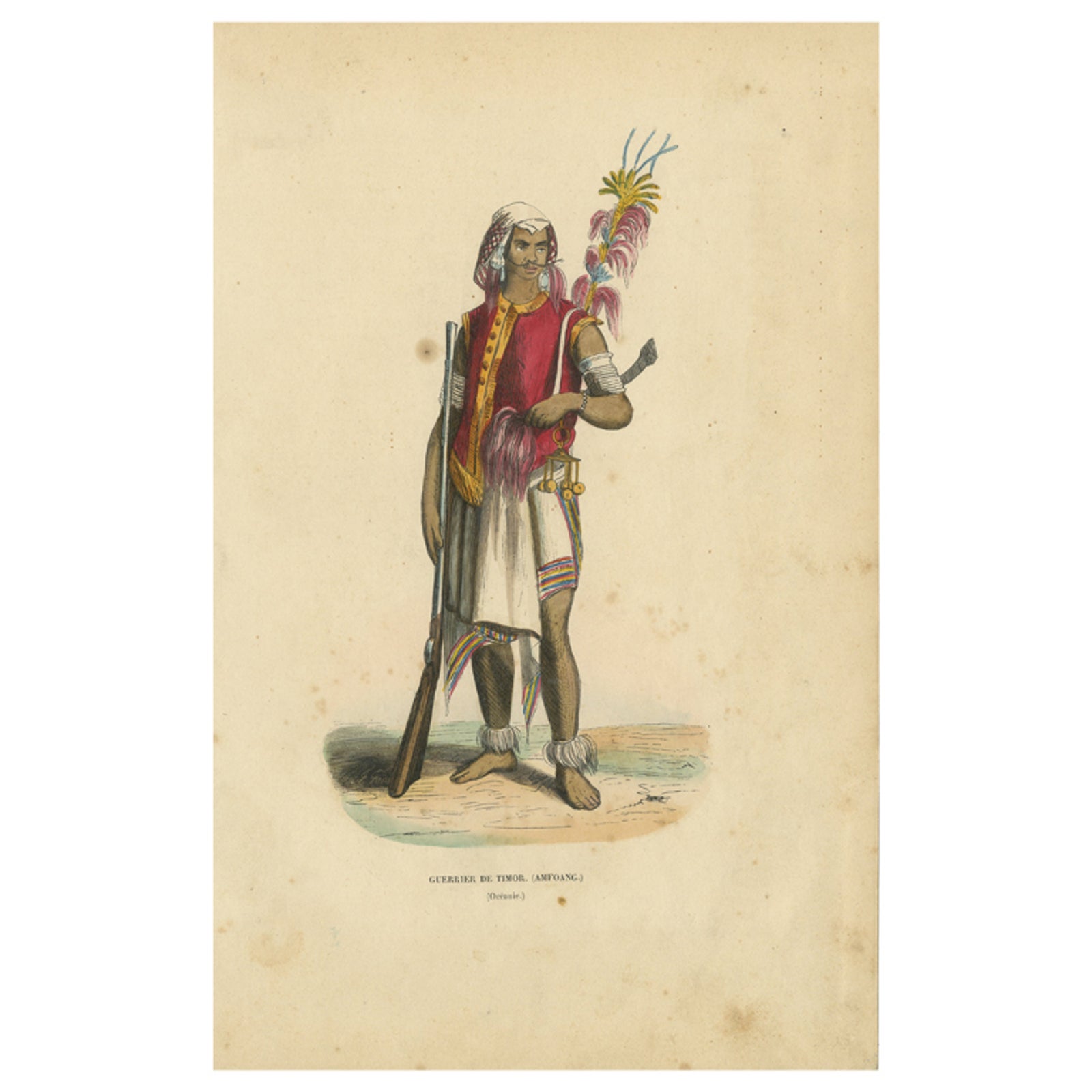
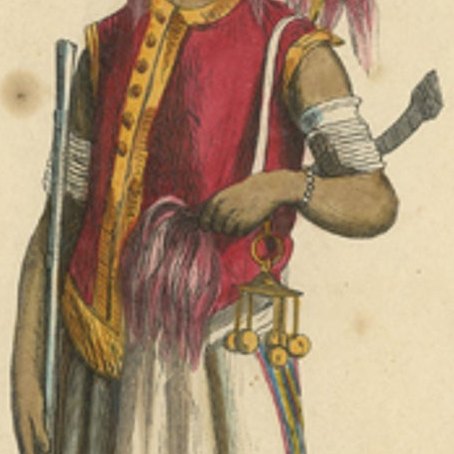
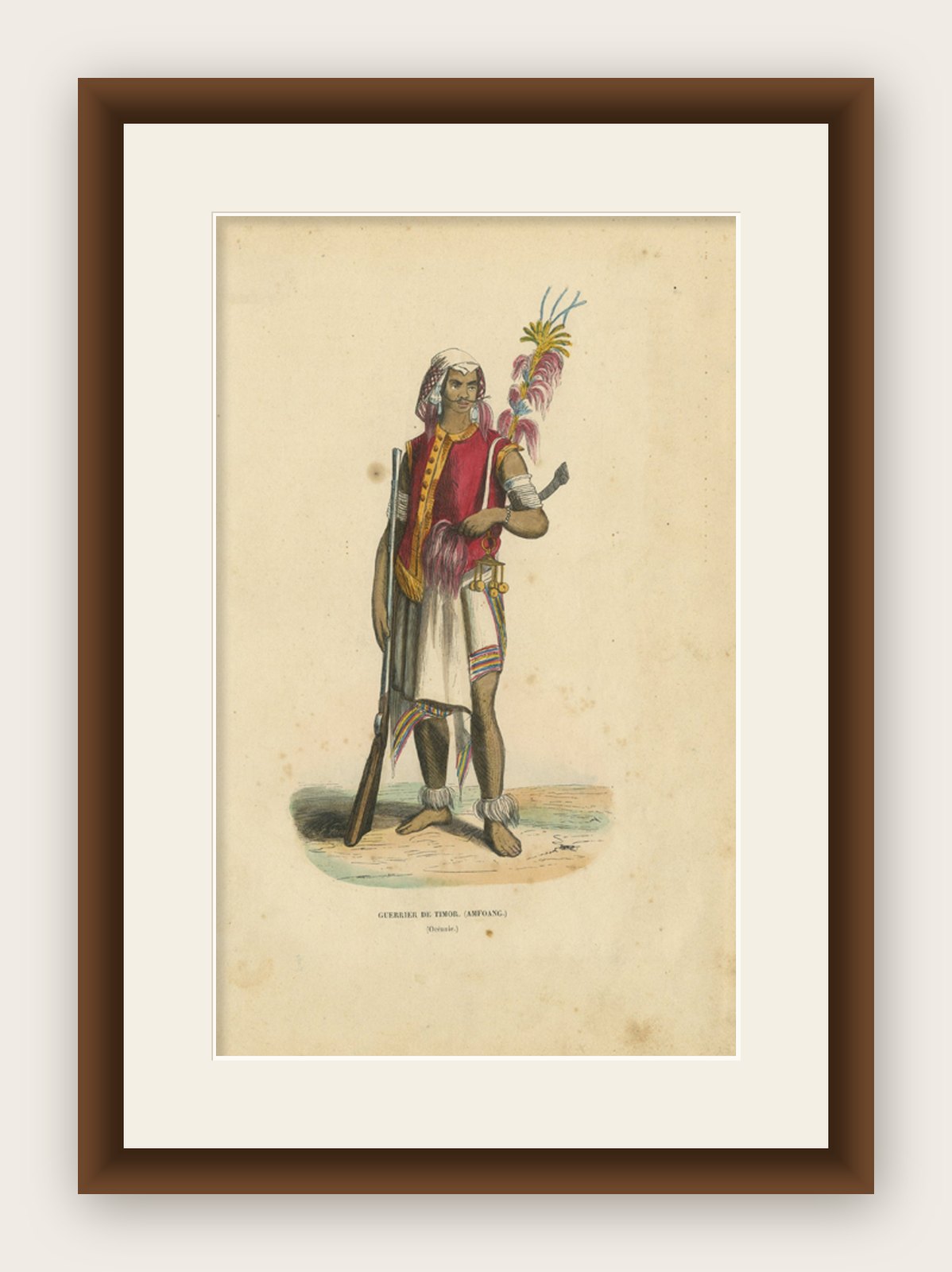
This antique print, titled 'Guerrier de Timor (Amfoang),' provides a vivid portrayal of an Atoni warrior from Kupang, West Timor, Indonesia. The hand-colored woodcut captures intricate details of the warrior's attire and adornments. He is depicted with tall plant fronds and feathers on his back, symbolizing his status and achievements. The bells hanging from his attire represent the number of men he has defeated in battle.
The warrior is dressed in a bandana, jacket, tai muti hip-cloth, and anklets, showcasing the traditional clothing and accessories of the Atoni people. Additionally, he carries a musket, highlighting the weaponry used by indigenous warriors in the region.
This print is a valuable historical record, providing insights into the culture, customs, and attire of the Atoni people of Timor during the 19th century. It is part of Auguste Wahlen's comprehensive work, "Moeurs, Usages et Costumes de tous les Peuples du Monde," published in 1845, which documented the customs and costumes of diverse cultures from around the world.