Close-ups
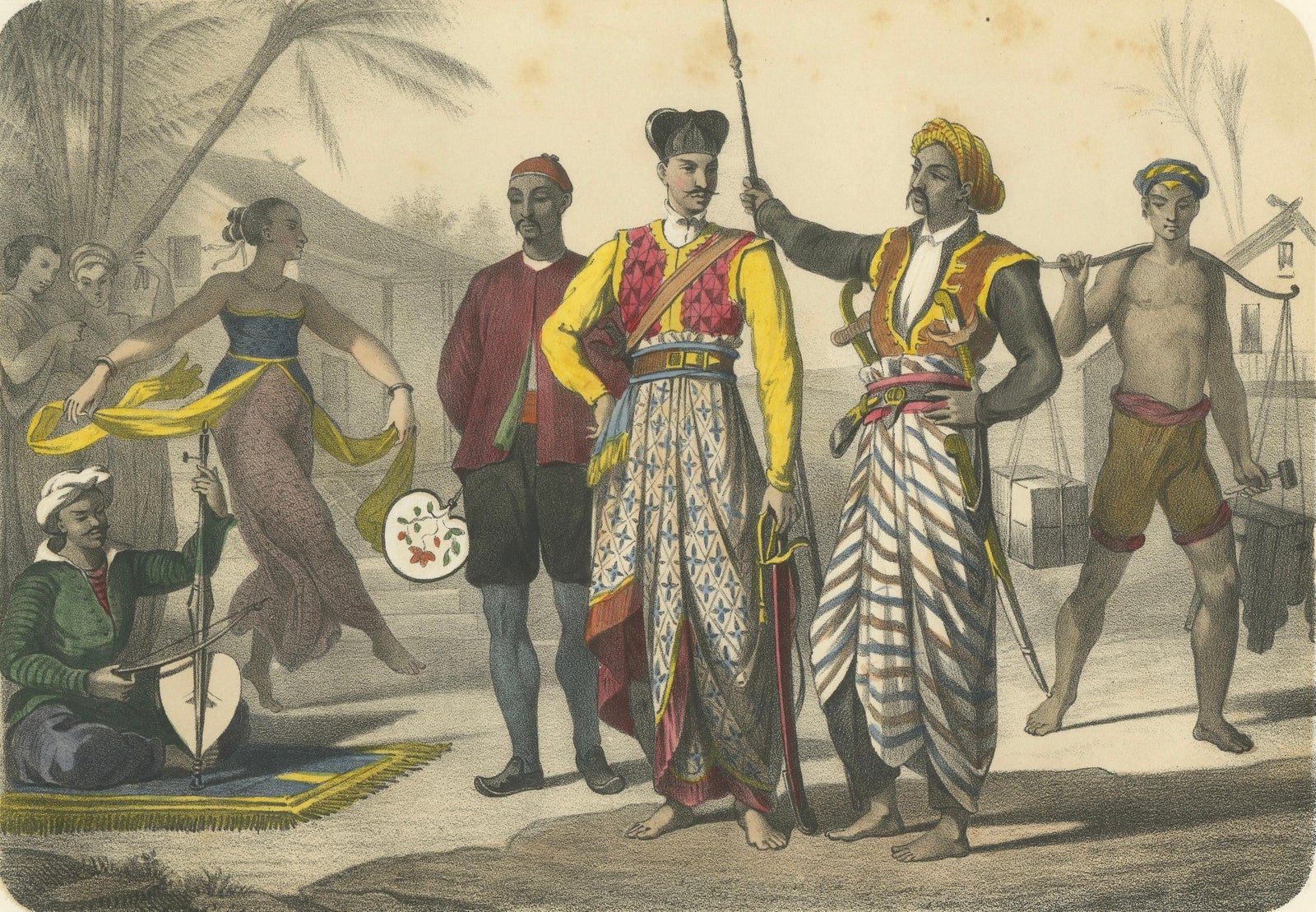
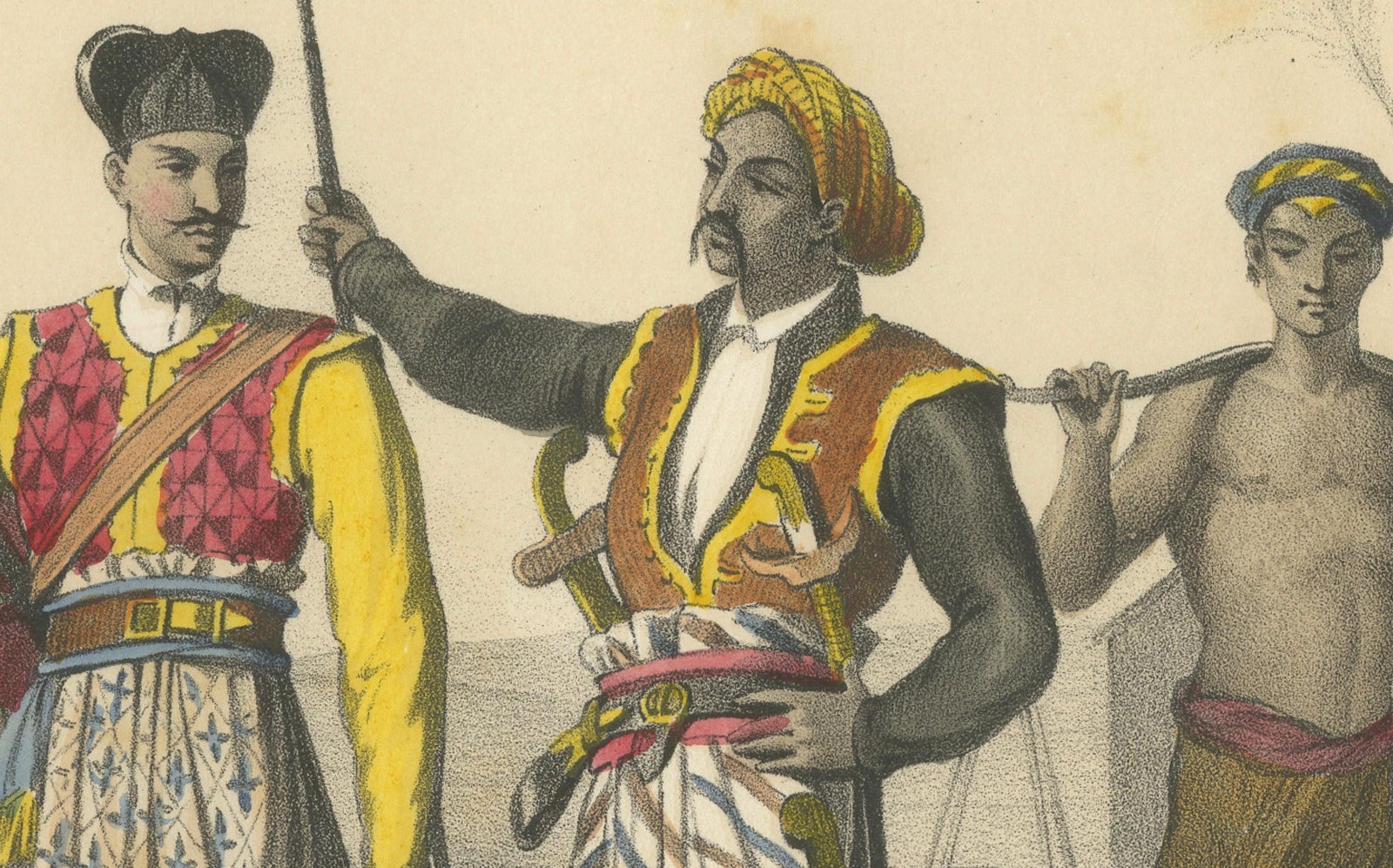
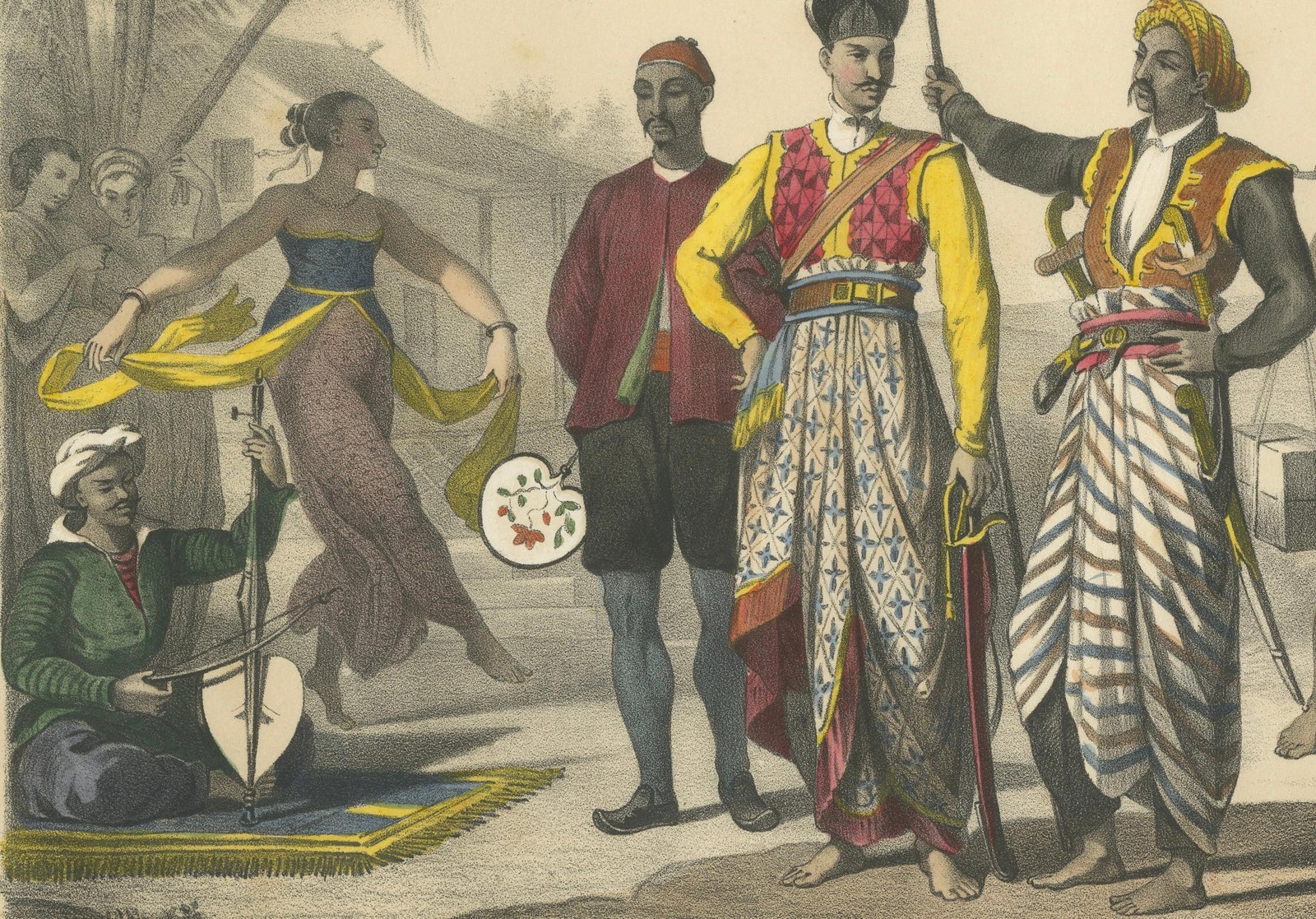
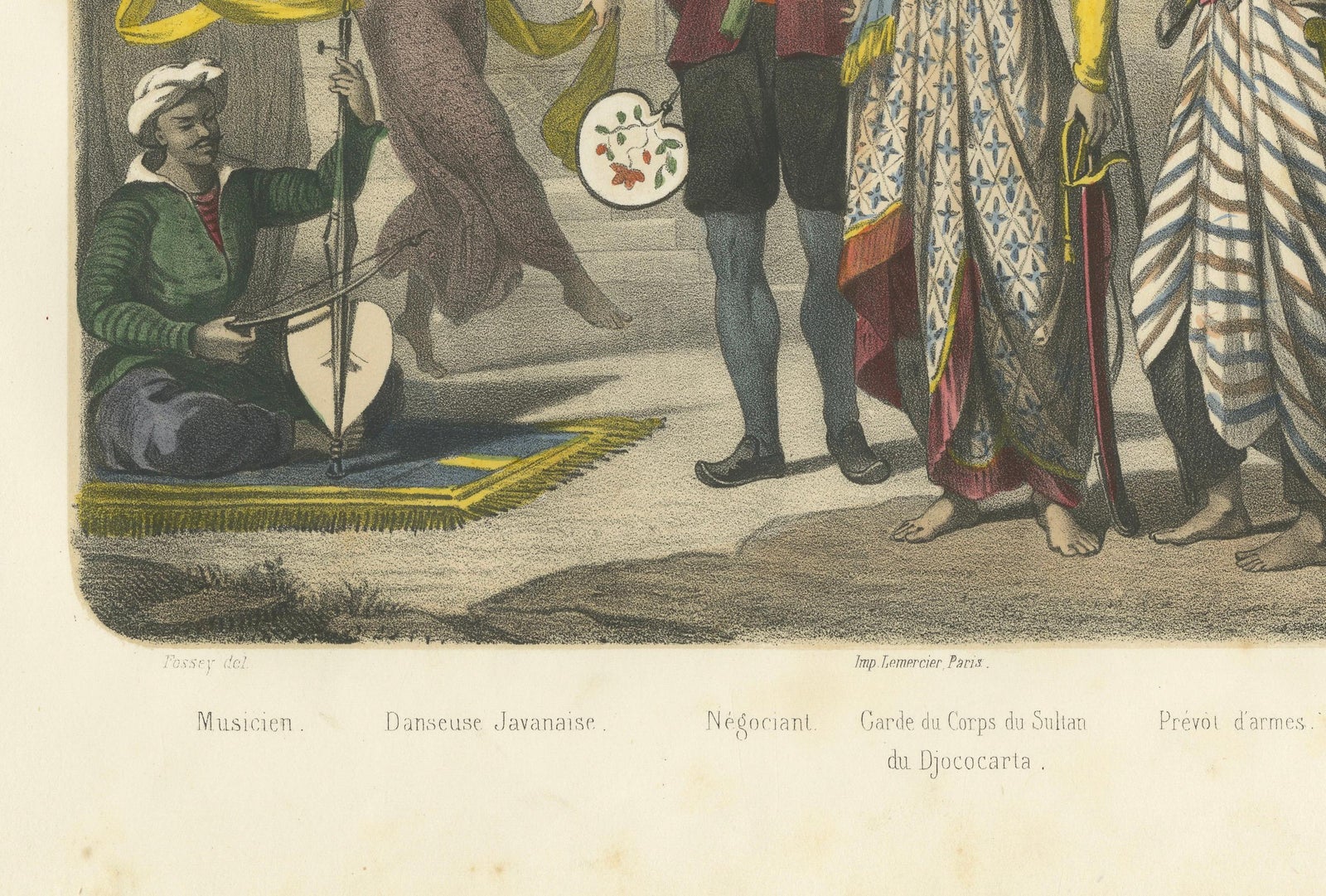
Framed and on the wall
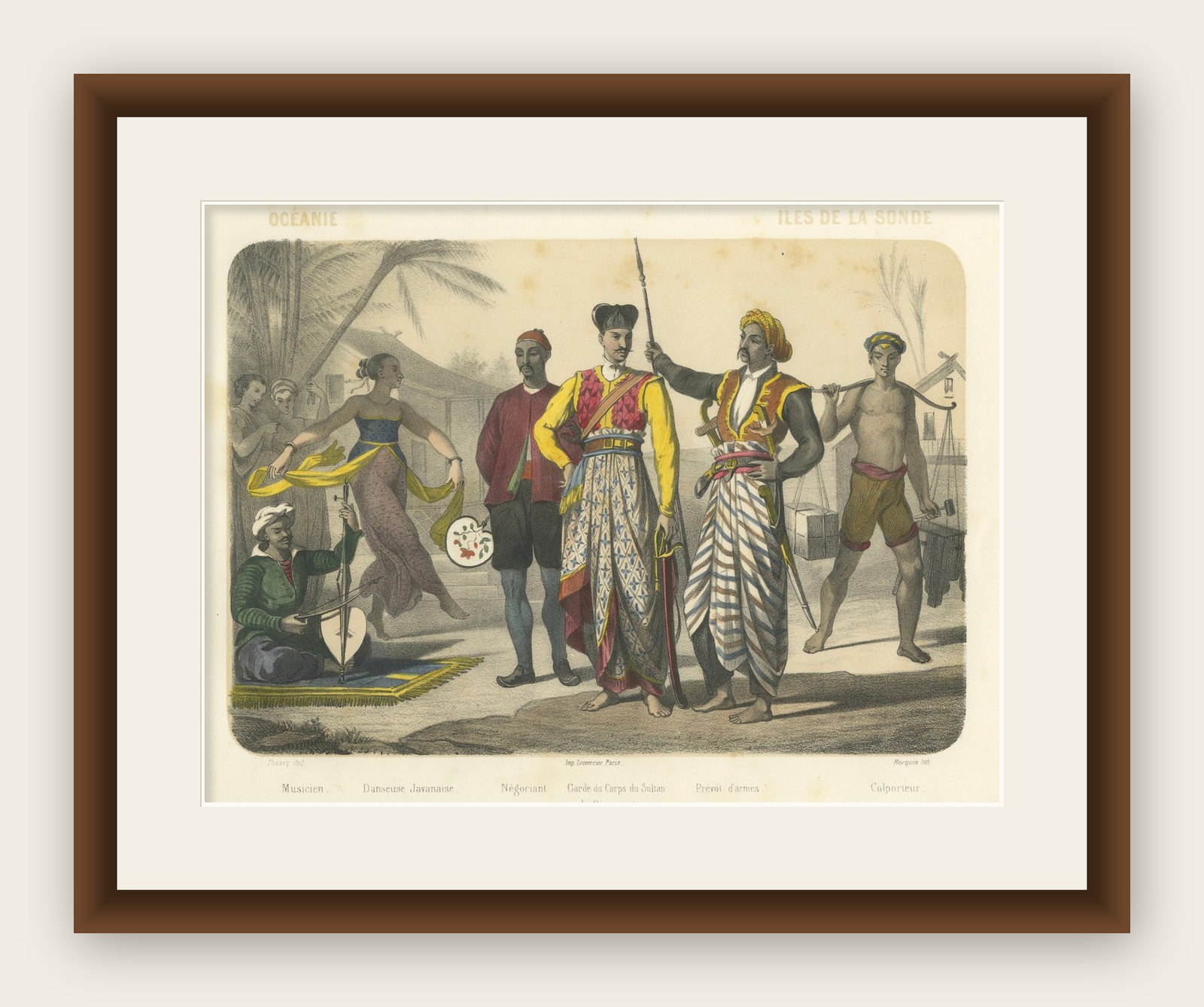


Frame and rooms are illustrations of how the print could look, drawn to its real size; it is sold unframed unless the description says otherwise.
Peoples and Costume
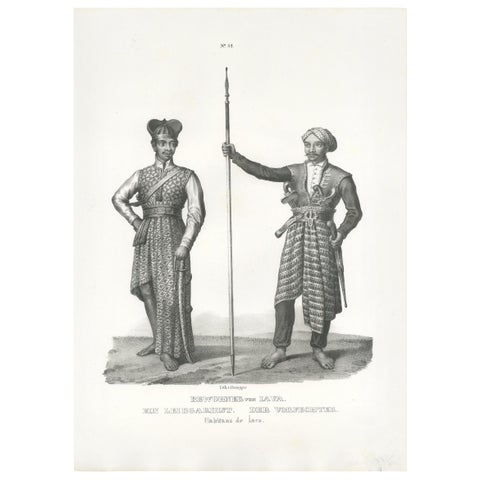
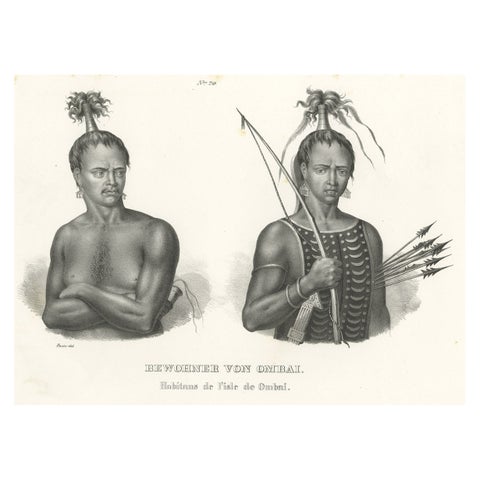
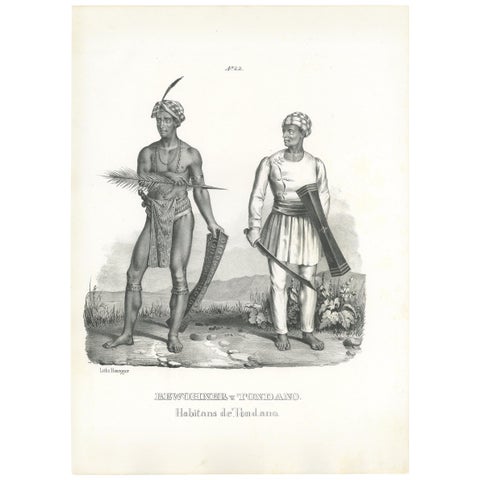
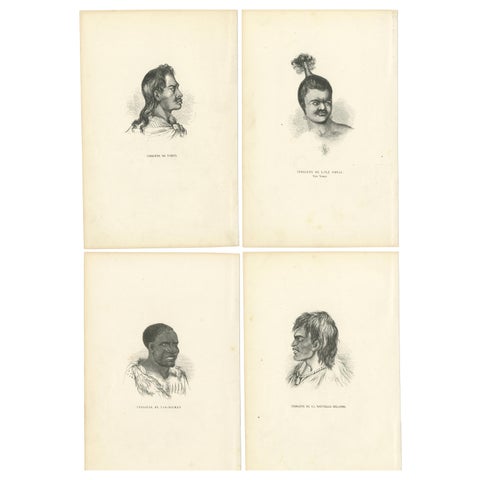
Javanese Court Scene, Musician, Dancer, and Sultan’s Guard, c.1845
€260
$290 · £220
Original print, not a reproduction
Ships worldwide from the Netherlands, insured and tracked. 14-day returns.
- Date
- 1845
- Sheet size
- 9.1 × 11.8 in (23 × 30 cm)
- Condition
- Good. Condition report: Excellent impression with strong, original hand-coloring. Minor foxing limited to margins; image area crisp and bright. Wide borders preserved.
- Island
- Java
- Collection
- Peoples and Costume
- Period
- Raffles to the Cultivation System, 1800 to 1849
- Stock no.
- f_47441272
- Color
- Hand colored
What the condition grades mean
- Excellent
- Bright and clean, with no faults worth mentioning.
- Very good
- Only light signs of age, such as faint toning.
- Good
- Normal signs of age for a sheet of this period: toning, some foxing, small marks or neat old repairs.
- Fair
- Clear faults such as staining, tears or repairs, priced to match.
Every fault we see is written in the condition note, and the whole sheet is shown uncropped in the photos.
Title: Javanese Court Scene, Musician, Dancer, and Sultan’s Guard, c.1845
Description:
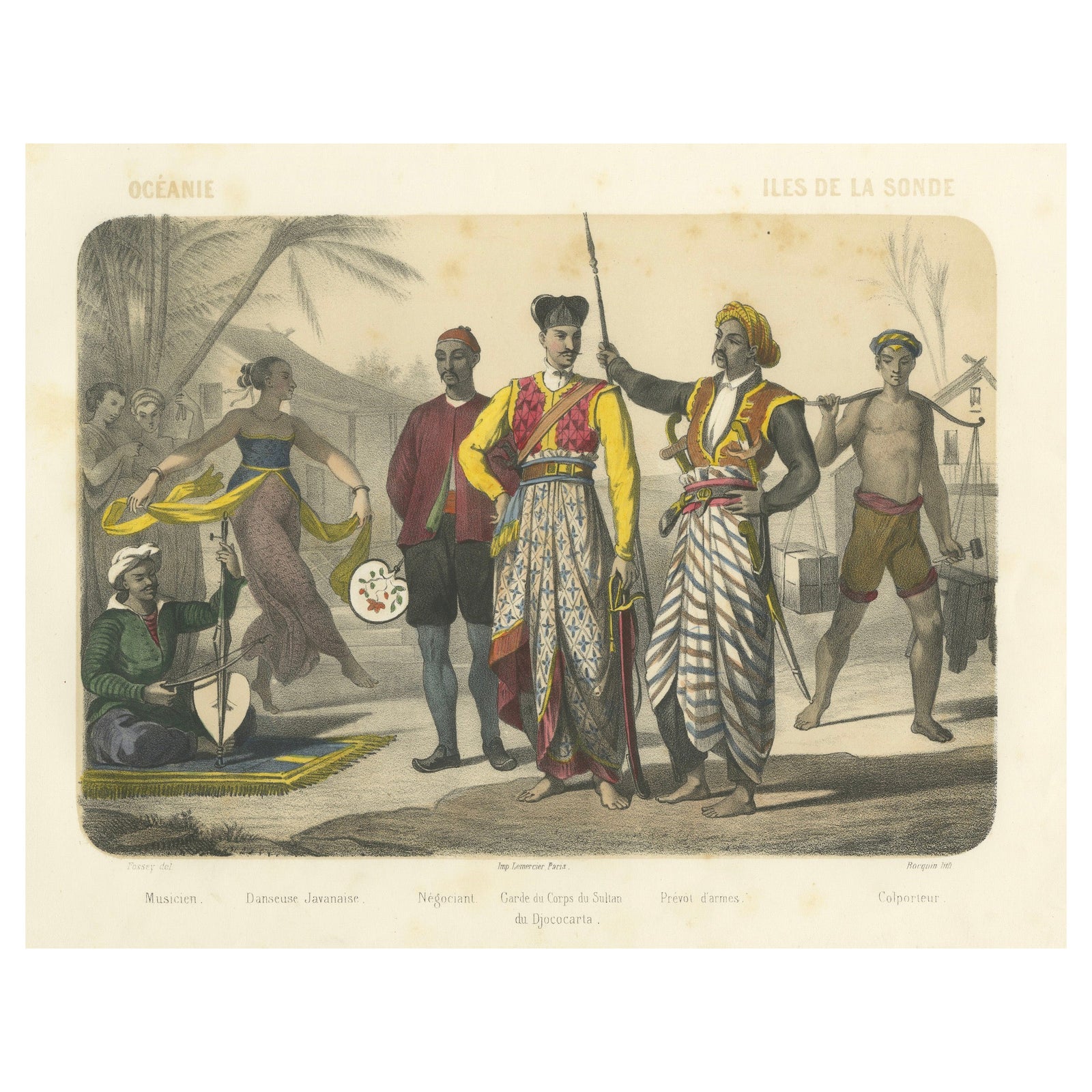
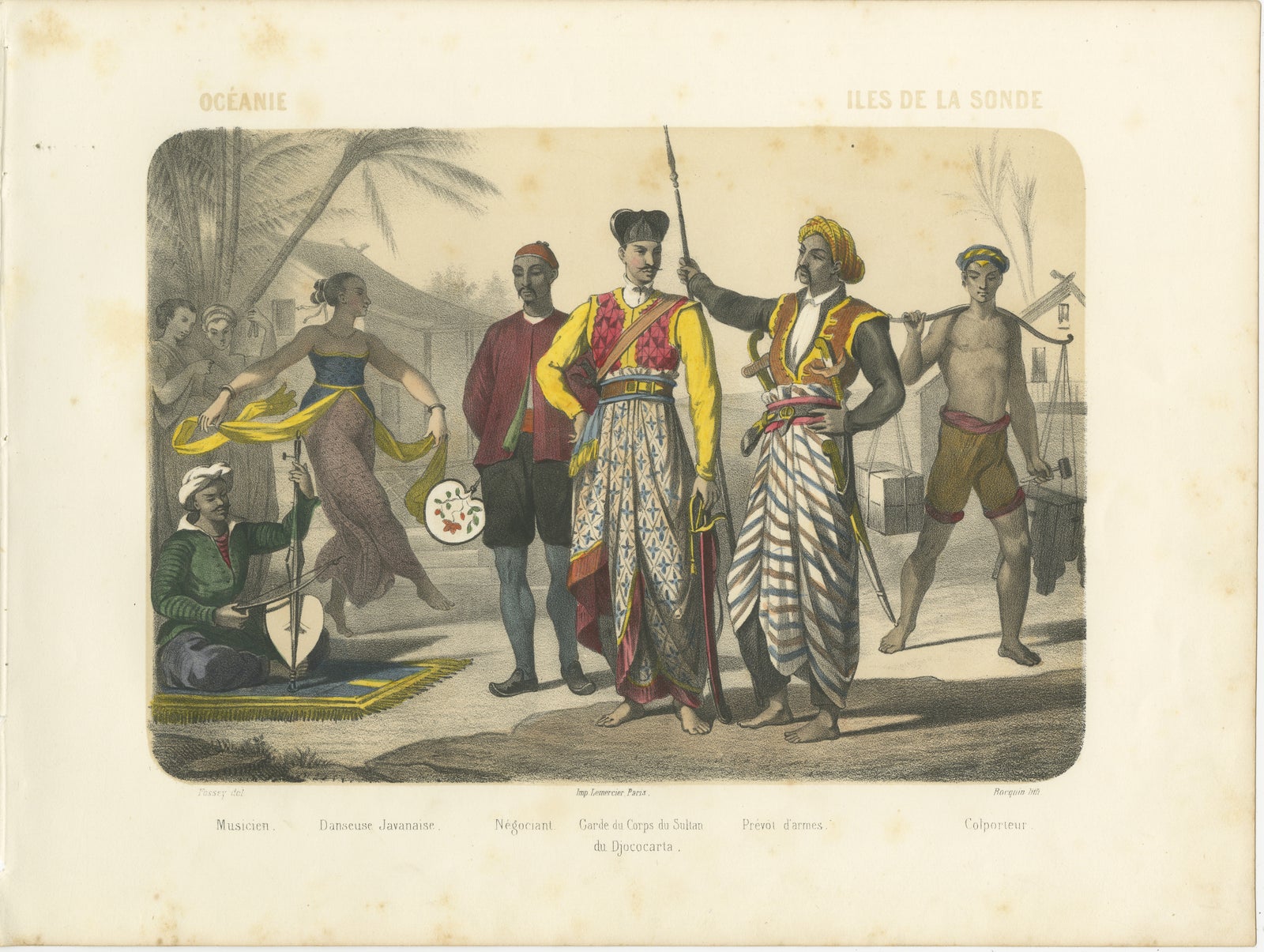
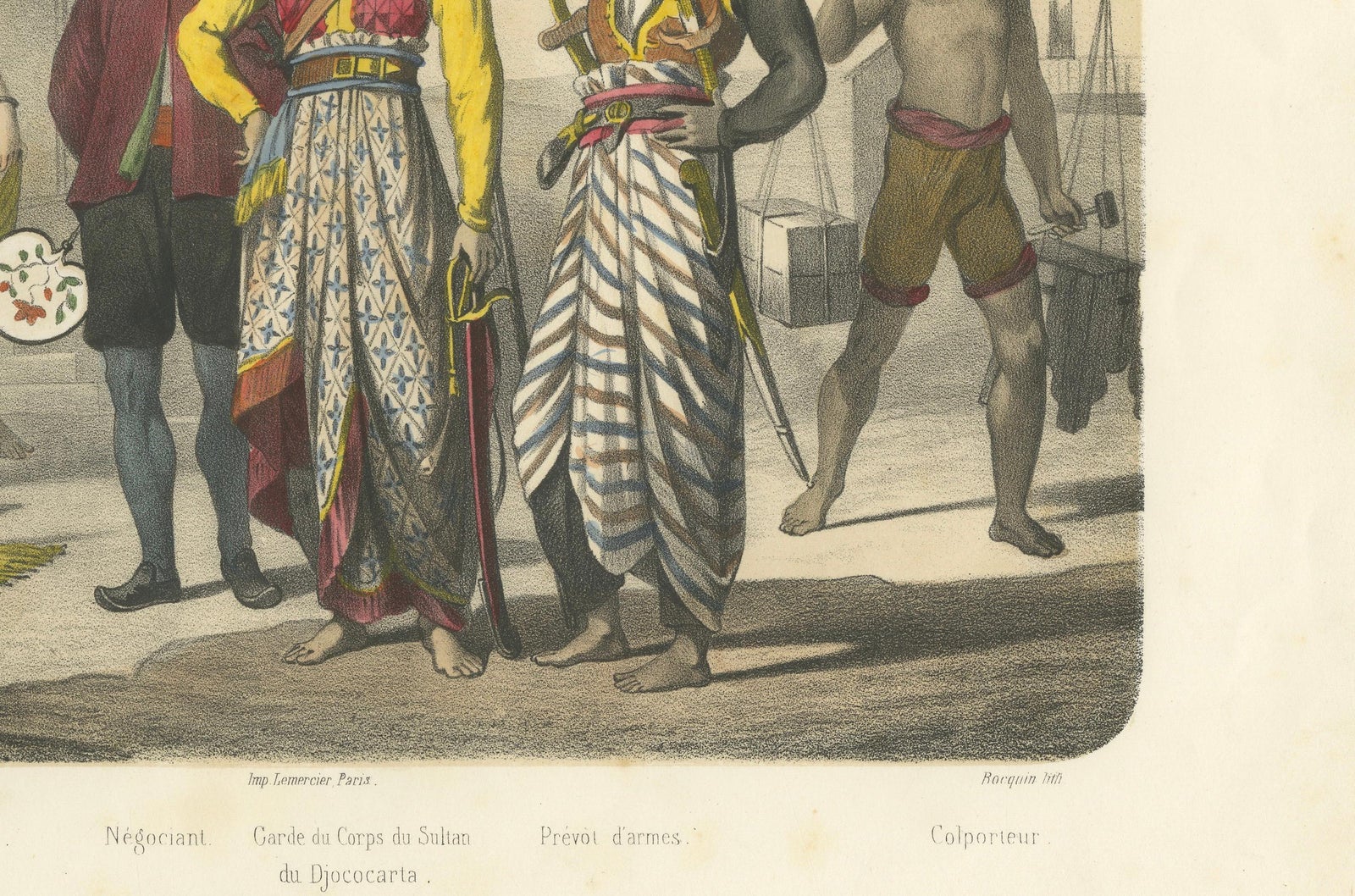
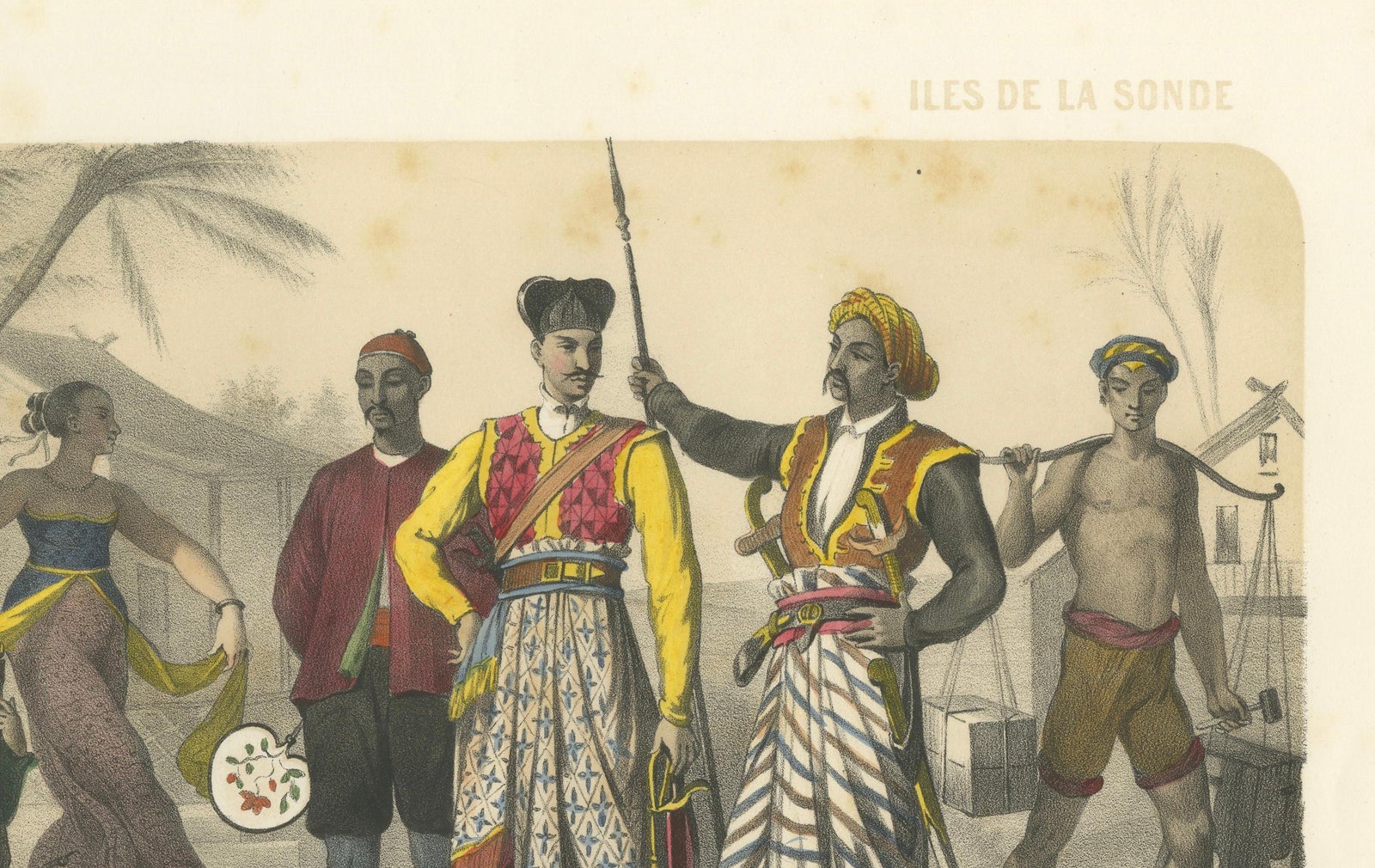
This vibrant hand-colored lithograph, titled “Océanie, Îles de la Sonde,” is from Le Monde en Estampes: Types et Costumes des Principaux Peuples de l’Univers, published in Paris circa 1845 to 1850 by Amédée Bedelet. Drawn by Fossey, lithographed by J. Bocquin, and printed by Lemercier, this plate beautifully captures the allure and exoticism of the Javanese world through the lens of 19th-century French Romanticism.
The scene depicts a lively tableau from Java, one of the Sunda Islands, during the height of the island’s cultural splendor under the influence of both indigenous courts and colonial contact. At the left, a seated musicien plays a bowed string instrument resembling a rebab, his rhythmic accompaniment providing the melody for the graceful danseuse javanaise beside him. The dancer, elegantly poised, wears a transparent flowing sarong and a yellow sash that swirls around her arms, embodying both poise and motion in her traditional Javanese dance.
At the center, richly attired figures display the grandeur of Javanese nobility and authority. The négociant (merchant) stands in conversation with a garde du corps du Sultan du Djococarta (bodyguard of the Sultan of Yogyakarta), whose regal bearing and luxurious patterned garments indicate his high rank. Beside them, the prévôt d’armes (chief of arms) holds his staff with dignity, his turban and sash emphasizing his elevated position within the royal entourage.
To the right, a colporteur (peddler) carries his wares balanced on a bamboo pole, symbolizing the trade networks that connected the Javanese islands with the broader archipelago and beyond. In the background, palm trees and bamboo huts evoke the tropical landscape of Java, while hints of architecture suggest the Sultan’s palace grounds.
The composition is both decorative and documentary, blending ethnographic observation with the Romantic fascination for the “Oriental world.” The fine detailing of the costumes, particularly the rich textiles and patterns of batik and songket, reflects the high craftsmanship of Javanese attire. Fossey’s careful drawing and Bocquin’s lithographic precision bring each figure to life, while Lemercier’s masterful printing achieves remarkable depth and luminosity in color.
This plate is an exceptional representation of how mid-19th-century French artists interpreted the diversity and refinement of Southeast Asian culture, combining artistry with curiosity about distant lands.
Condition report: Excellent impression with strong, original hand-coloring. Minor foxing limited to margins; image area crisp and bright. Wide borders preserved.
Framing tips: Ideal with a warm cream or pale sand mat and a dark teak or ebony frame. A narrow gold inner mat can complement the rich yellows and reds of the dancers’ garments.
Technique: Hand-colored lithograph
Maker: J. Bocquin after Fossey, printed by Lemercier, Paris, circa 1845