Close-ups
Framed and on the wall

Frame and rooms are illustrations of how the print could look, drawn to its real size; it is sold unframed unless the description says otherwise.
Peoples and Costume
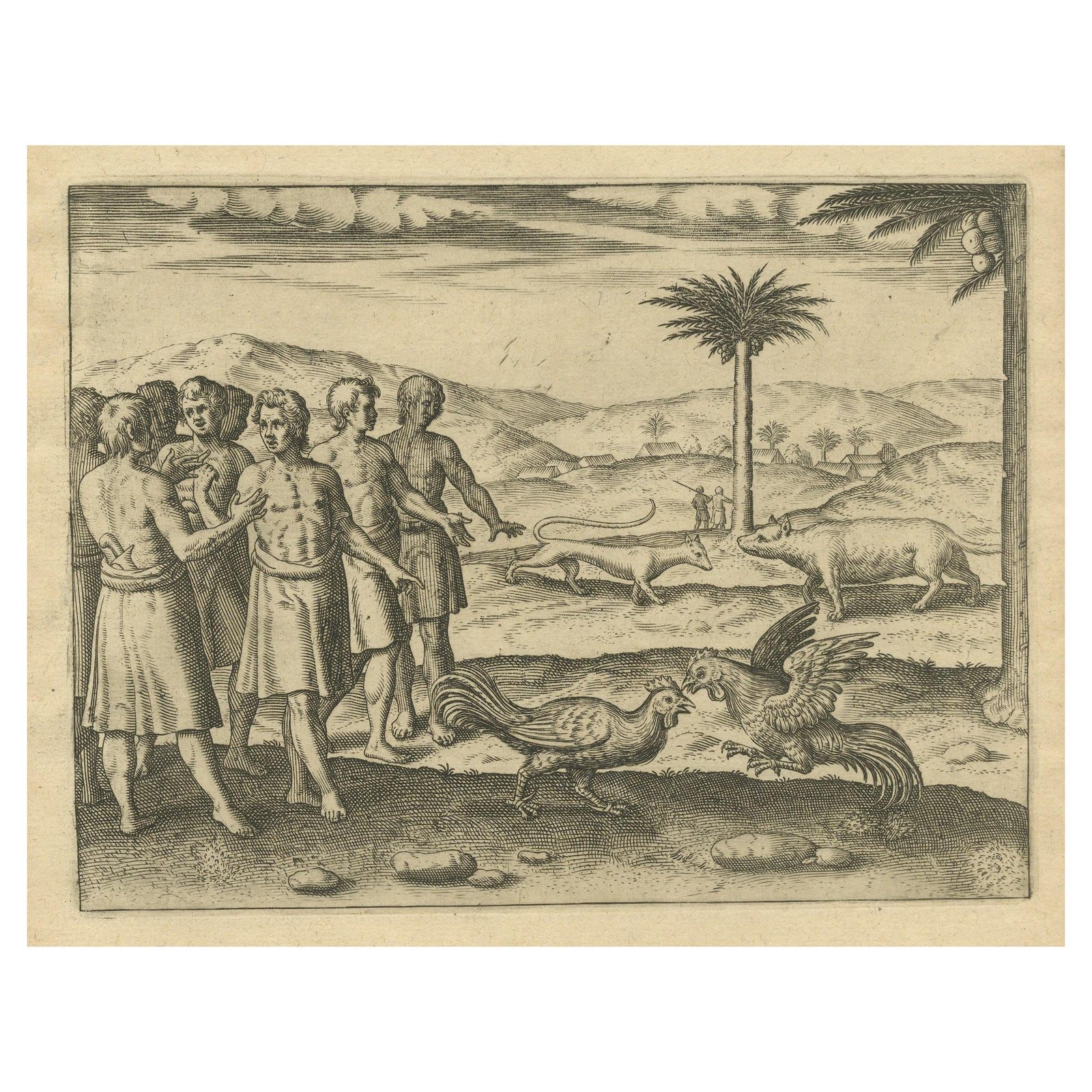
The Cockfight of Java: A 1601 de Bry Engraving of Cultural Pastimes
$615
€550 · £460
Original print, not a reproduction
Ships worldwide from the Netherlands, insured and tracked. 14-day returns.
- Date
- 1601
- Sheet size
- 11.8 × 7.9 in (30 × 20 cm)
- Condition
- Good. The condition of the print is very good, considering its age of over 400 years. Light brownish toning and some soiling due to handling. Please study this image carefully.
- Island
- Java
- Collection
- Peoples and Costume
- Period
- The spice race, before 1700
- Stock no.
- f_37755002
What the condition grades mean
- Excellent
- Bright and clean, with no faults worth mentioning.
- Very good
- Only light signs of age, such as faint toning.
- Good
- Normal signs of age for a sheet of this period: toning, some foxing, small marks or neat old repairs.
- Fair
- Clear faults such as staining, tears or repairs, priced to match.
Every fault we see is written in the condition note, and the whole sheet is shown uncropped in the photos.
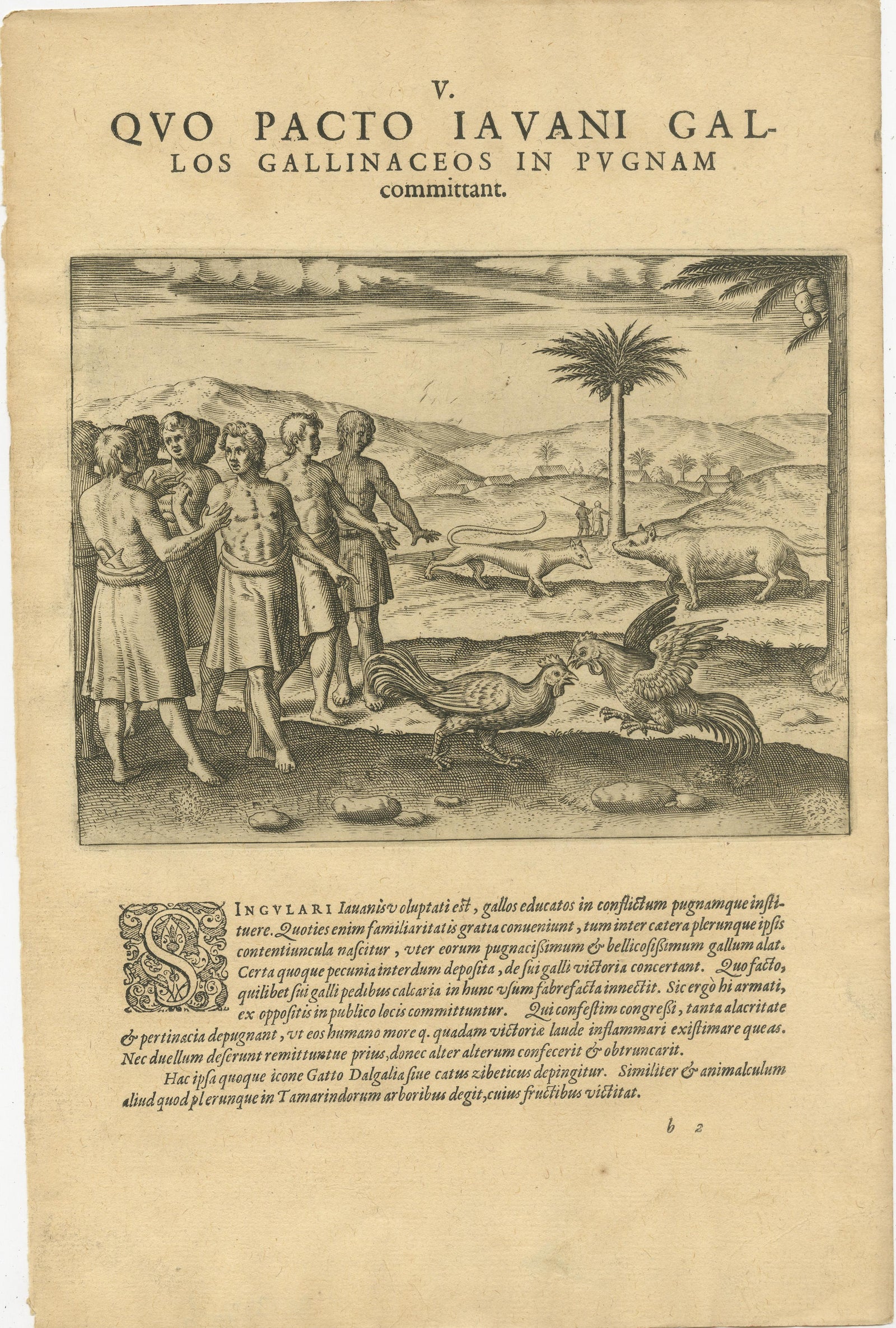
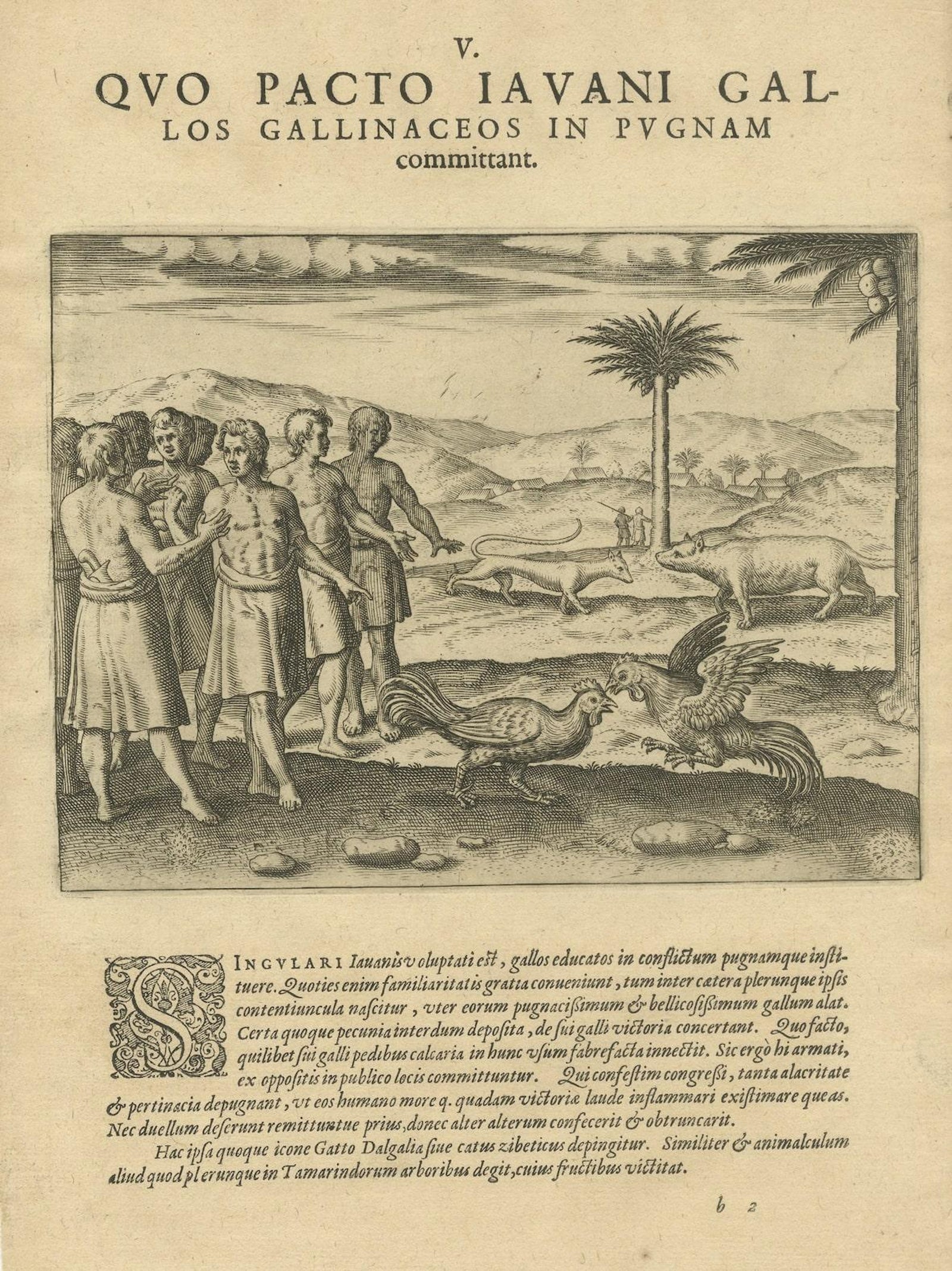
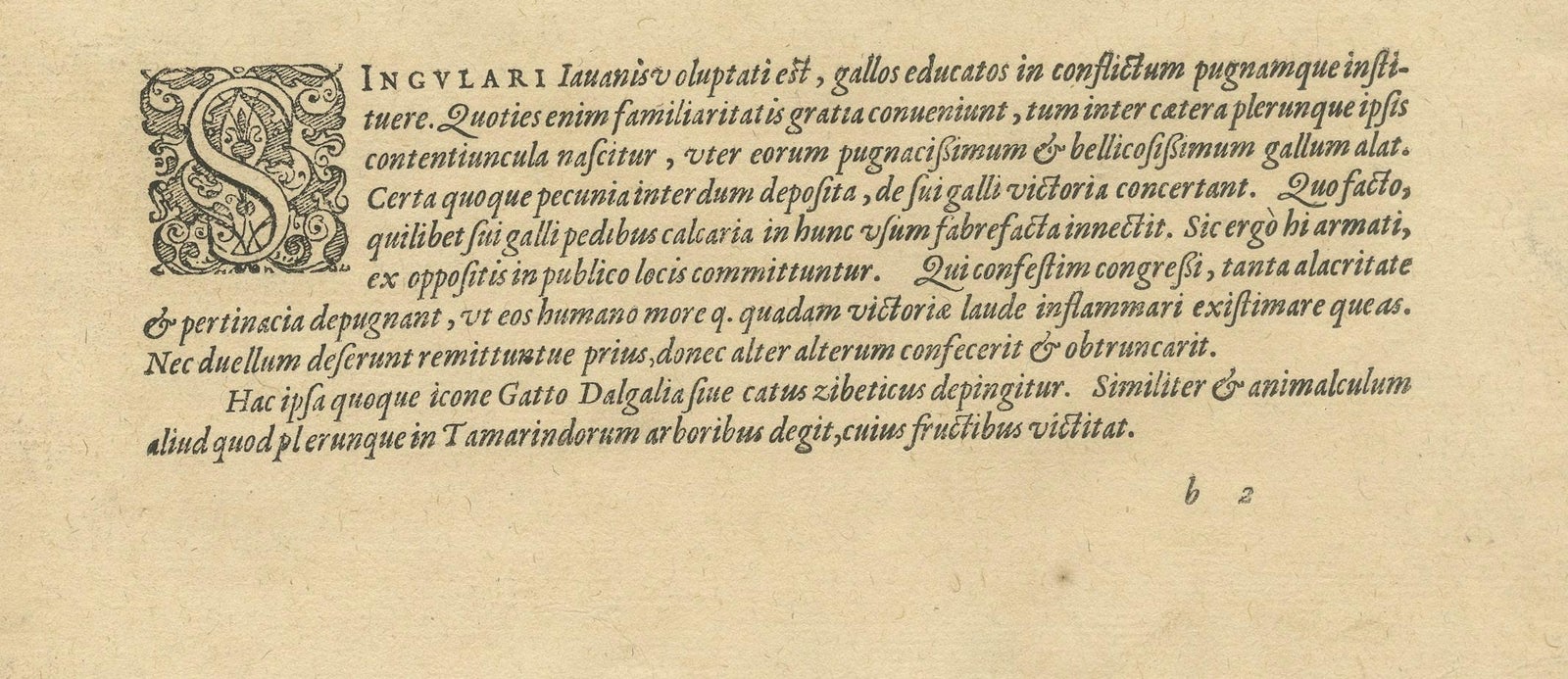
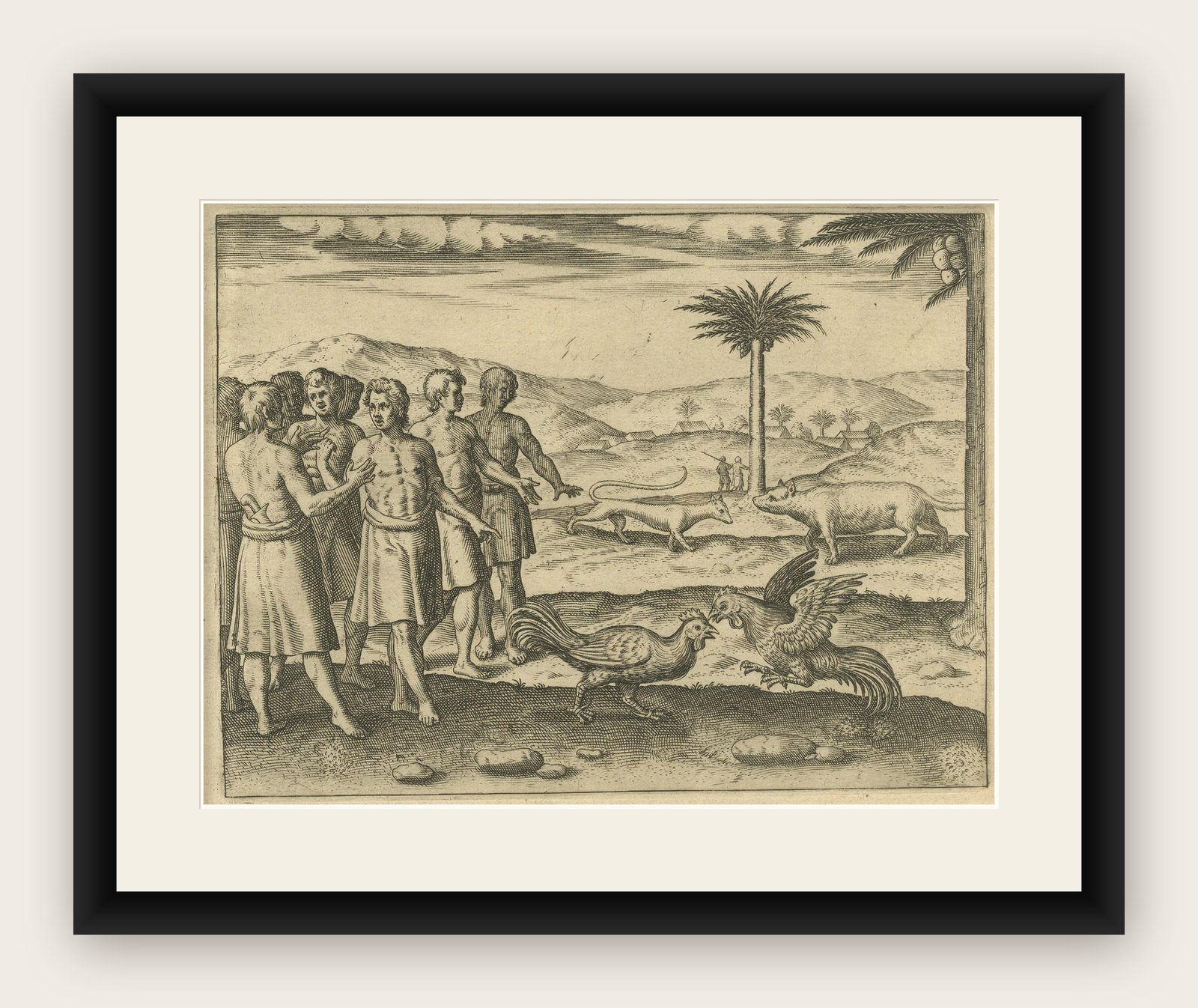
Original Antique engraving by Theodore De Bry from 'Pars Quarta Indiae Orientalis...,' 1601, with descriptive Latin text below the image.
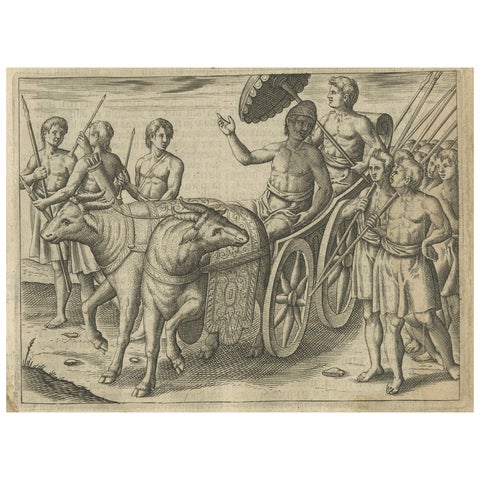
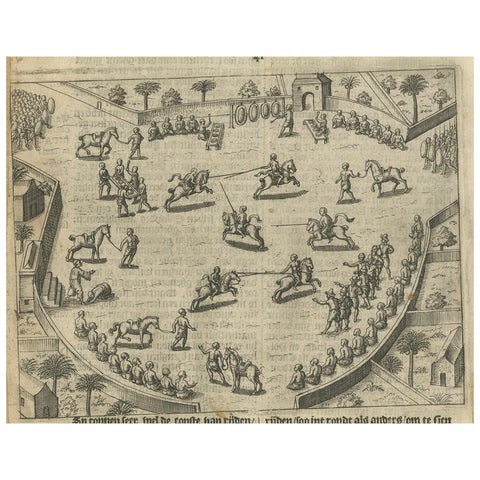
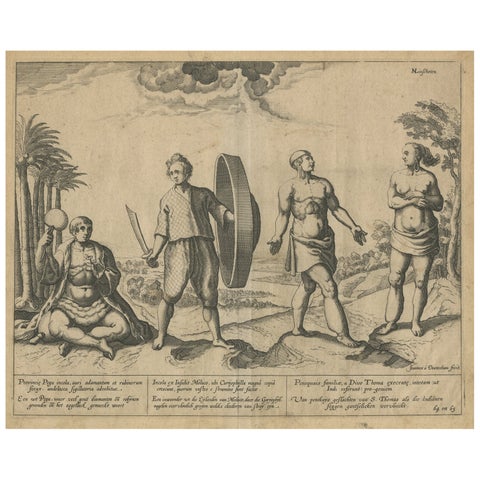
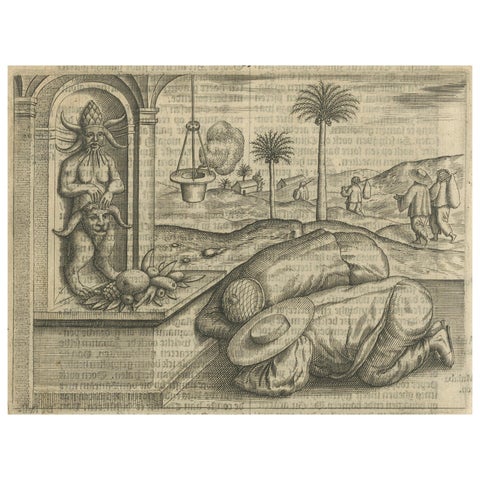
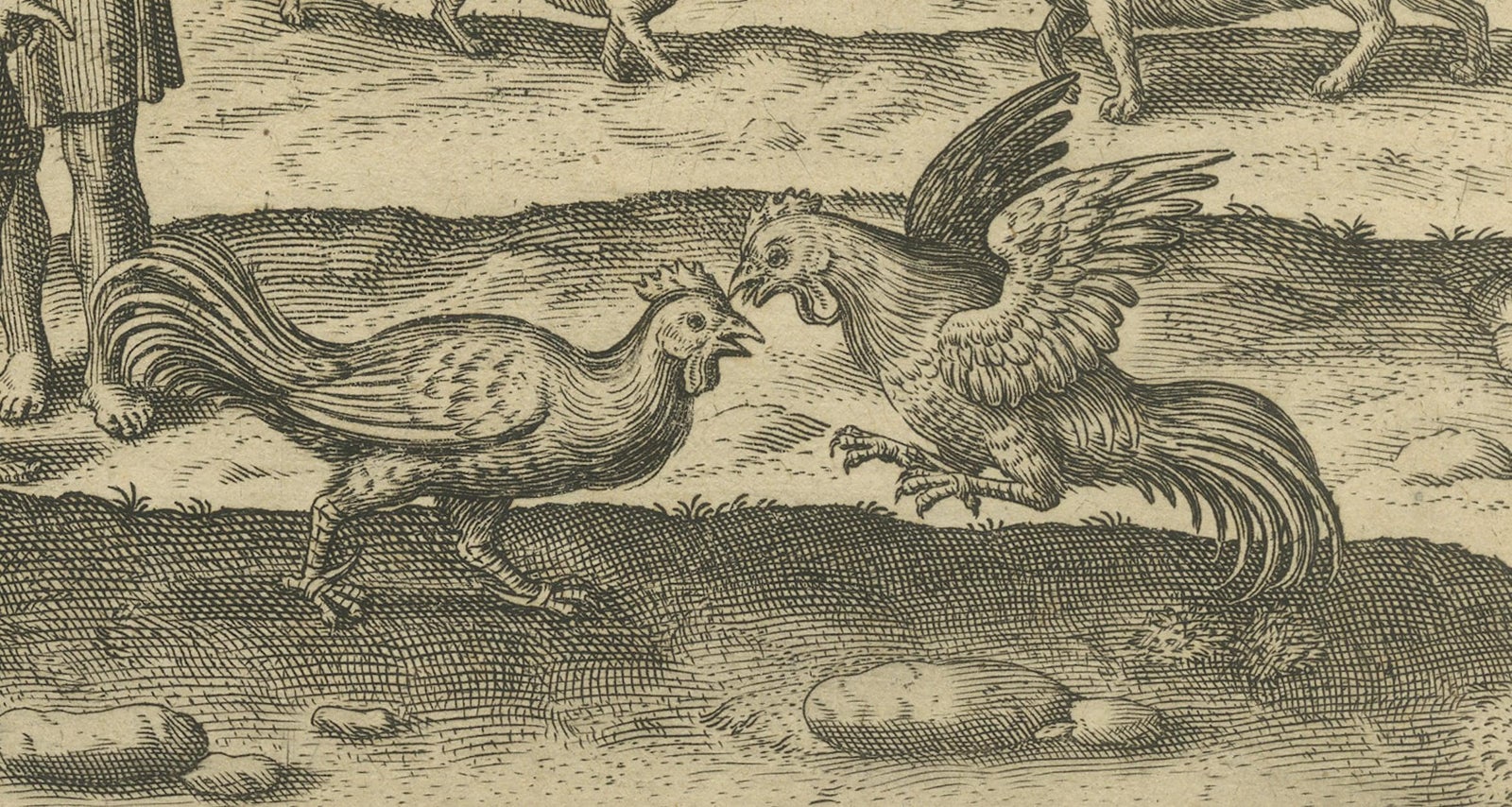
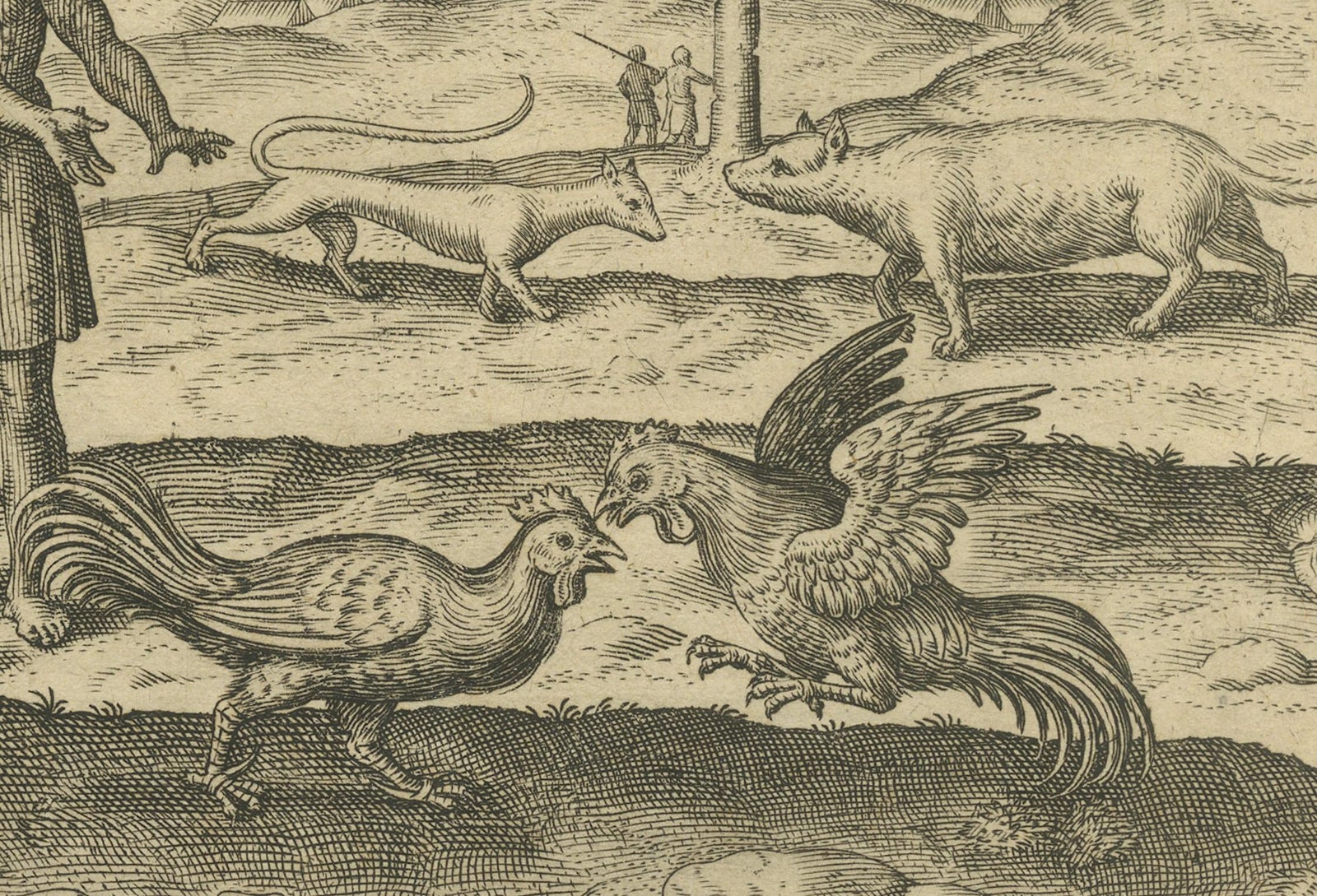
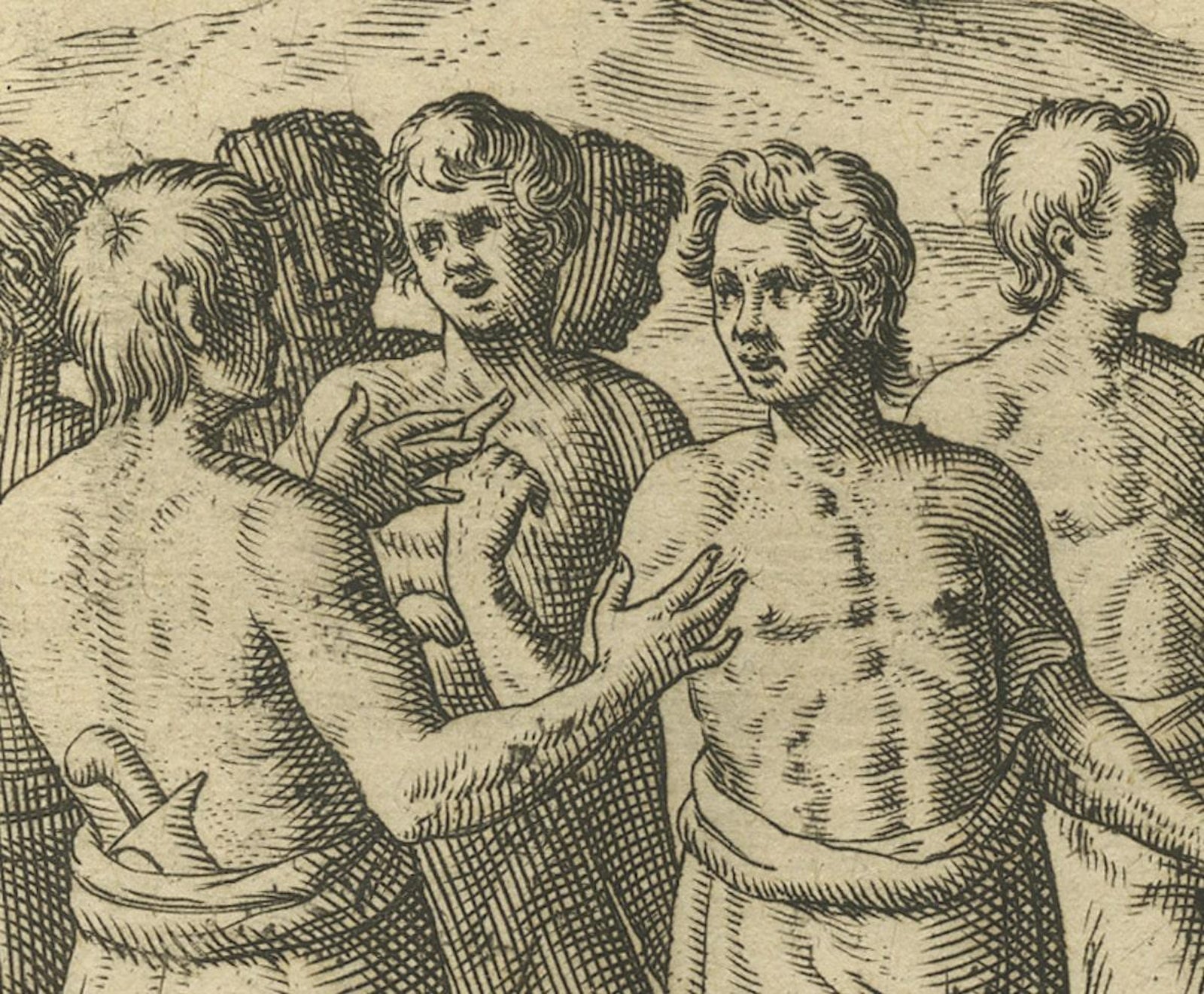
This 1601 engraving by Theodore de Bry offers a detailed glimpse into the cultural practices of Java, depicting a scene of a traditional cockfight. The central focus is on two roosters in the midst of a battle, surrounded by a group of attentive onlookers. These spectators are dressed in the attire of the period, suggesting their social status and the importance of the event. The background features a serene landscape of Java, complete with palm trees and distant mountains, providing a tranquil contrast to the foreground's intense activity.
Cockfighting, a sport that dates back thousands of years, is shown here as a communal event, highlighting its role in social bonding and entertainment. The detailed artistry of the engraving captures the movement and energy of the birds, as well as the engagement of the human figures who appear both casual and intensely focused on the outcome of the fight.
De Bry's works are renowned for their ethnographic accuracy and artistic detail, and this piece is no exception. It serves not only as an artwork but also as a historical record of the customs and cultural life on the island of Java in the early modern era. This image provides a window into the past, showcasing the unique traditions that were observed by European explorers during their travels to exotic lands.
The technique of the engraving is detailed and precise, typical of the period, offering a rich depiction of the event. The scene is framed by a textual header in Latin, which likely provides context or commentary on the scene depicted, common in works intended for an educated European audience of the time. This print is a part of a larger collection that aimed to document the discoveries of new lands and their practices, flora, and fauna, bringing the vast and varied world to the European readers of the era.
This piece forms part of a larger corpus of works produced under the supervision of the de Bry family, a lineage of renowned engravers and publishers based in Frankfurt. Initiated by Theodore de Bry in 1590, this series aimed to visually document the epoch of European global exploration and the encounters with the natural world that ensued.
The engraving is a page from Part IV of de Bry's "Petits Voyages," which narrates significant expeditions to the East Indies, including those led by Jan Juygen van Linschoten and Cornelis de Houtman between 1595-97, as well as the journey by Jacob van Neck and Wybrandt van Warwijck in 1598-99. These works were not merely artistic endeavors but also ethnographic records, showcasing indigenous peoples, fauna, flora, and the diverse riches of lands like India, Madagascar, and the East Indies.
Though Theodore de Bry began this ambitious project, it was continued posthumously by his family and later completed by his son-in-law, Matthaus Merian, in 1644. This particular engraving, rich in detail and drama, offers a window into the perilous and wondrous experiences of early explorers, and the ways in which these moments were captured and communicated to a European audience hungry for knowledge of the wider world.