Close-ups
Framed and on the wall

Frame and rooms are illustrations of how the print could look, drawn to its real size; it is sold unframed unless the description says otherwise.
Peoples and Costume
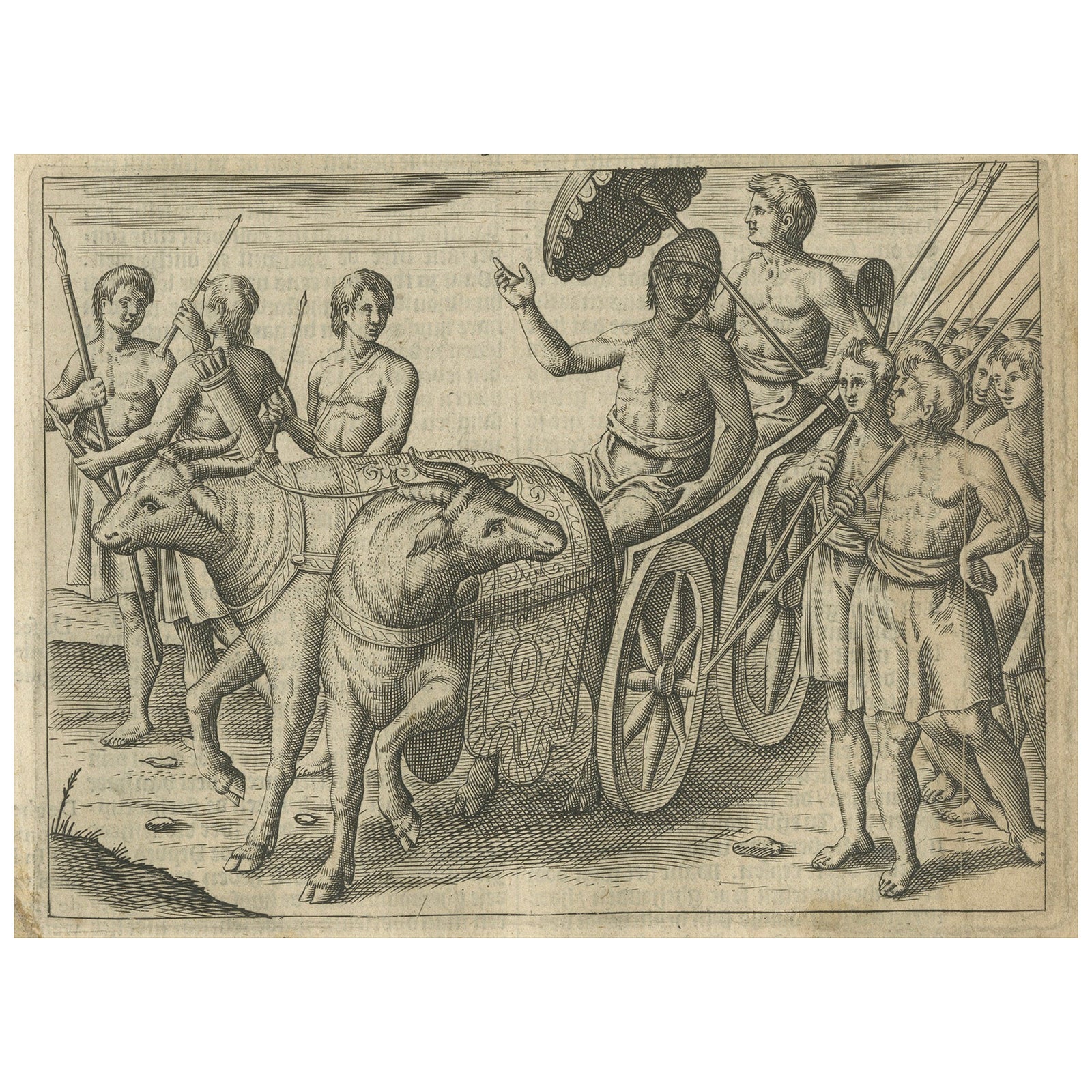
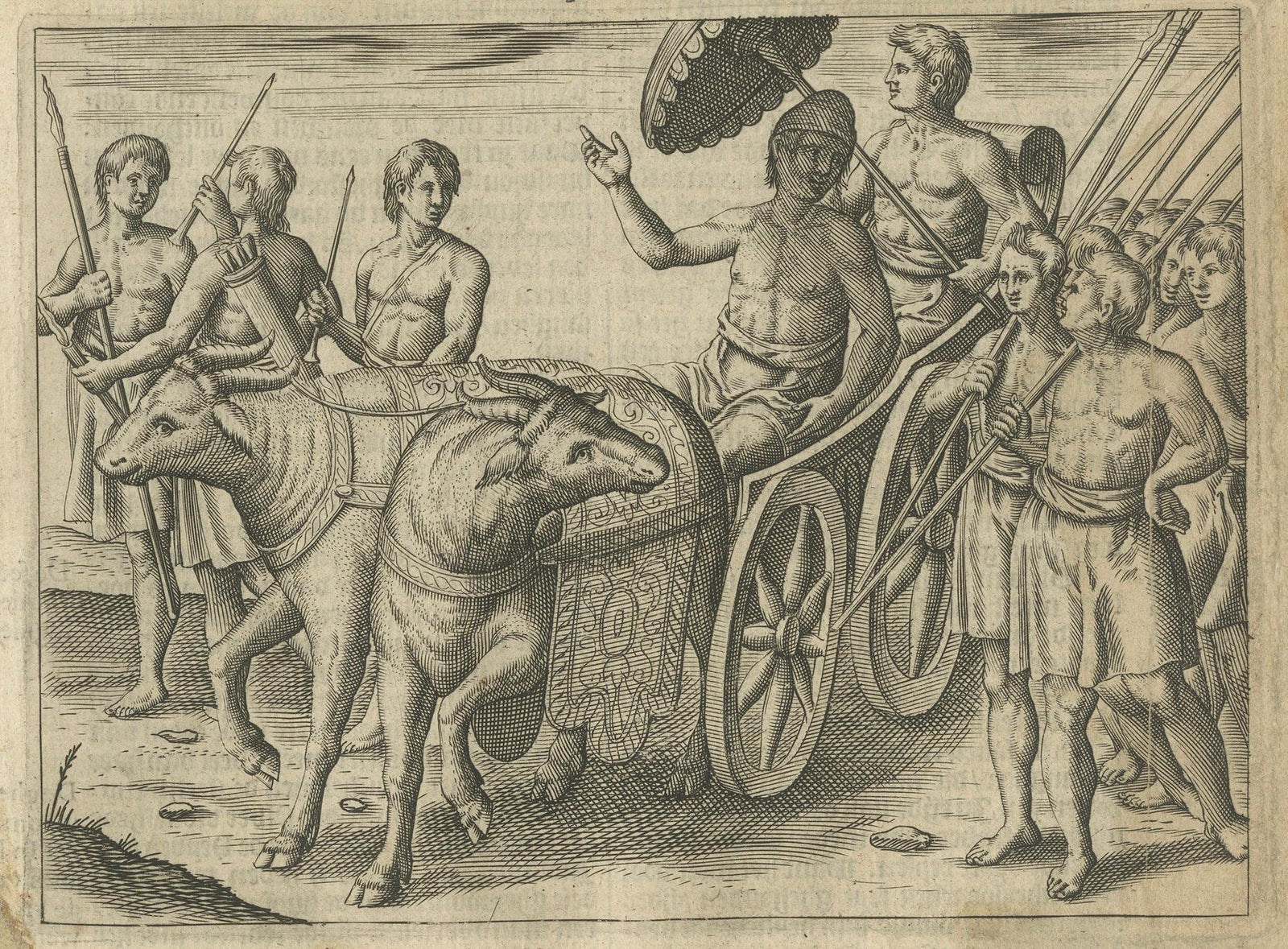
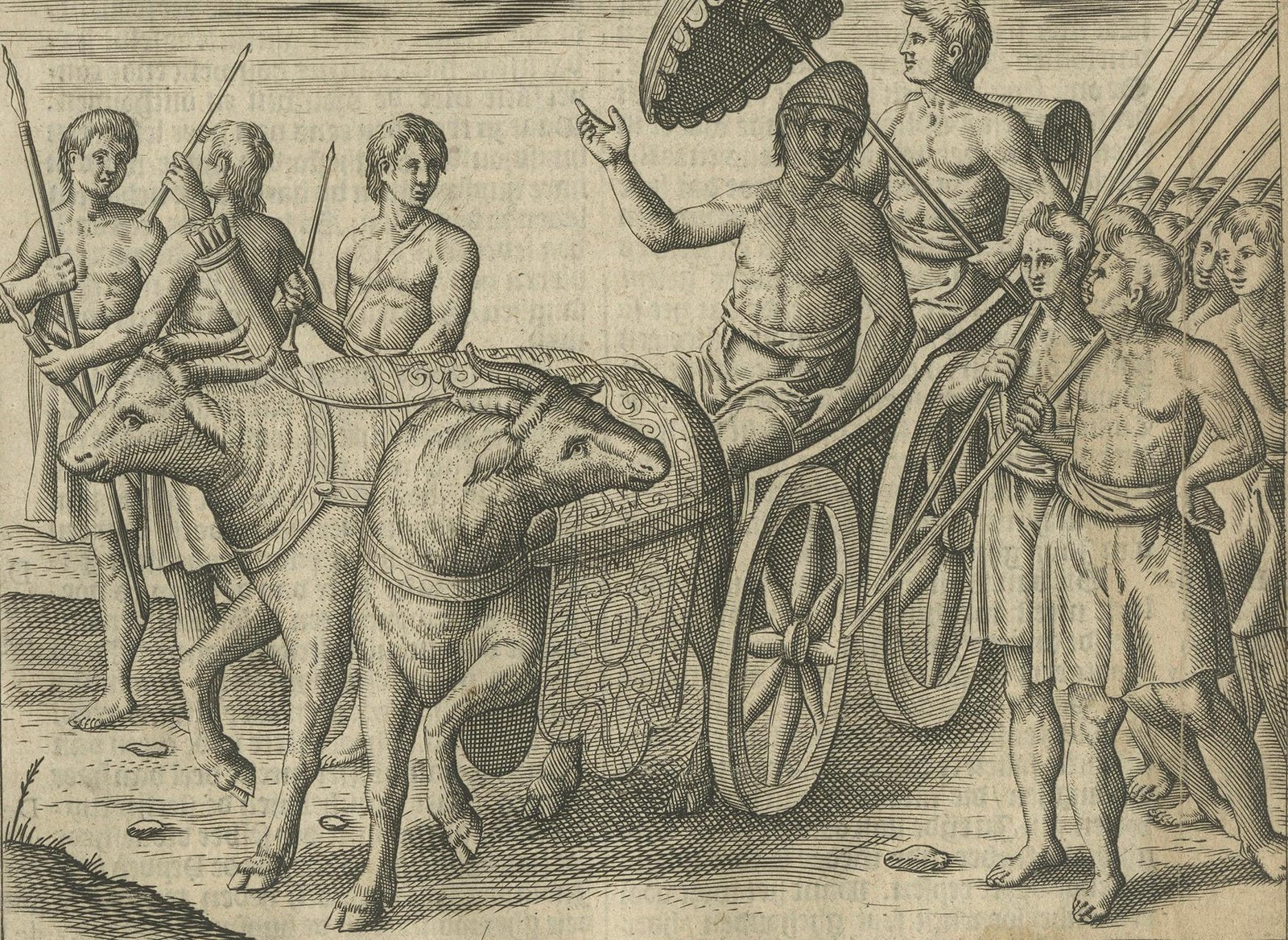
Earliest Depiction of Bali, Dutch Engraving of the King of Bali, c.1601
$435
€390 · £325
Original print, not a reproduction
Ships worldwide from the Netherlands, insured and tracked. 14-day returns.
- Date
- 1601
- Sheet size
- 9.4 × 7.2 in (24 × 18.2 cm)
- Condition
- Fair. Laid paper with age toning, light marginal wear, and small corner losses; strong, early impression with plate mark visible. The leaf fair, but the Image itself very good and ready for framing.
- Island
- Lesser Sunda
- Collection
- Peoples and Costume
- Period
- The spice race, before 1700
- Stock no.
- f_46935132
What the condition grades mean
- Excellent
- Bright and clean, with no faults worth mentioning.
- Very good
- Only light signs of age, such as faint toning.
- Good
- Normal signs of age for a sheet of this period: toning, some foxing, small marks or neat old repairs.
- Fair
- Clear faults such as staining, tears or repairs, priced to match.
Every fault we see is written in the condition note, and the whole sheet is shown uncropped in the photos.
Title: Earliest Depiction of Bali, Dutch Engraving of the King of Bali c.1601
Description:
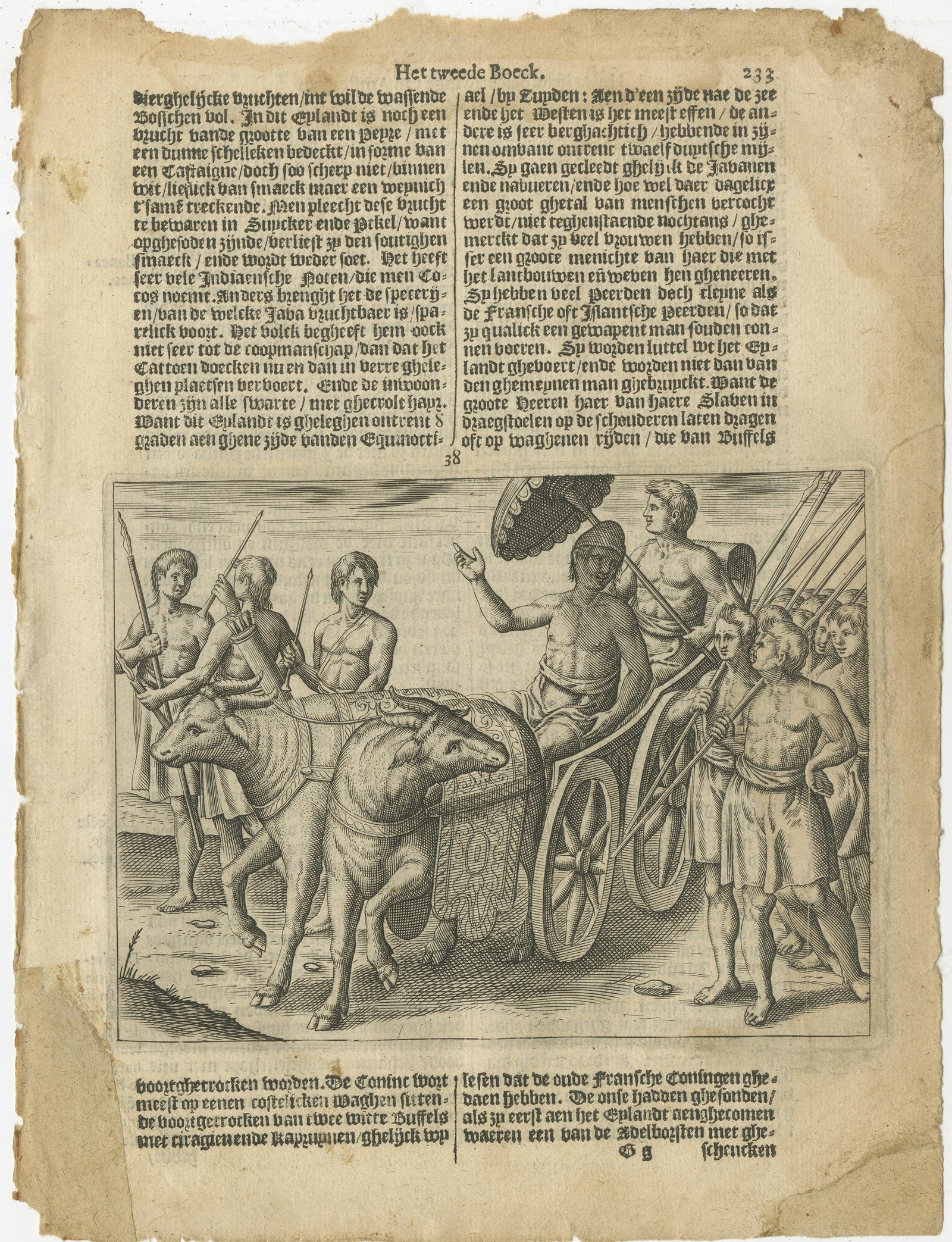
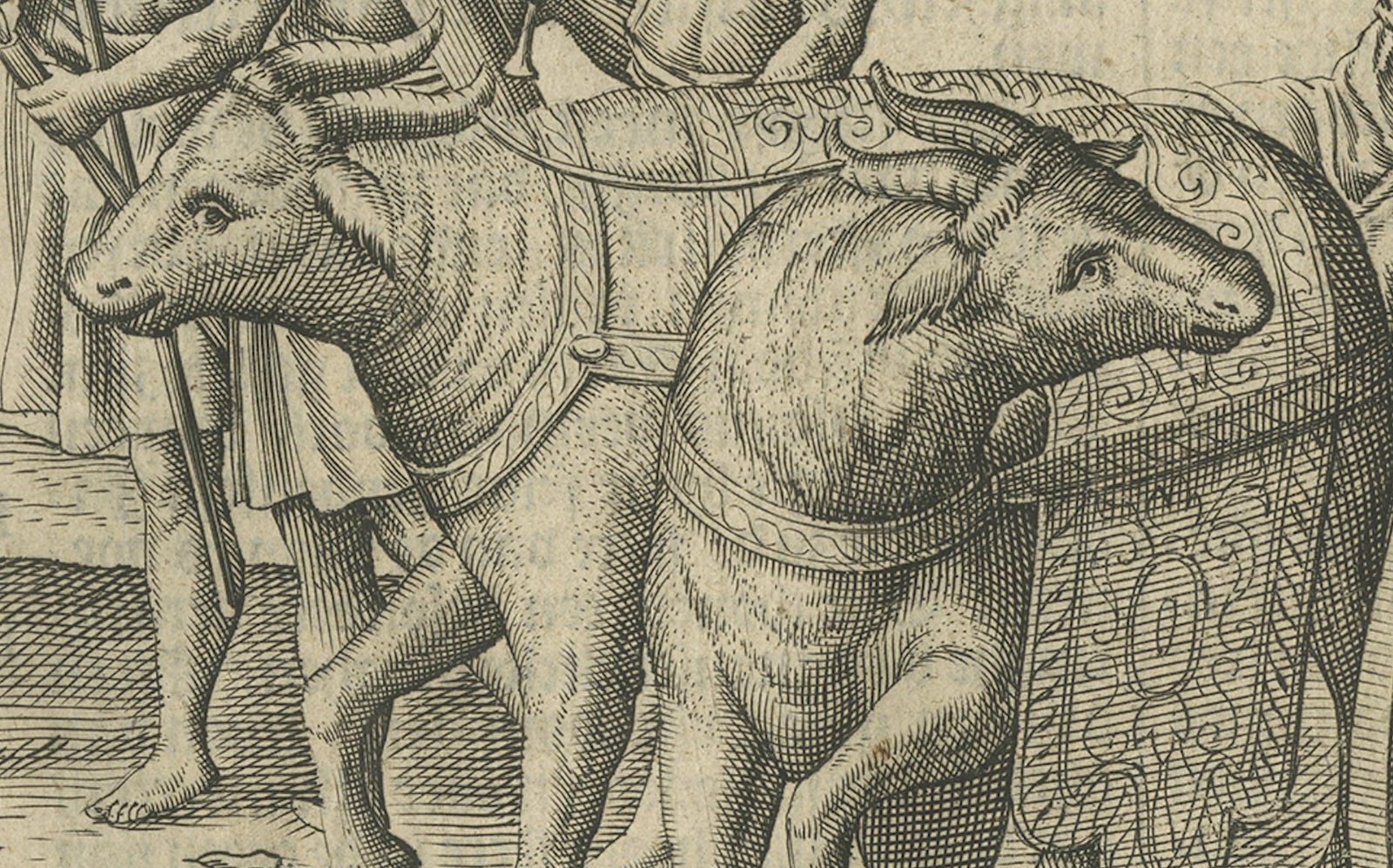
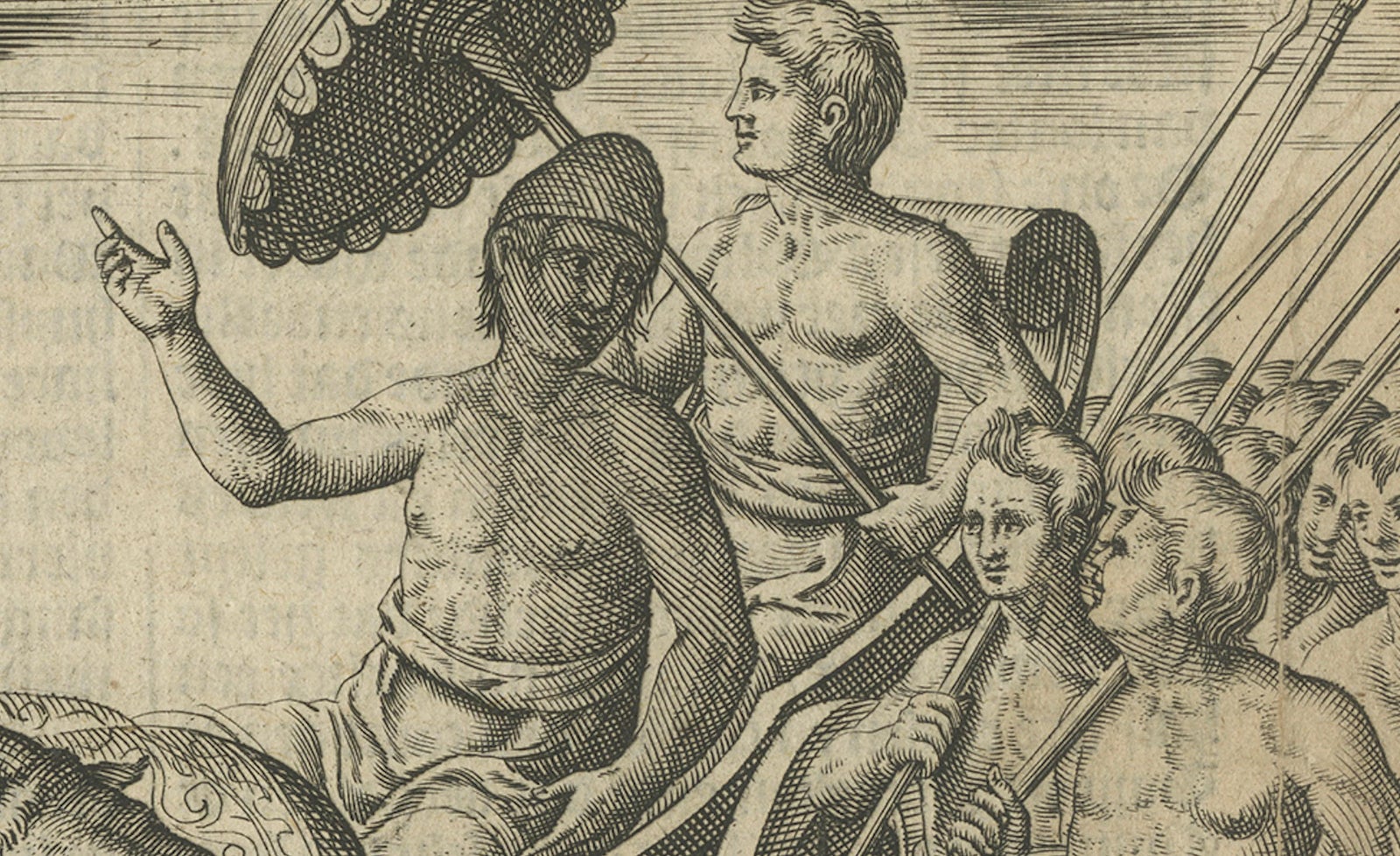
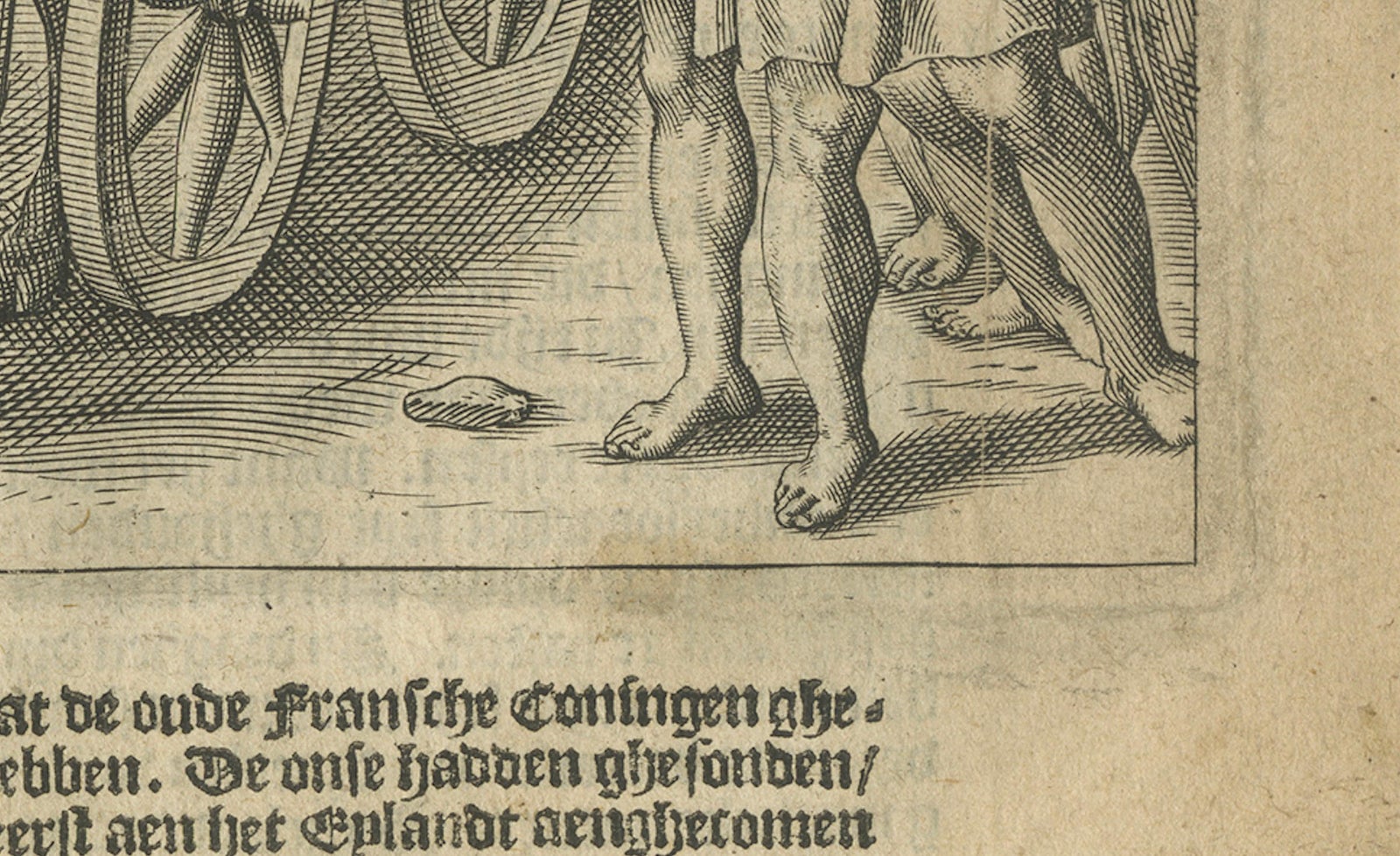
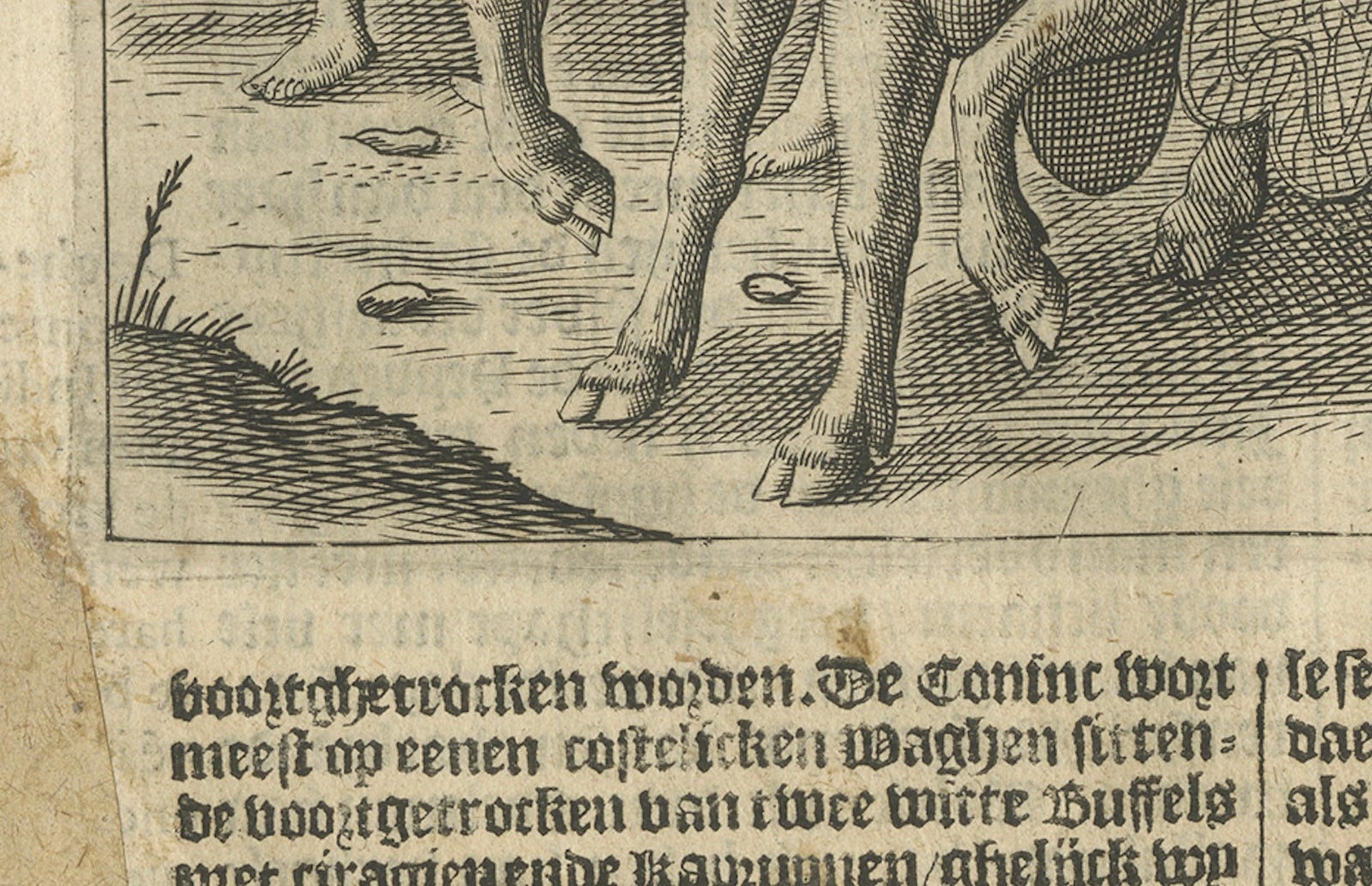
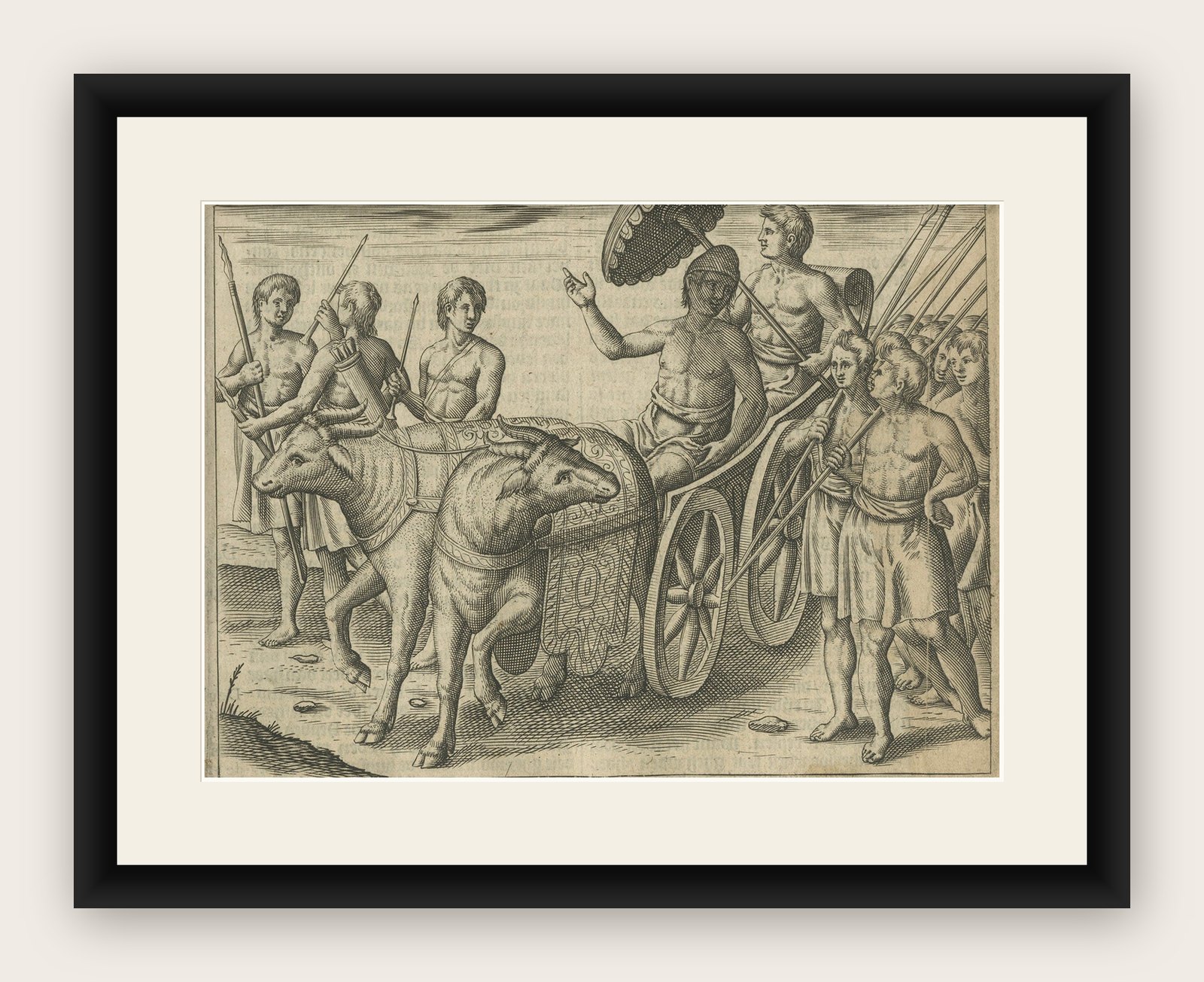
Exceptionally rare early 17th-century Dutch engraving showing the King of Bali in a ceremonial chariot, the earliest known European depiction of Bali. The ruler sits beneath a parasol, a symbol of royal authority in the Indonesian archipelago, while attendants walk beside the richly decorated chariot drawn by two small oxen or ram-like animals. Armed retainers carry lances and bows, illustrating the grandeur of Balinese royal processions as witnessed by the first Dutch explorers.
This engraving originates from Itinerario, voyage ofte schipvaert van Jan Huygen van Linschoten naer Oost- ofte Portugaels Indien, published in Amsterdam by Cornelis Claesz around 1598 to 1601. Linschoten’s pioneering work introduced Europe to the peoples, trade, and customs of the East Indies and directly inspired the foundation of the Dutch East India Company (VOC).
Printed with accompanying Dutch text in blackletter type and headed Het tweede Boeck, the leaf combines copper engraving with letterpress text on laid paper. It represents the very first visual record of Bali made available to European readers, a cornerstone image in the visual history of Indonesia.
Laid paper with age toning, light marginal wear, and small corner losses; strong, early impression with plate mark visible. The leaf fair, but the Image itself very good and ready for framing.
Framing tips:
Float-mount in a dark teak or ebony frame with a cream mat. For study or museum display, a double-glass frame allows both sides of the leaf to be viewed.
Technique: Copperplate engraving with letterpress text on laid paper
Maker: After Jan Huygen van Linschoten, Amsterdam, c.1601
Explore