Framed and on the wall
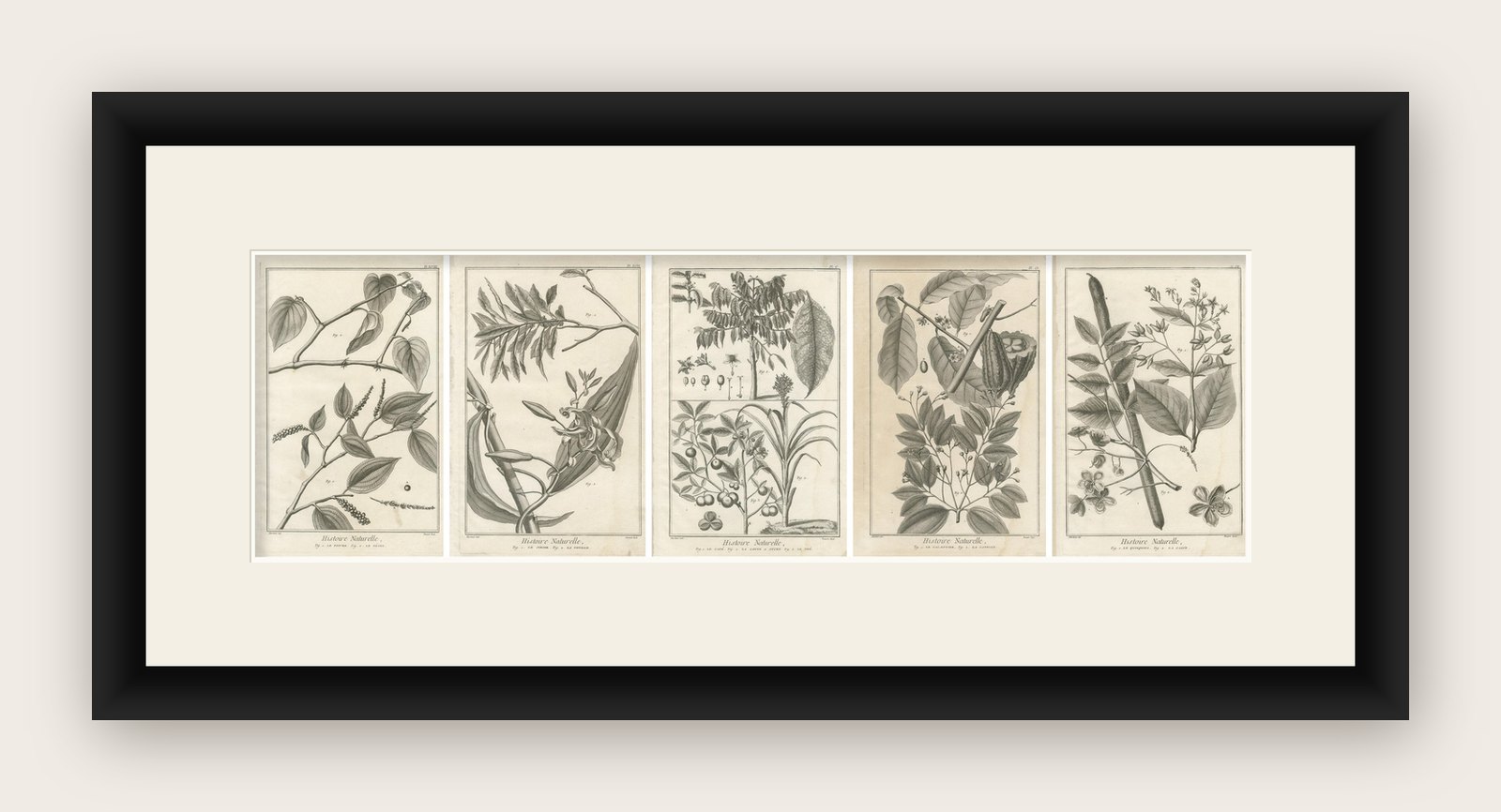
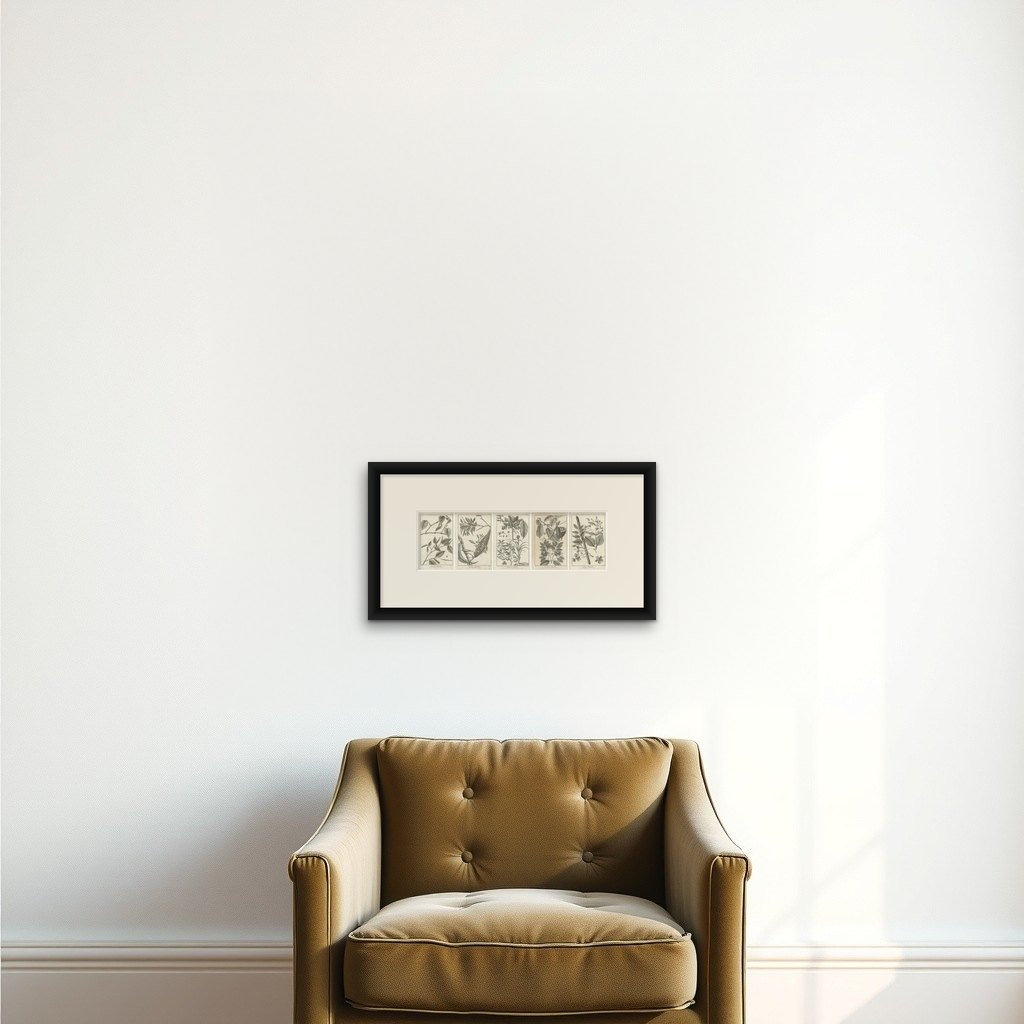

Frame and rooms are illustrations of how the print could look, drawn to its real size; it is sold unframed unless the description says otherwise.
Flora and Fauna
Set of Five Antique Engravings of Spices and Colonial Crops by Diderot, 1770
€360
$405 · £300
Original print, not a reproduction
A set of 5 sheets, sold together as one piece at this price.
Ships worldwide from the Netherlands, insured and tracked. 14-day returns.
- Date
- 1770
- Sheet size
- 15.4 × 9.8 in (39 × 25 cm)
- Condition
- Good. Condition report: Good condition overall with strong plate impressions. Light toning and some marginal spotting consistent with age. Fine laid paper, each sheet retaining a clear platemark.
- Collection
- Flora and Fauna
- Period
- The Company, 1700 to 1799
- Stock no.
- f_46682622
What the condition grades mean
- Excellent
- Bright and clean, with no faults worth mentioning.
- Very good
- Only light signs of age, such as faint toning.
- Good
- Normal signs of age for a sheet of this period: toning, some foxing, small marks or neat old repairs.
- Fair
- Clear faults such as staining, tears or repairs, priced to match.
Every fault we see is written in the condition note, and the whole sheet is shown uncropped in the photos.
Set of Five Antique Engravings of Spices and Colonial Crops from Diderot’s Encyclopédie, ca. 1770
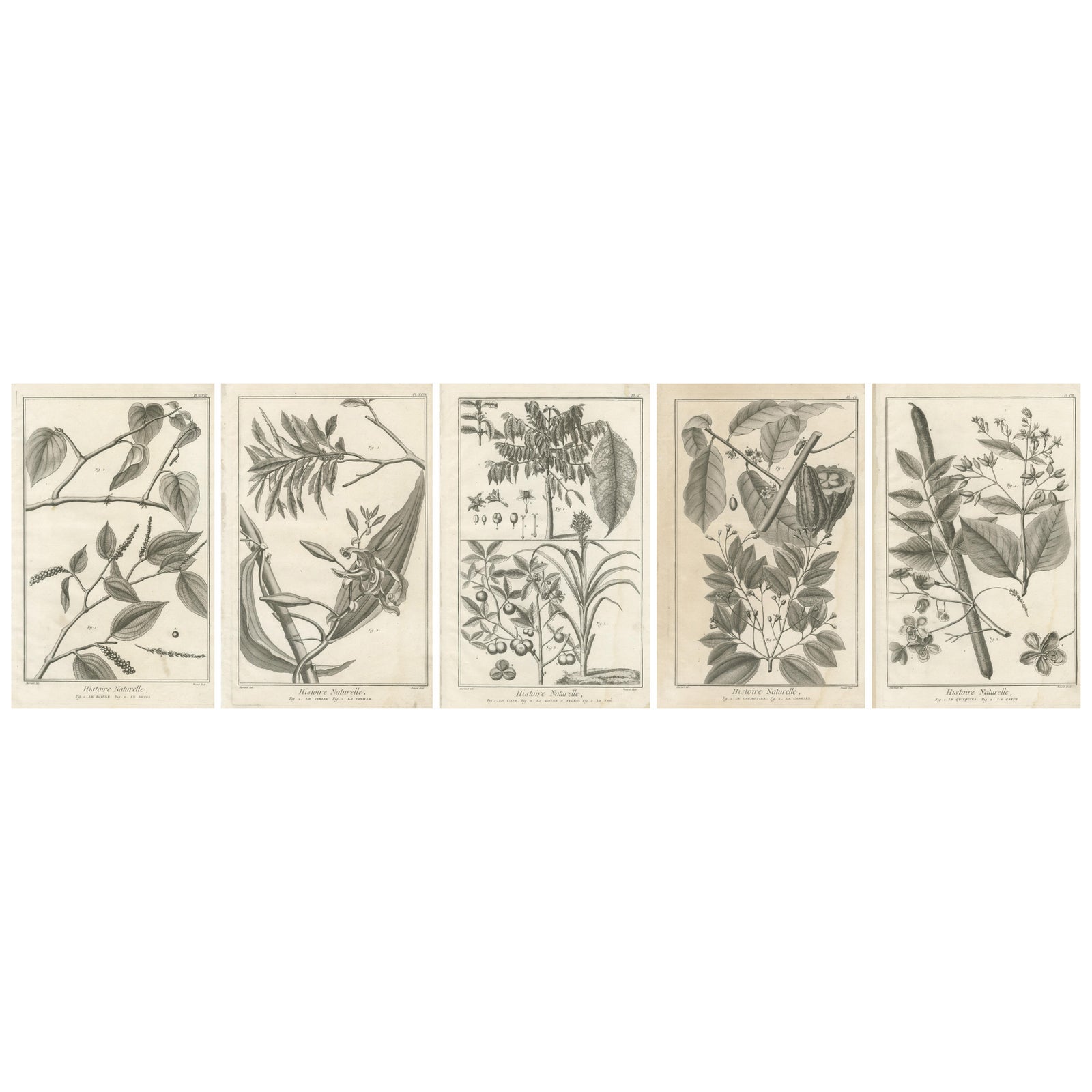
A remarkable set of five copperplate engravings from Denis Diderot and Jean le Rond d’Alembert’s Encyclopédie ou Dictionnaire raisonné des sciences, des arts et des métiers, Paris, circa 1770. These plates from the Histoire naturelle section focus on exotic spices and crops central to global trade during the Enlightenment and colonial expansion.
Each engraving captures with scientific precision and artistic elegance the plants that reshaped European economies and taste.
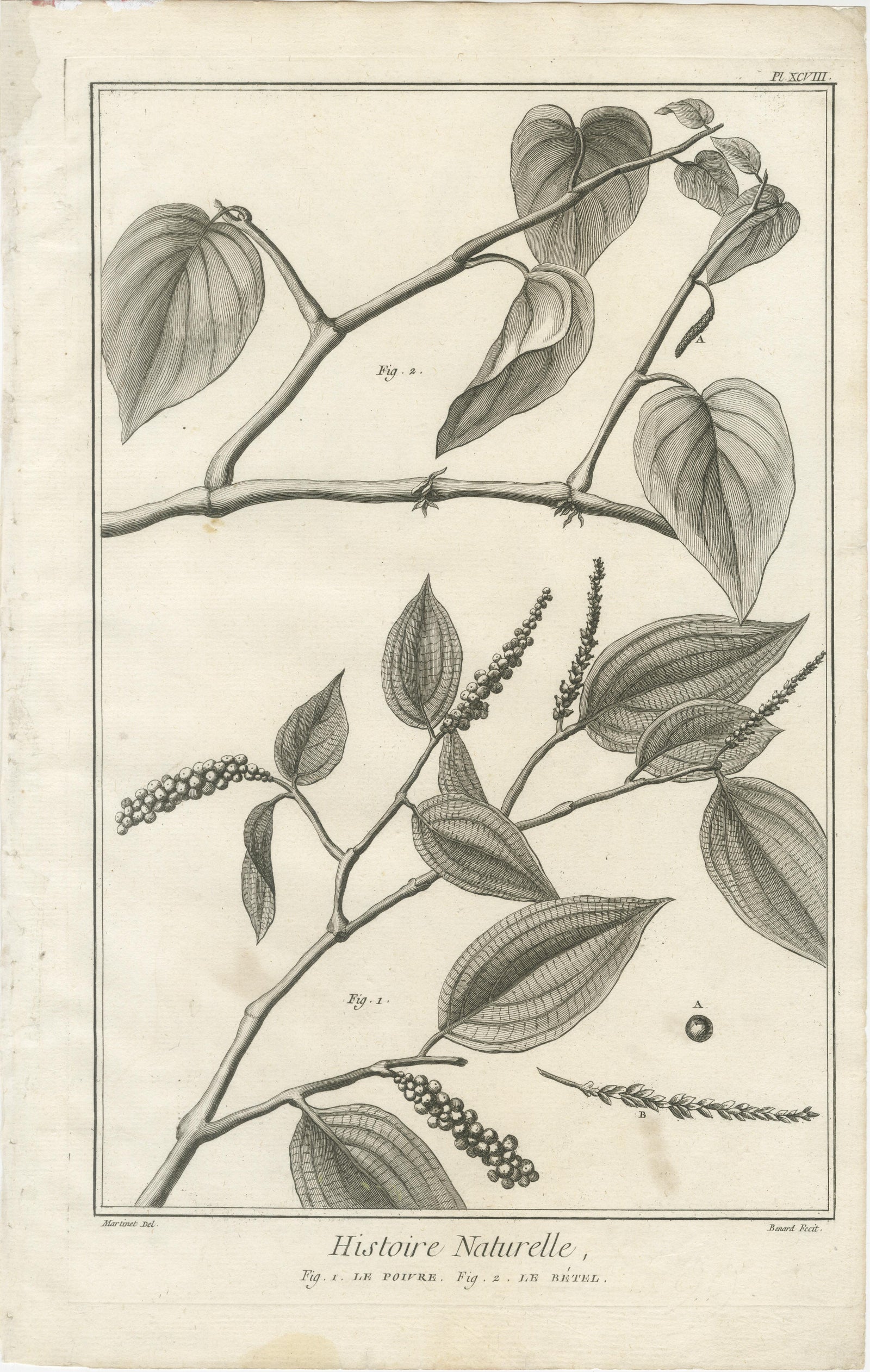
1. Pl. XCVIII, Depicts the pepper plant (Le Poivre), source of the highly prized spice, and the betel (Le Bétel), widely chewed in Asia.
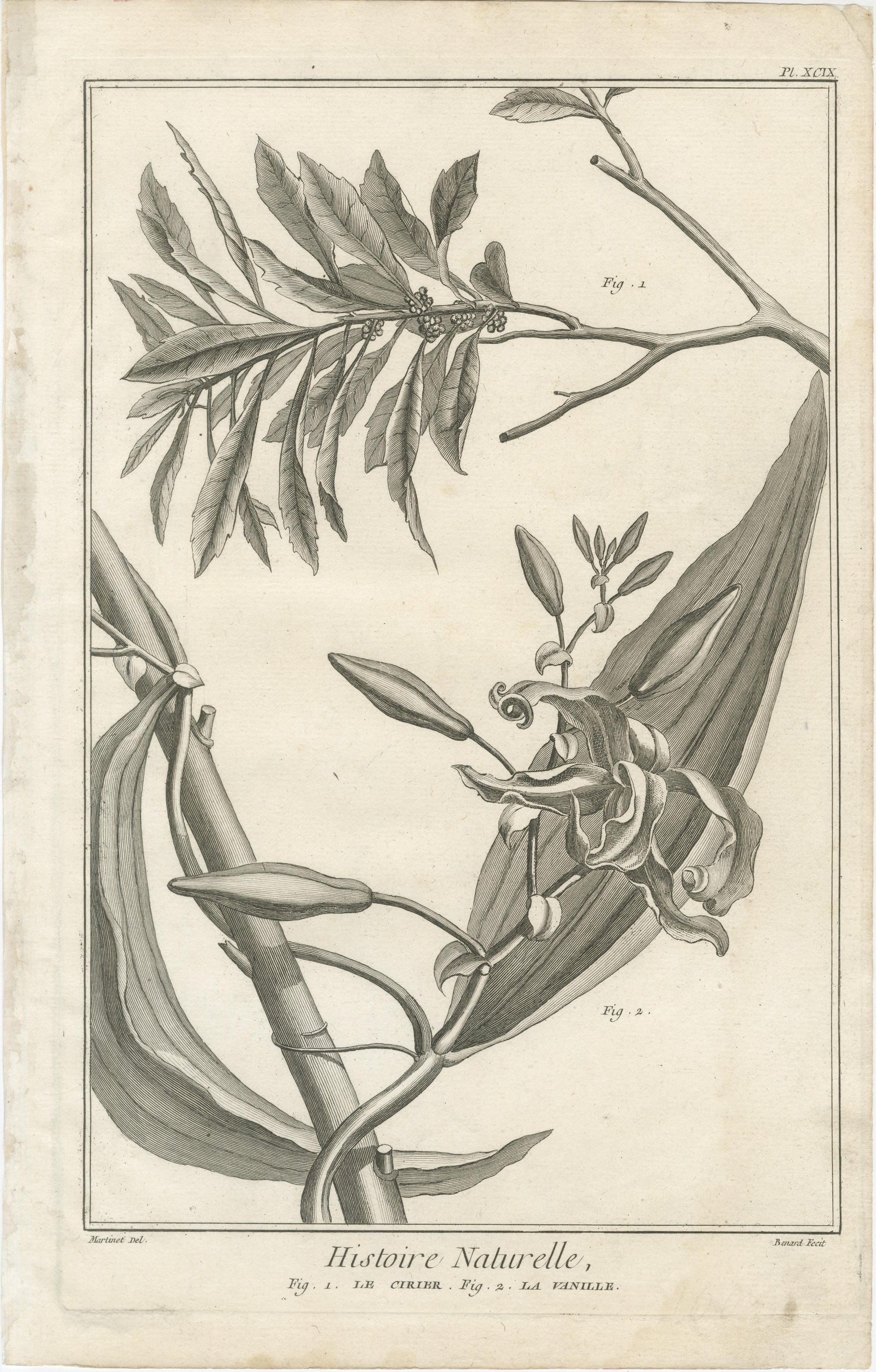
2. Pl. XCIX, Shows the clove tree (Le Crier), an essential spice from the Moluccas, alongside the vanilla orchid (La Vanille), its distinctive pods shown on the vine.
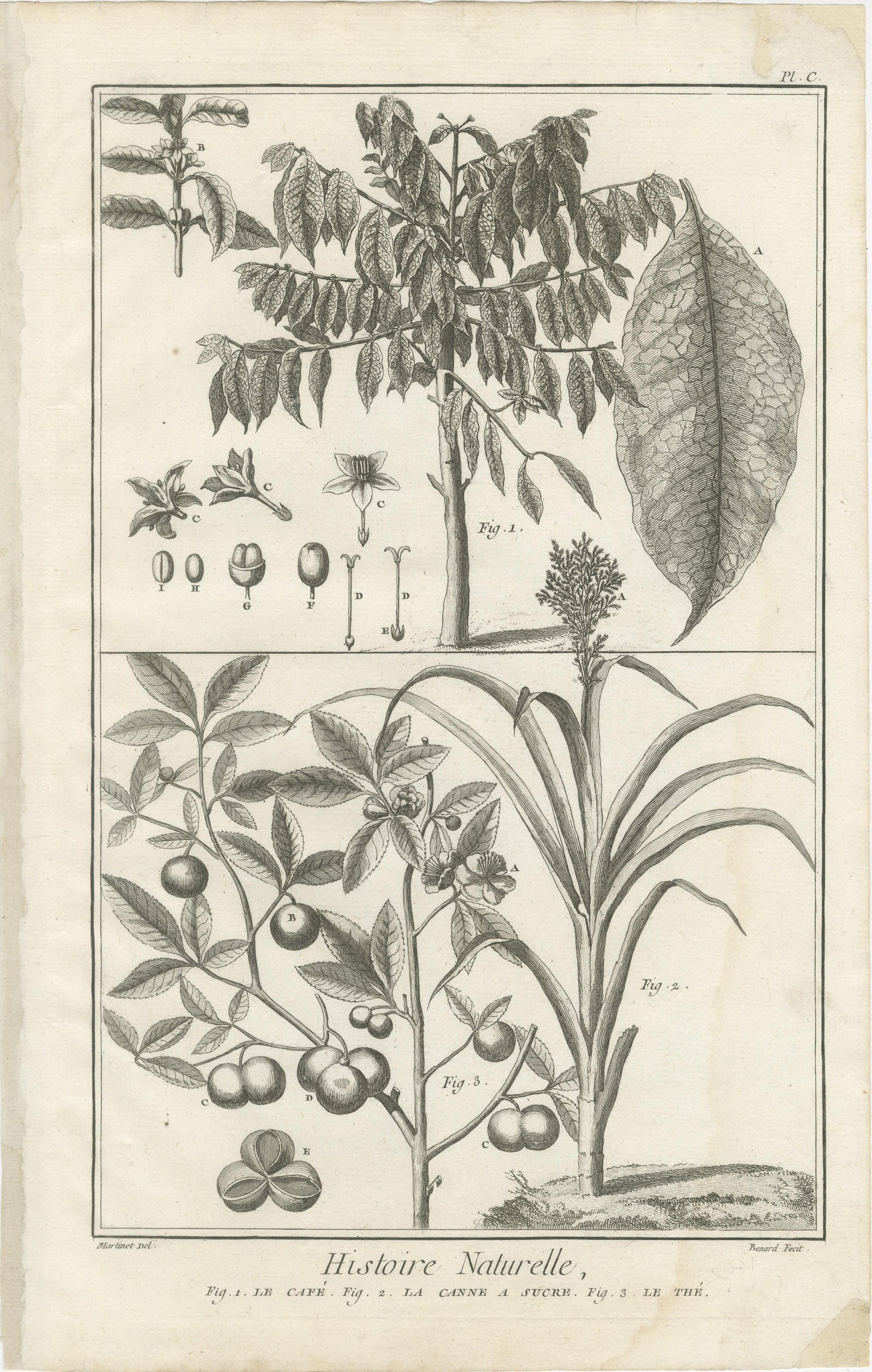
3. Pl. C, Illustrates coffee (Le Café), with botanical details of flowers and beans; sugarcane (La Canne à Sucre), a foundation of colonial plantations; and tea (Le Thé), the global beverage that linked Asia with Europe.
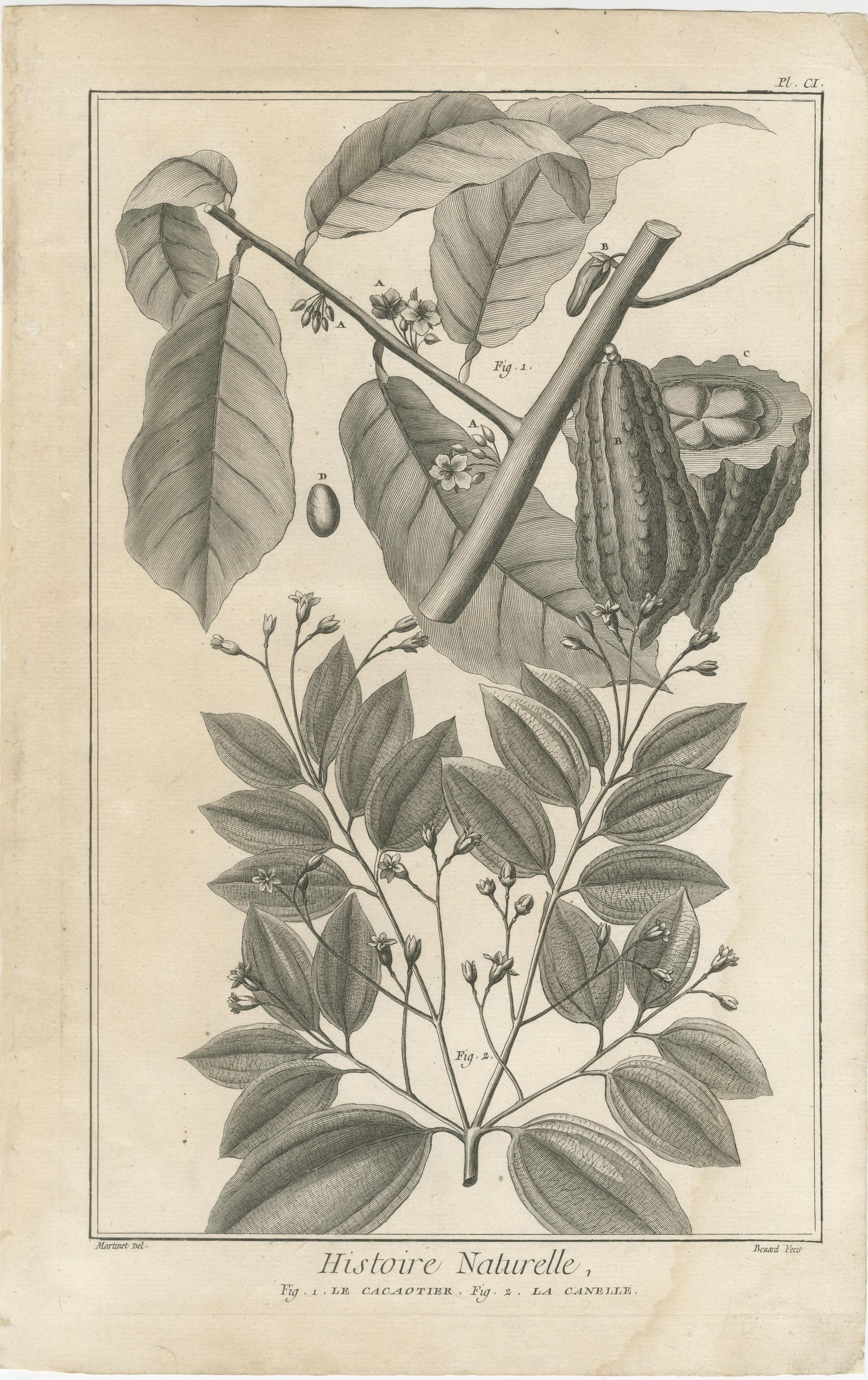
4. Pl. CI, Features the cacao tree (Le Cacaotier), with its pods and seeds used for chocolate, paired with cinnamon (La Canelle), one of the earliest spices to reach Europe.
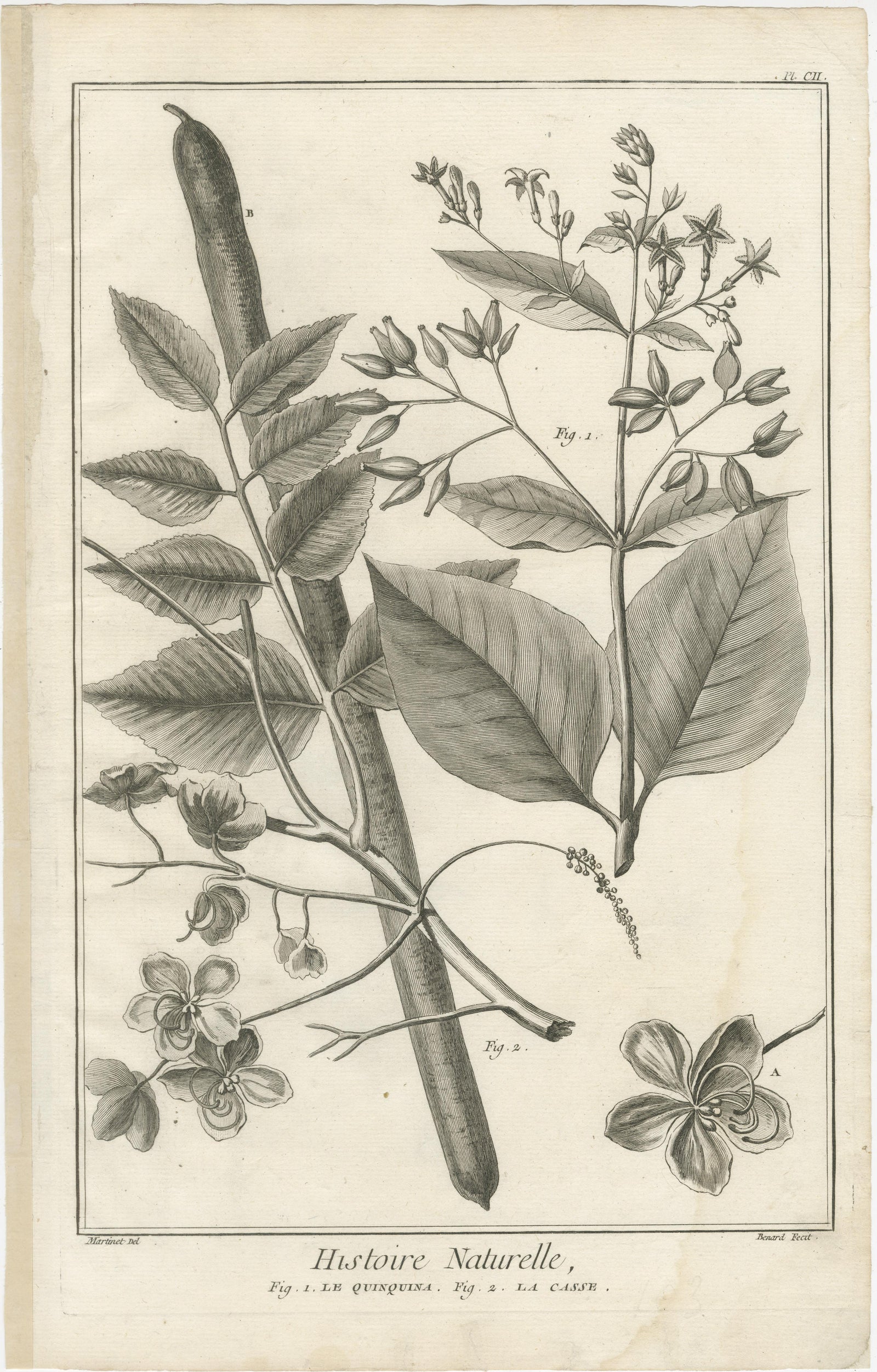
5. Pl. CII, Shows quinquina (Le Quinquina), source of quinine used in medicine against malaria, and cassia (La Casse), another important spice and medicinal plant.
Together, these engravings document the plants that transformed diets, medicine, and trade in the 17th and 18th centuries, representing Europe’s growing dependence on colonial networks. They combine scientific inquiry with an almost decorative beauty, making them appealing both as historic documents and as striking display pieces.
Condition report: Good condition overall with strong plate impressions. Light toning and some marginal spotting consistent with age. Fine laid paper, each sheet retaining a clear platemark.
Framing tips: These plates work beautifully displayed as a thematic set. They can be grouped in a horizontal or grid arrangement, mounted with ivory or cream mats and either gilt or dark wood frames. For emphasis on their commercial history, a grouping in a study or library setting would highlight their intellectual and decorative character.
Technique: Copperplate engraving
Maker: Denis Diderot & Jean le Rond d’Alembert, Paris, ca. 1770
Explore