Close-ups
Framed and on the wall
Frame and rooms are illustrations of how the print could look, drawn to its real size; it is sold unframed unless the description says otherwise.
Flora and Fauna
Aromatic Treasures of the Indies: The Enchanting Scents of De Bry’s Collection
€540
$605 · £450
Original print, not a reproduction
Ships worldwide from the Netherlands, insured and tracked. 14-day returns.
- Date
- Not stated
- Sheet size
- 11.8 × 7.9 in (30 × 20 cm)
- Condition
- Good. The condition of the print is good, considering its age of over 400 years. Light browning or soiling mainly around the edges. Left site thin margin, otherwise fine. Please study this image carefully.
- Collection
- Flora and Fauna
- Stock no.
- f_37756672
What the condition grades mean
- Excellent
- Bright and clean, with no faults worth mentioning.
- Very good
- Only light signs of age, such as faint toning.
- Good
- Normal signs of age for a sheet of this period: toning, some foxing, small marks or neat old repairs.
- Fair
- Clear faults such as staining, tears or repairs, priced to match.
Every fault we see is written in the condition note, and the whole sheet is shown uncropped in the photos.
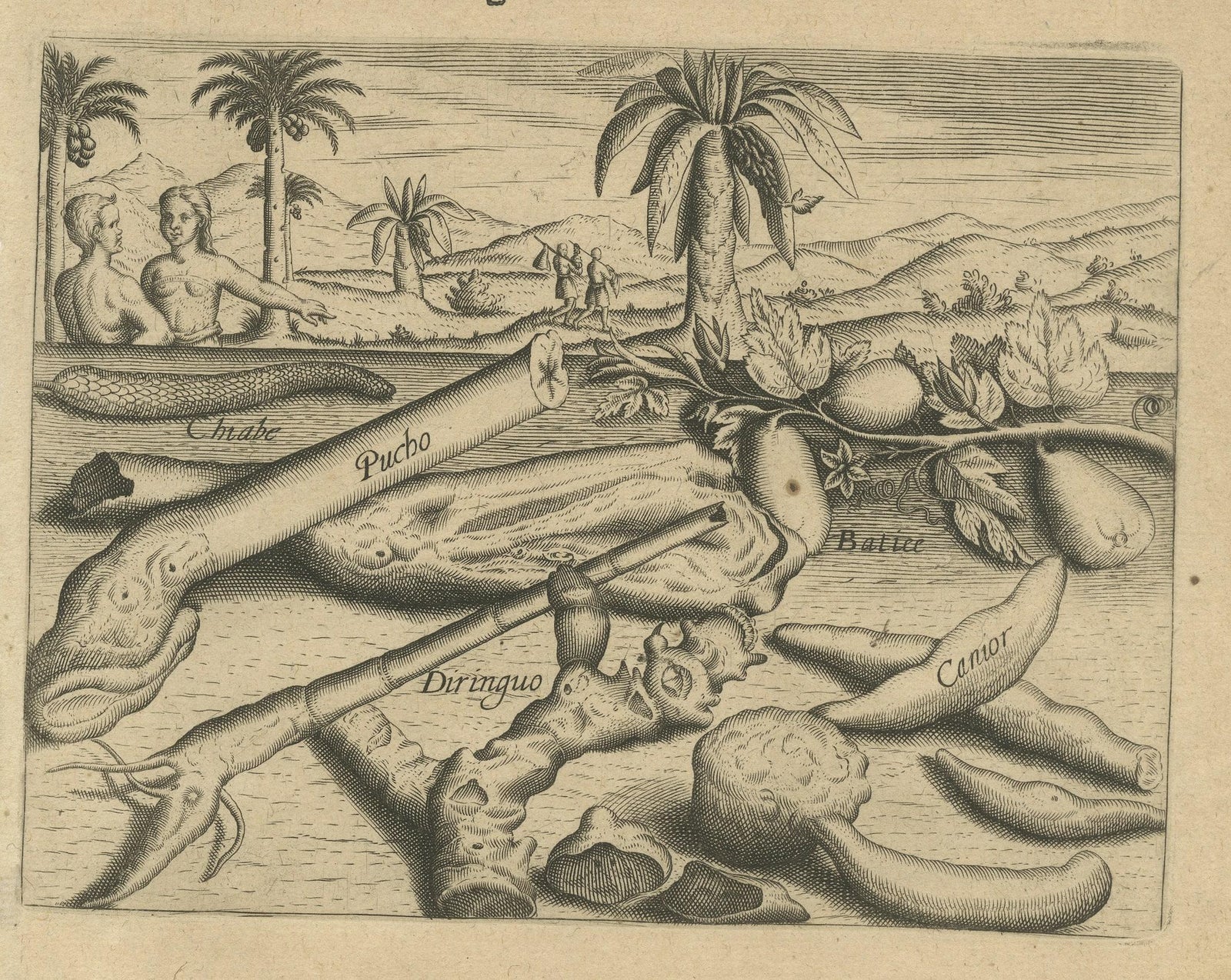
Title: "Aromatic Treasures of the Indies: The Enchanting Scents of De Bry’s Exotic Collection"
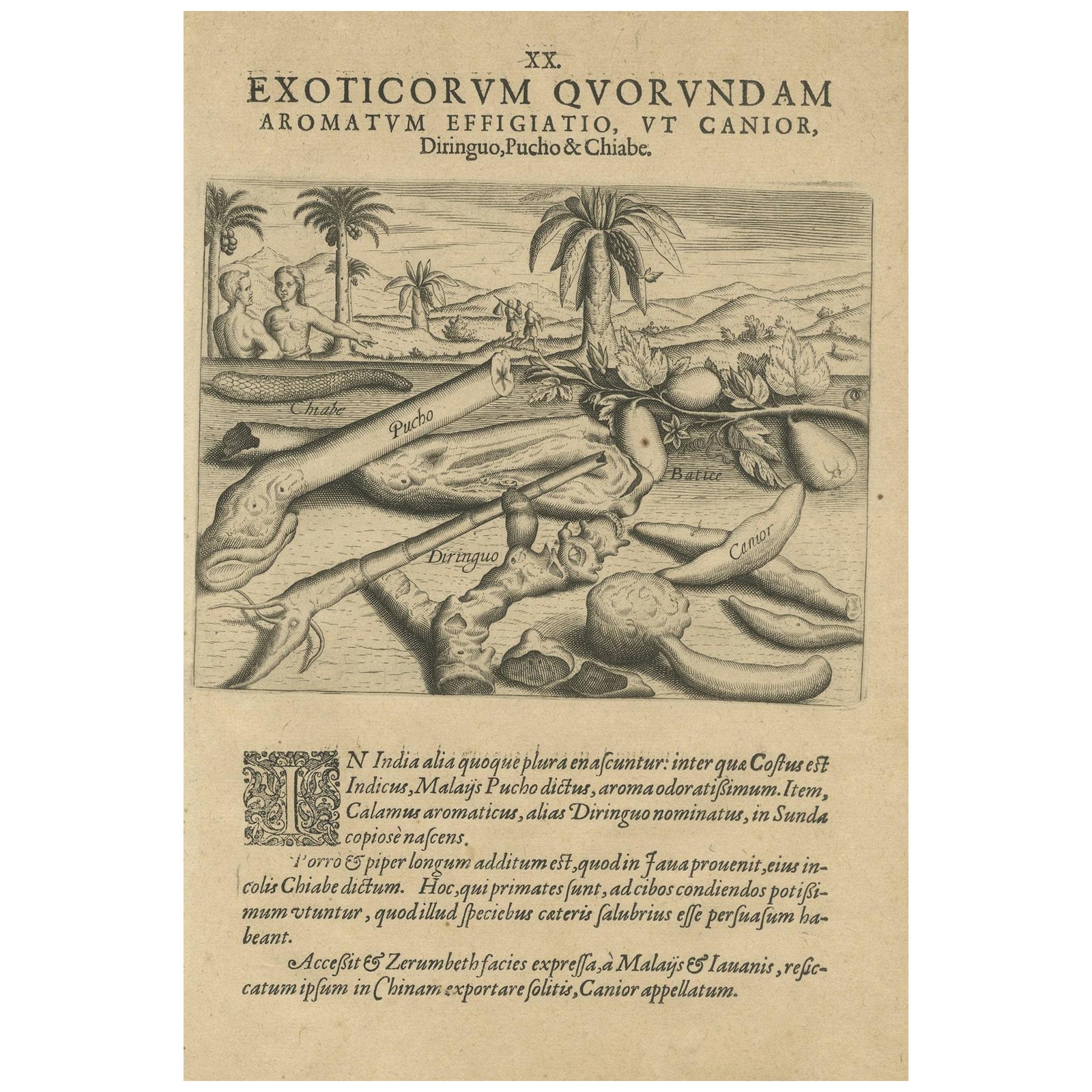
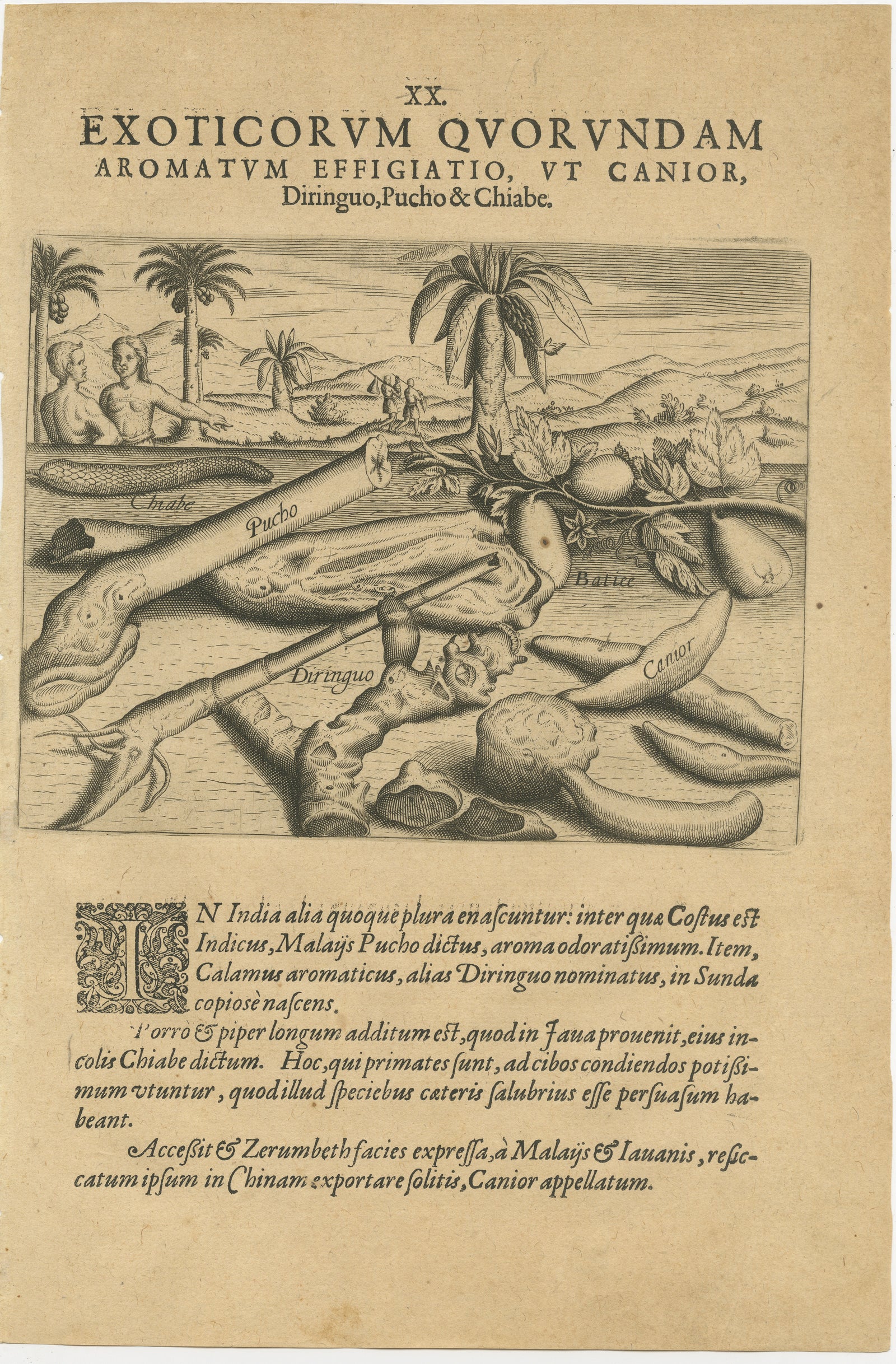
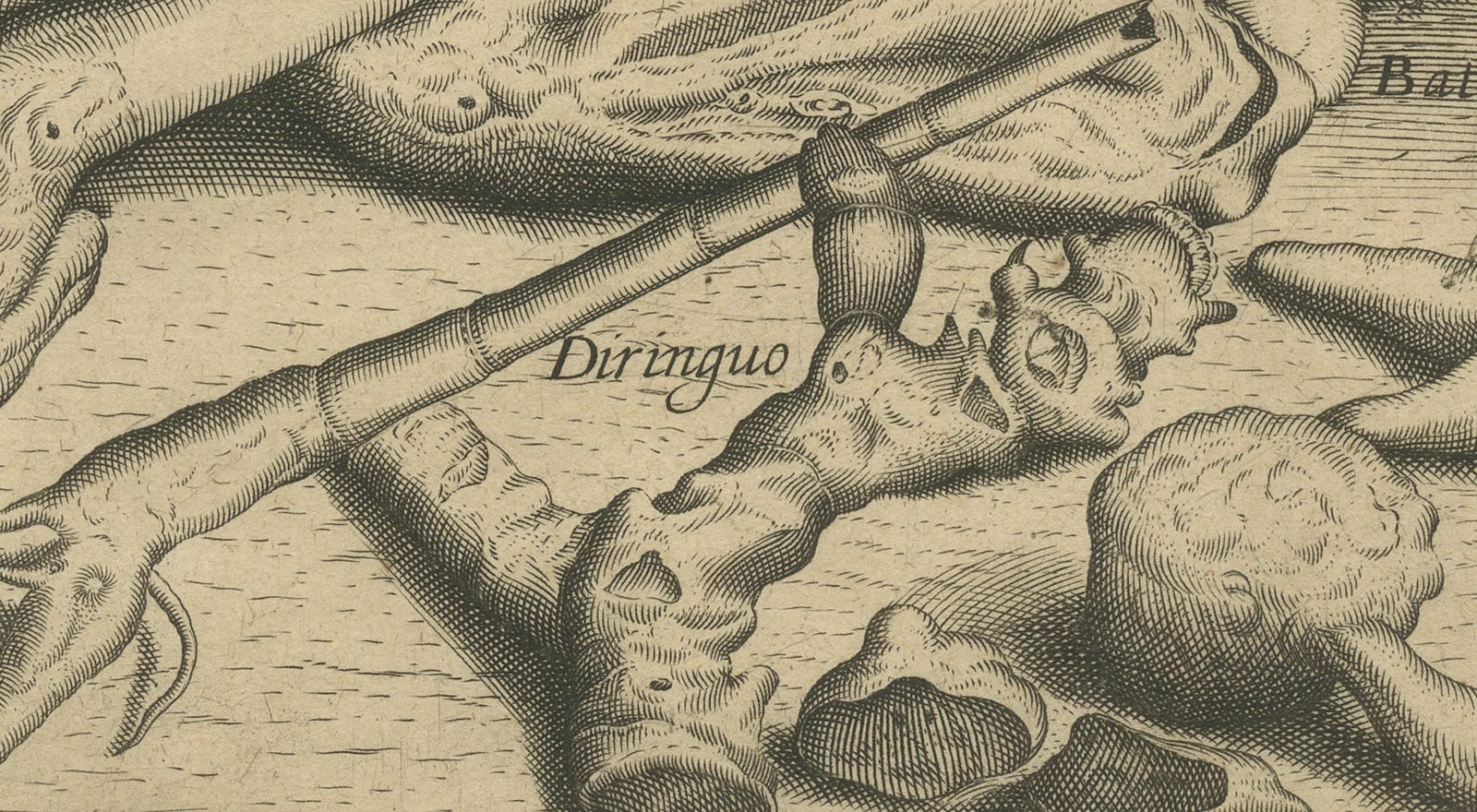
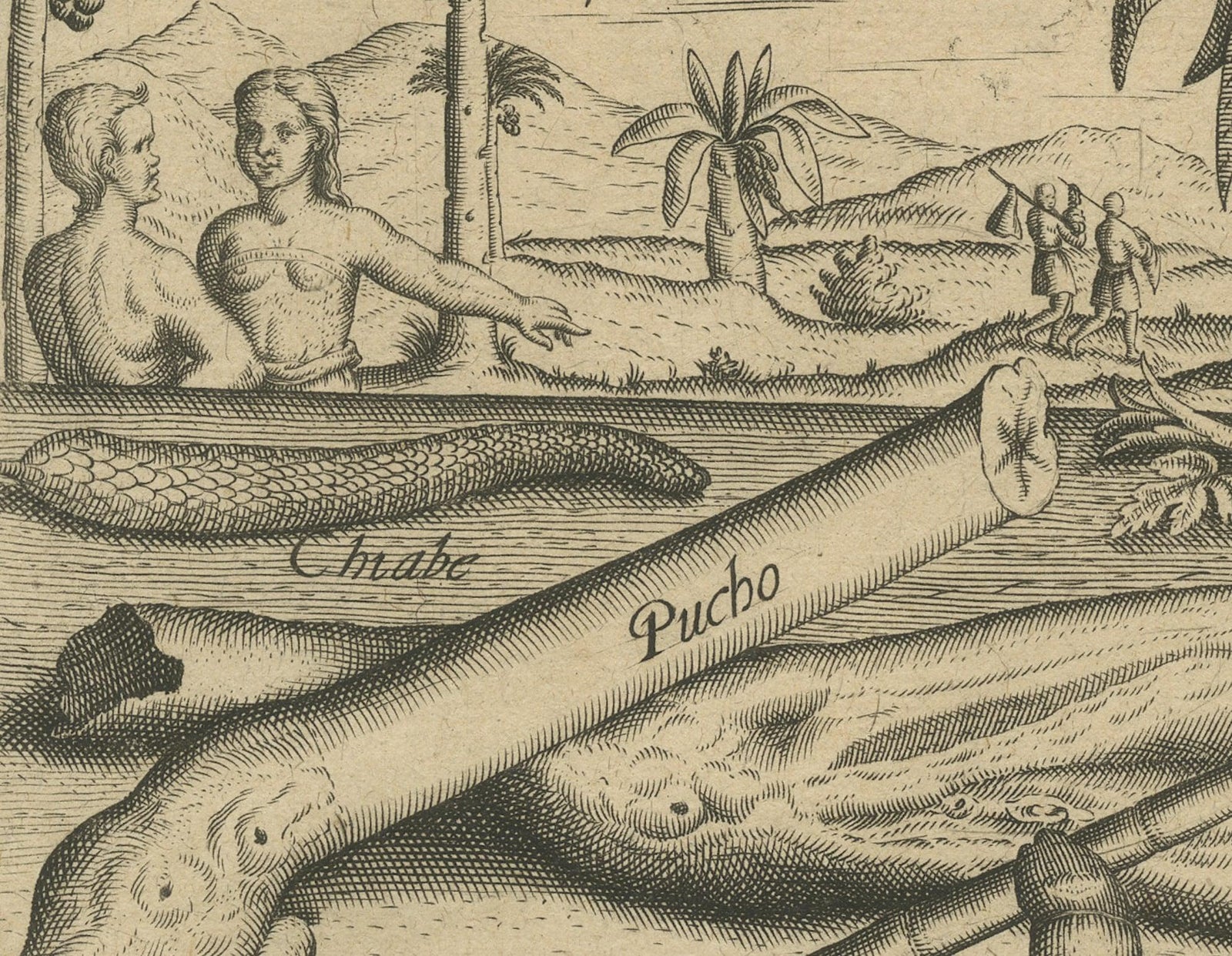
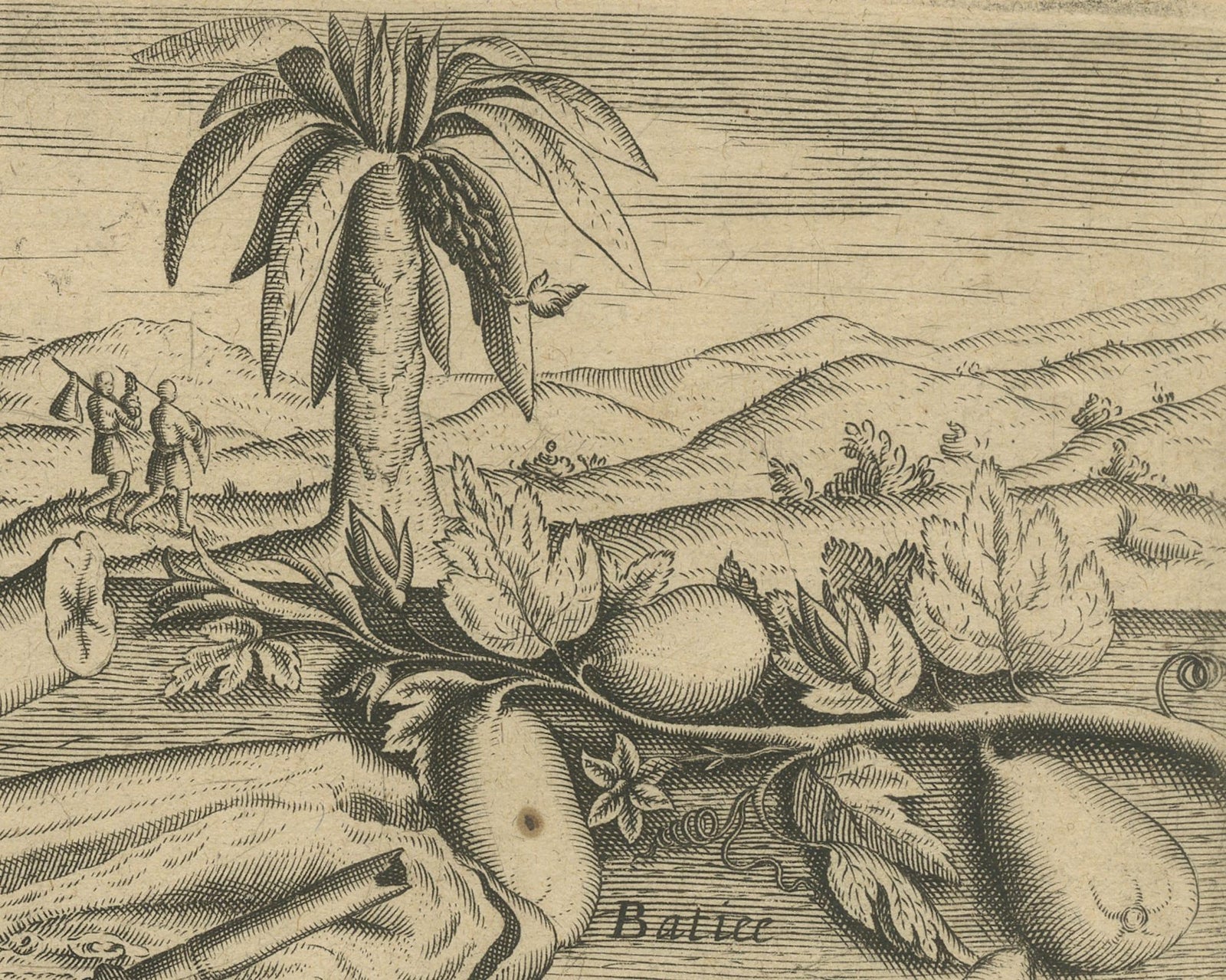
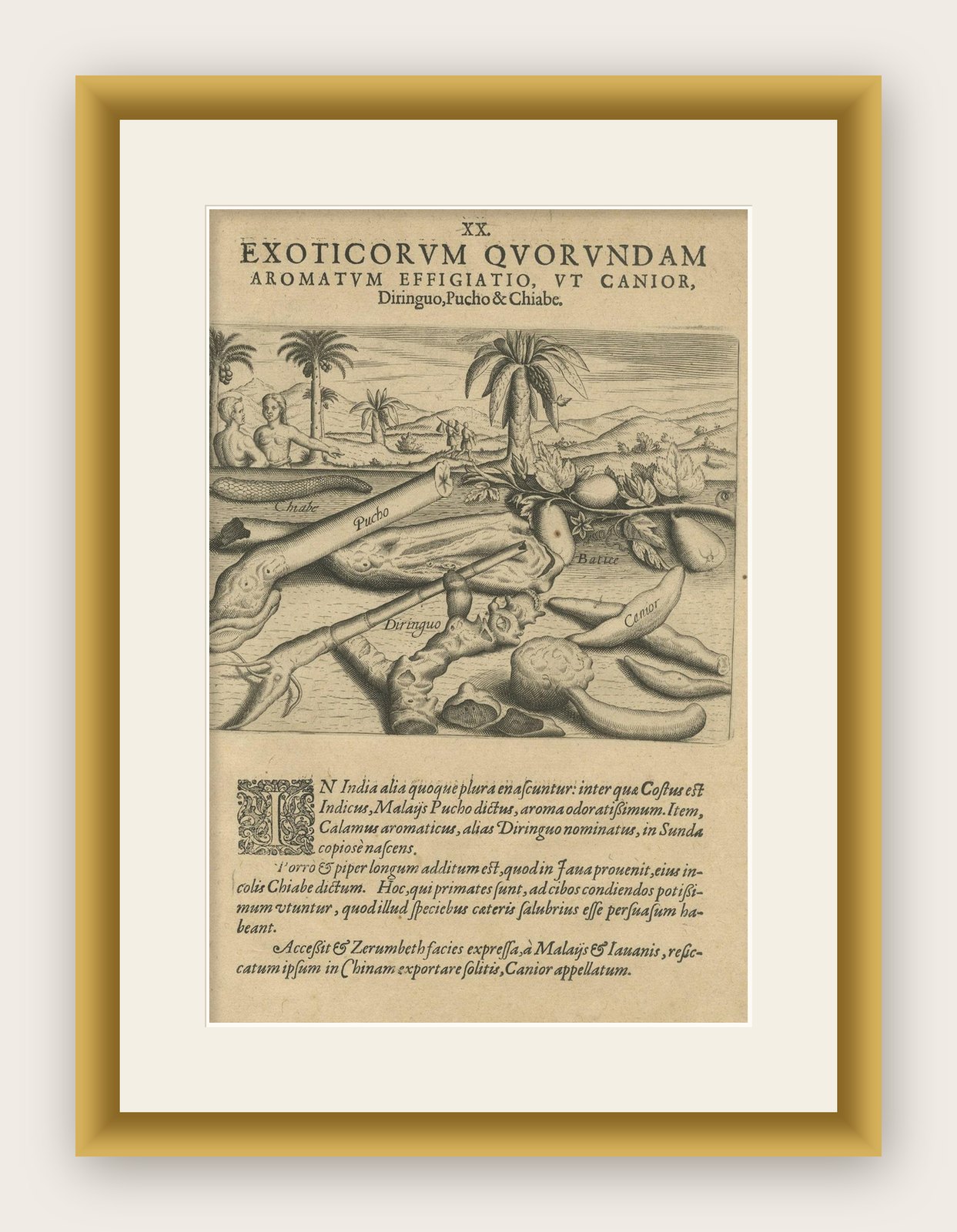
Description: This intricate 1601 engraving from Theodore de Bry’s collection showcases a variety of aromatic plants and roots highly valued for their fragrant properties and integral roles in perfumery and spicing. Featured prominently are specimens such as the costus and the long pepper, known as Puchō in Malay, alongside the aromatic calamus, referred to as Diringuo. These botanical wonders are illustrated amidst a tropical setting, highlighting their exotic origins and the allure they held for European traders and botanists.
The image captures not just the plant life but also the sensory experience these aromatics provided. De Bry’s work was crucial in documenting the botanical wealth of the East Indies, offering a glimpse into the biodiversity that sparked the age of exploration and trade.
Translation of the Latin text:
"In India, there are also many things that are found, among which the costus and Indian calamus, called Puchō by the Malays, are fragrant. Likewise, the aromatic calamus, otherwise called Diringuo, is plentifully produced in Sunda. The other is long pepper, which grows in Java, in the color of Chiabē called. These, which are the best, are added to boxes for seasoning after cinnamon, which in the rest of the spices are less valuable may be preferred. And the figure of Zerumbet is expressed, from the Malays and Javanese, a cat's whisker, which is exported to China, is called Canior."
The engraving is a page from Part IV of de Bry's "Petits Voyages," which narrates significant expeditions to the East Indies, including those led by Jan Juygen van Linschoten and Cornelis de Houtman between 1595-97, as well as the journey by Jacob van Neck and Wybrandt van Warwijck in 1598-99. These works were not merely artistic endeavors but also ethnographic records, showcasing indigenous peoples, fauna, flora, and the diverse riches of lands like India, Madagascar, and the East Indies.
Though Theodore de Bry began this ambitious project, it was continued posthumously by his family and later completed by his son-in-law, Matthaus Merian, in 1644. This particular engraving, rich in detail and drama, offers a window into the perilous and wondrous experiences of early explorers, and the ways in which these moments were captured and communicated to a European audience hungry for knowledge of the wider world.
Explore