Close-ups
Framed and on the wall
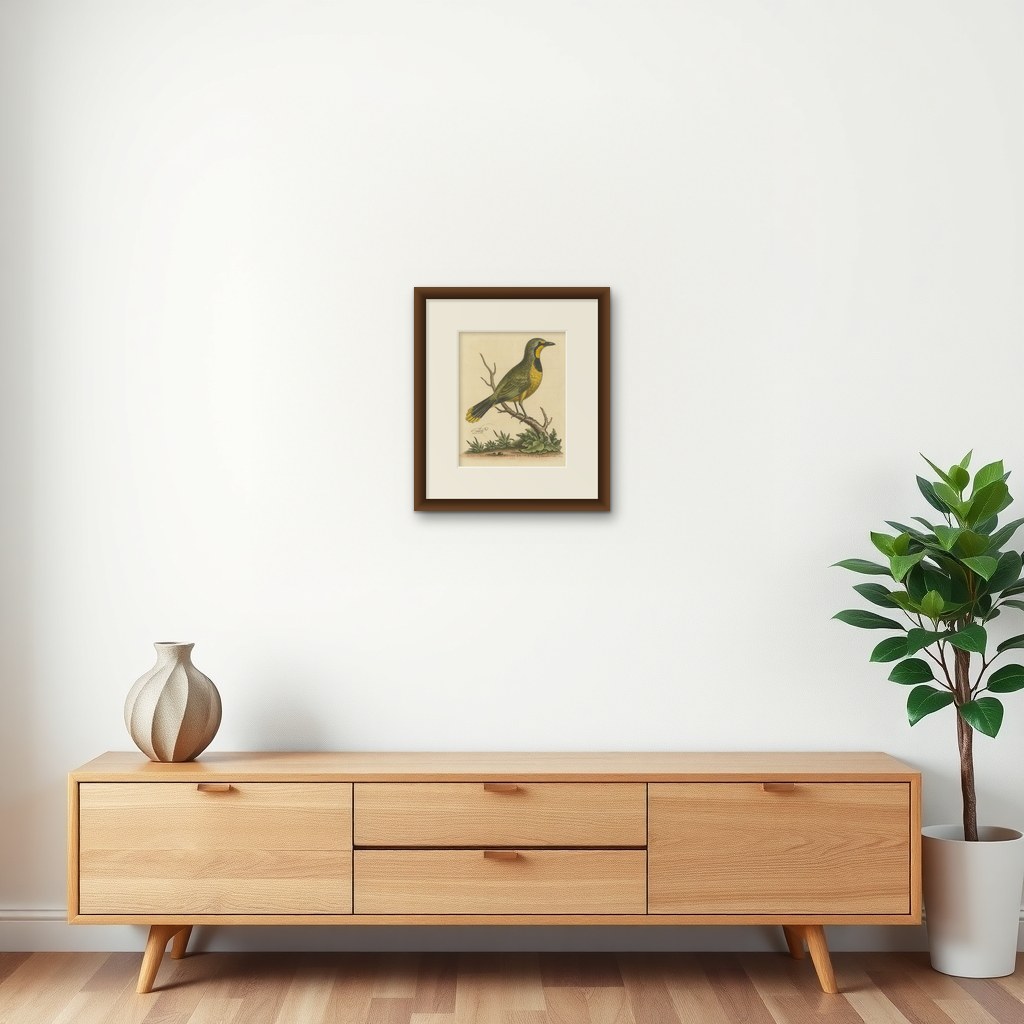

Frame and rooms are illustrations of how the print could look, drawn to its real size; it is sold unframed unless the description says otherwise.
Flora and Fauna
Antique Bird Print of a Green Pie from the East Indies
£285
$380 · €340
Original print, not a reproduction
Ships worldwide from the Netherlands, insured and tracked. 14-day returns.
- Date
- Not stated
- Sheet size
- 11.3 × 8.8 in (28.6 × 22.3 cm)
- Condition
- Good. General age-related toning. Minor wear and soiling. Blank verso. Please study image carefully.
- Collection
- Flora and Fauna
- Stock no.
- f_36154822
What the condition grades mean
- Excellent
- Bright and clean, with no faults worth mentioning.
- Very good
- Only light signs of age, such as faint toning.
- Good
- Normal signs of age for a sheet of this period: toning, some foxing, small marks or neat old repairs.
- Fair
- Clear faults such as staining, tears or repairs, priced to match.
Every fault we see is written in the condition note, and the whole sheet is shown uncropped in the photos.
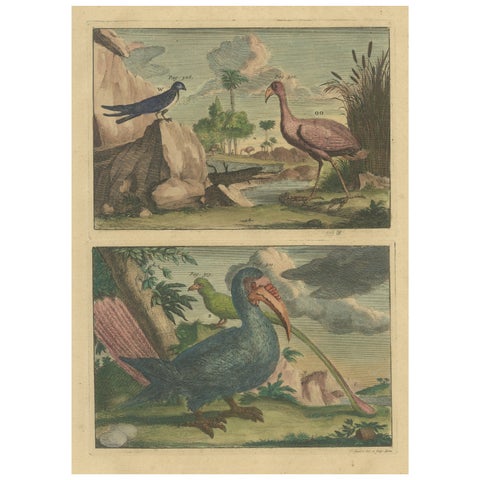
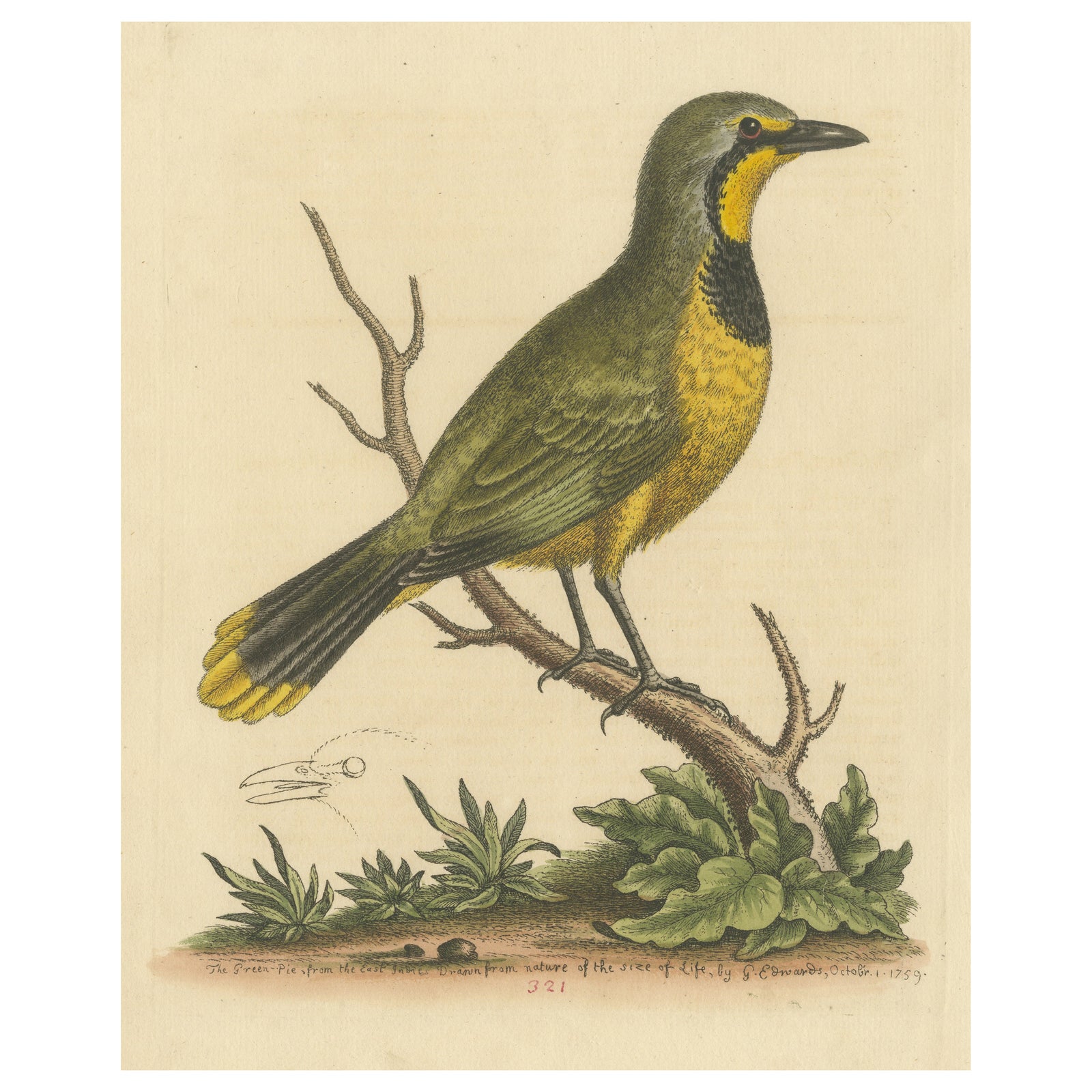
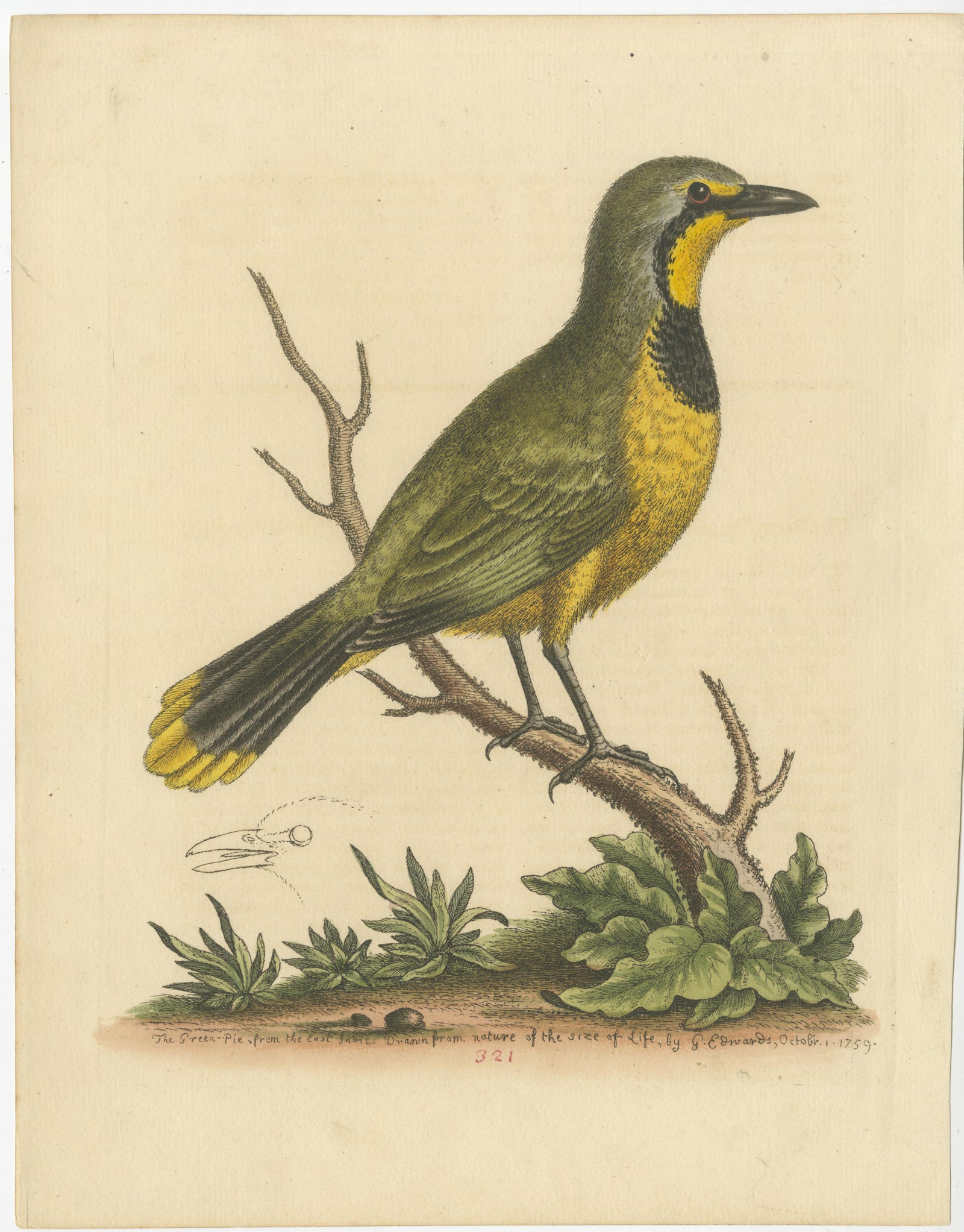
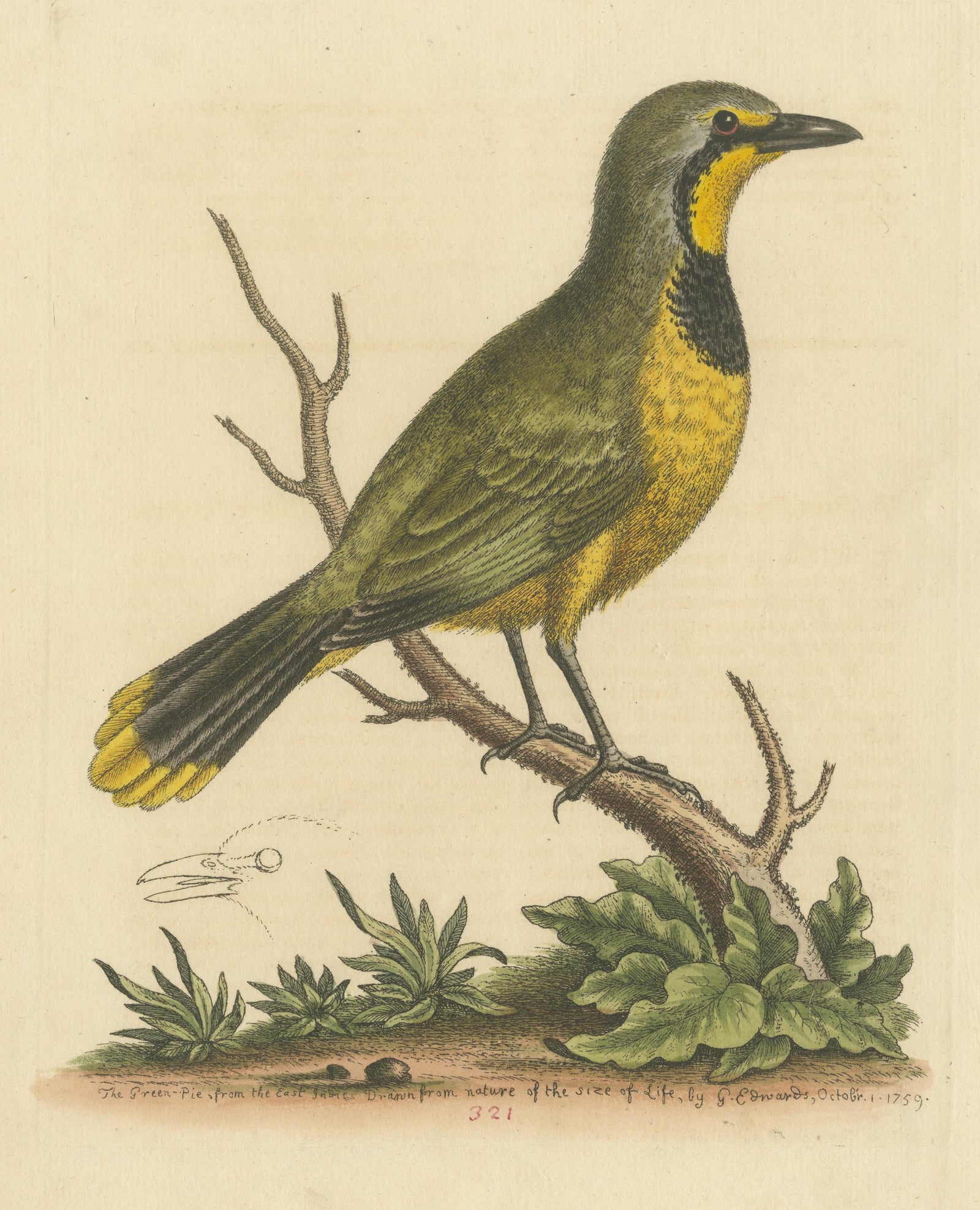
An original delicate and captivating antique print, labeled 'The Green-Pie from the East Indies.' It is a representation of a bird, specifically a Green Magpie, with origins in the East Indies region, which includes parts of modern-day Southeast Asia.
The print showcases the bird perched gracefully on a branch, with its plumage rendered in fine detail. The bird's feathers display a blend of yellow and olive-green, with a distinct yellow neck patch and a contrasting dark gray to blackish crown and mask, creating a striking visual impact. The Green Magpie's vibrant coloration and detailed portrayal would likely attract the attention of ornithology enthusiasts and antique art collectors.
Produced around the year 1760, this piece of art was published by George Edwards, an English naturalist and ornithologist renowned for his detailed and accurate illustrations of birds. Edwards is often referred to as the "father of British ornithology," and his works were essential in the development of ornithological art in Europe.
This print, with its combination of scientific accuracy and aesthetic charm, would have significant appeal to collectors of ornithological prints, those with a specific interest in avian studies, as well as admirers of 18th-century natural history illustration. The inclusion of a scientific illustration of the bird's skull at the bottom of the print adds to its educational value, making it not only a piece of art but also a historical scientific document.
Prints such as this would also attract those with an appreciation for the history of colonial exploration and natural history, as the East Indies were a significant region of interest during the 18th century for European explorers and naturalists. Collectors may also value the antique nature of the paper, the print’s provenance, and the patina of age that often accompanies such prints, adding to their rarity and desirability.
Explore