Close-ups
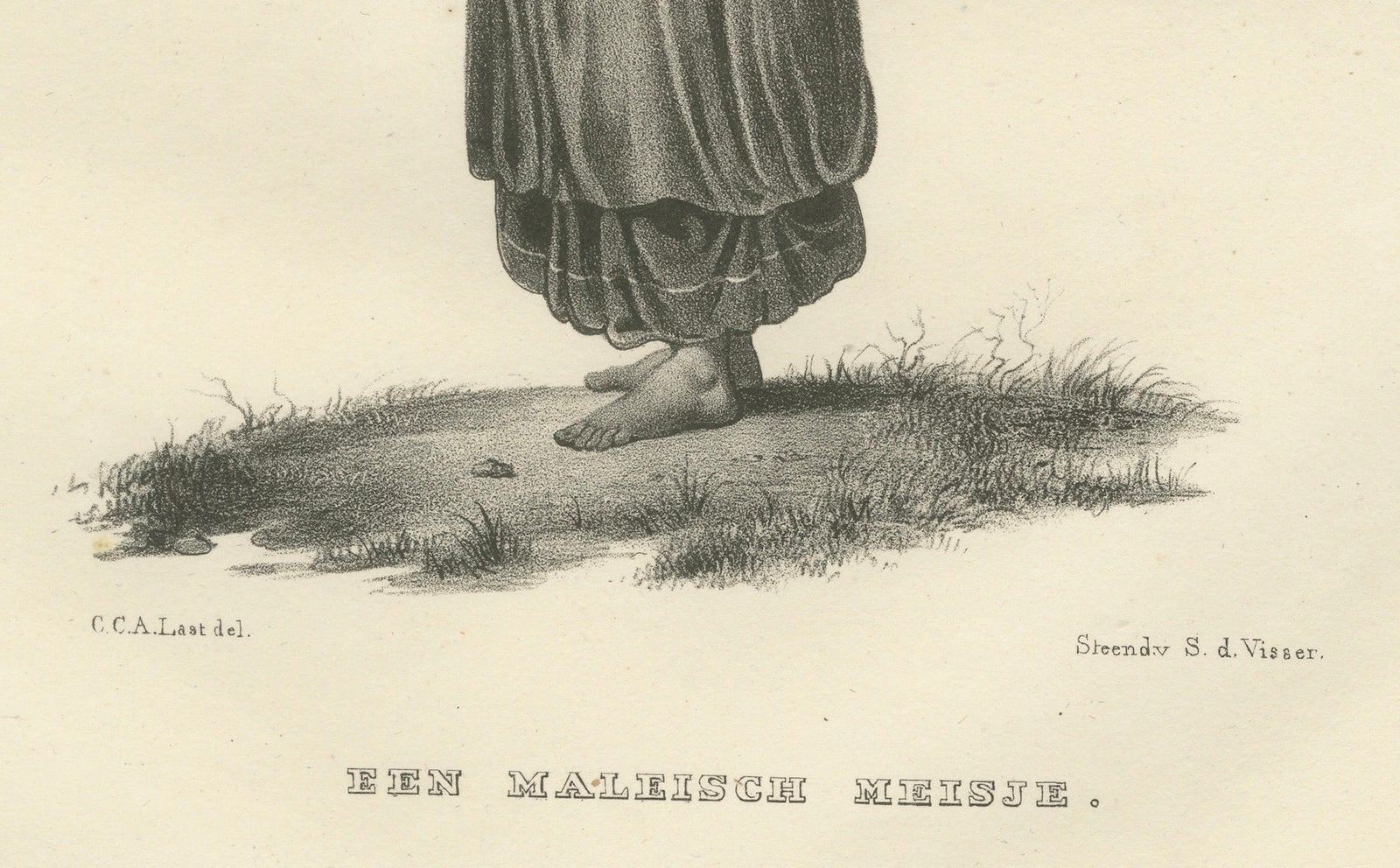
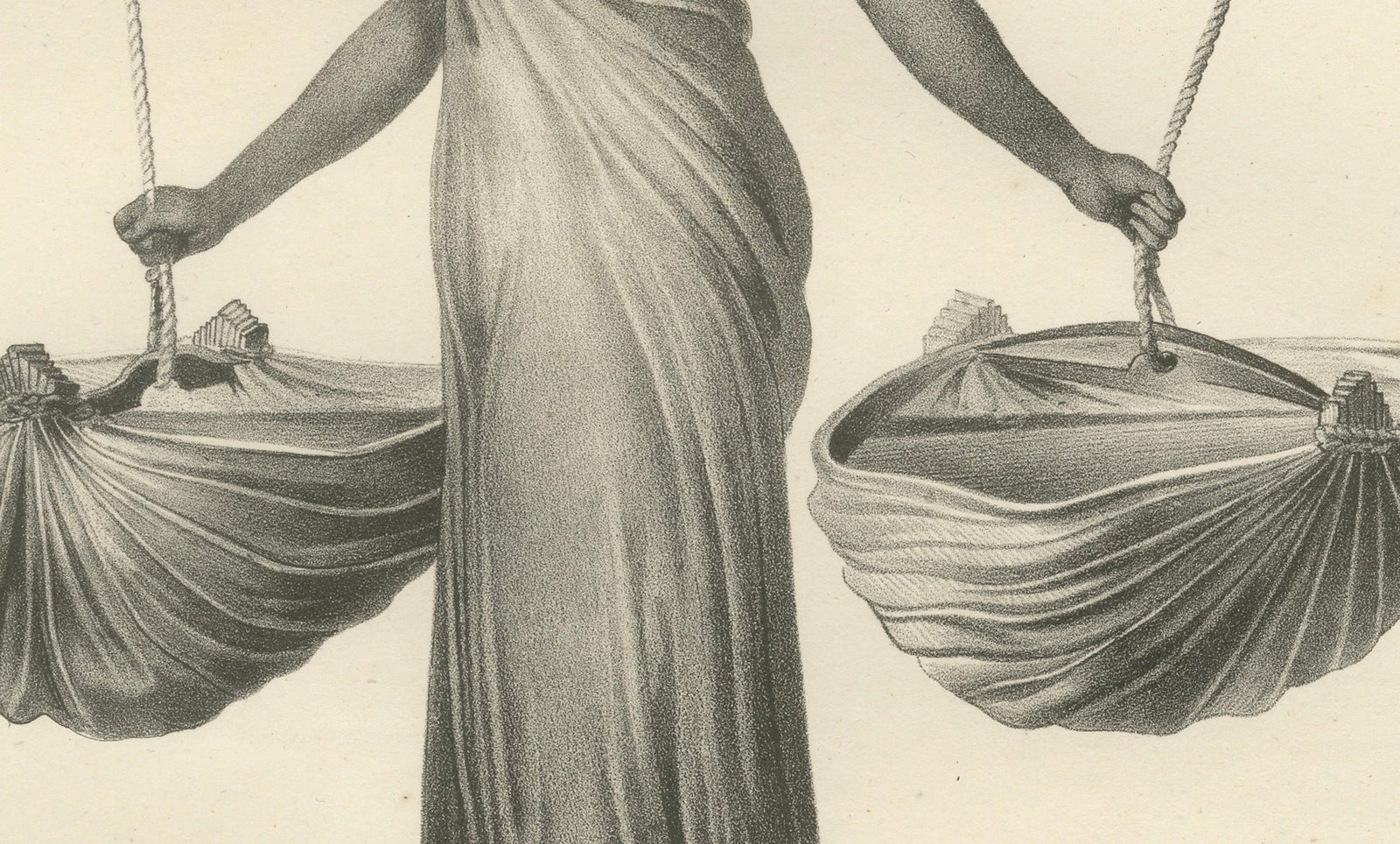
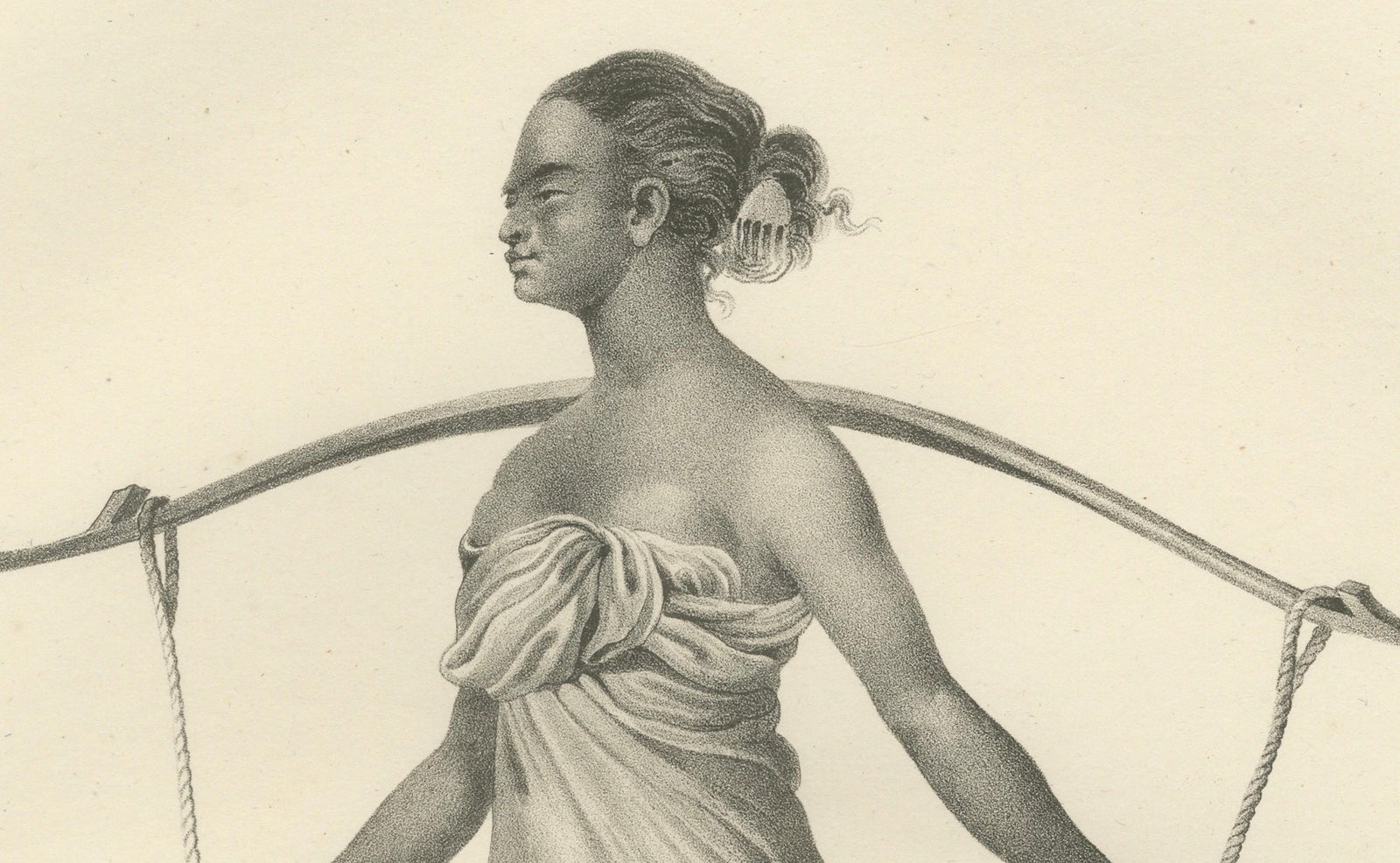
Framed and on the wall

Frame and rooms are illustrations of how the print could look, drawn to its real size; it is sold unframed unless the description says otherwise.
Peoples and Costume
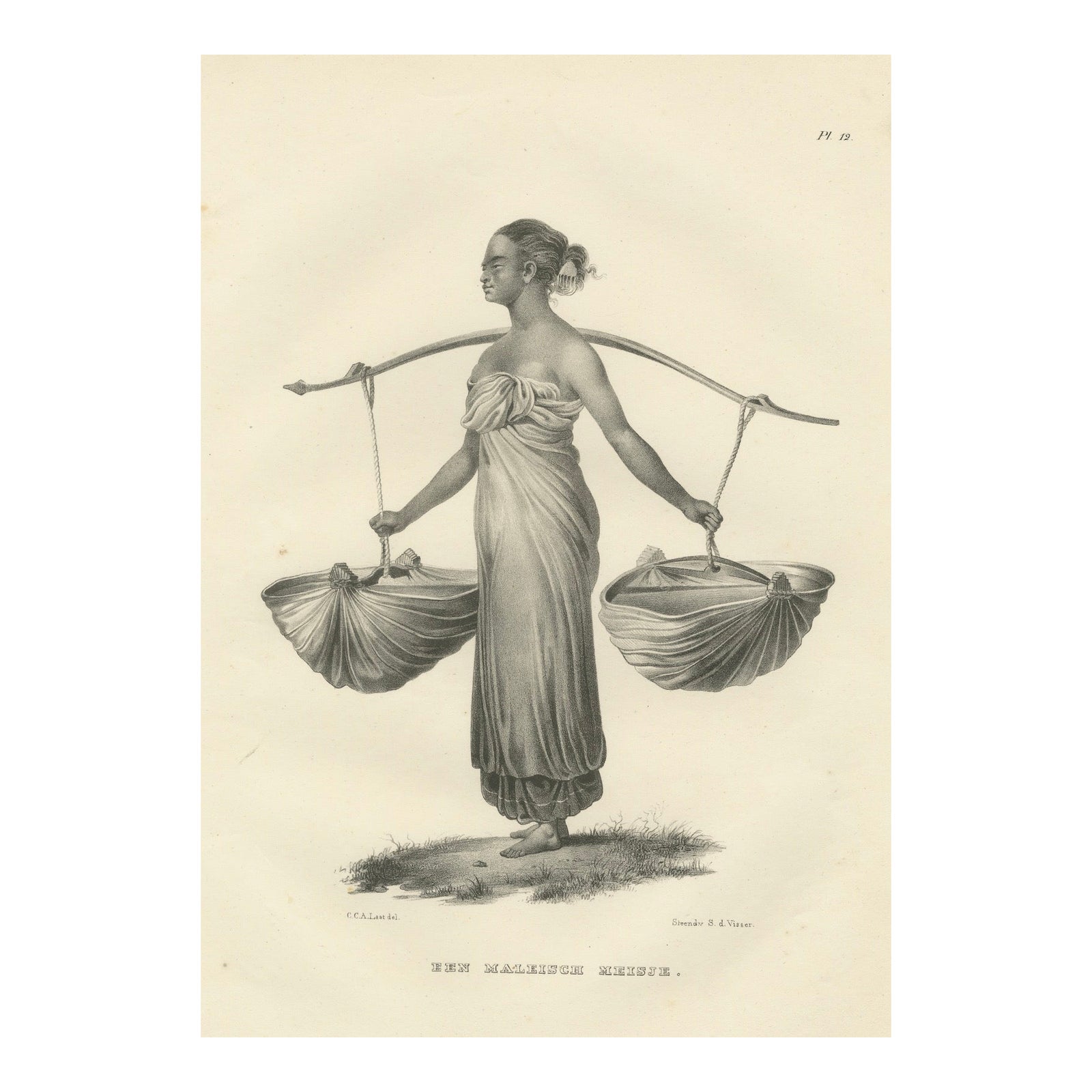
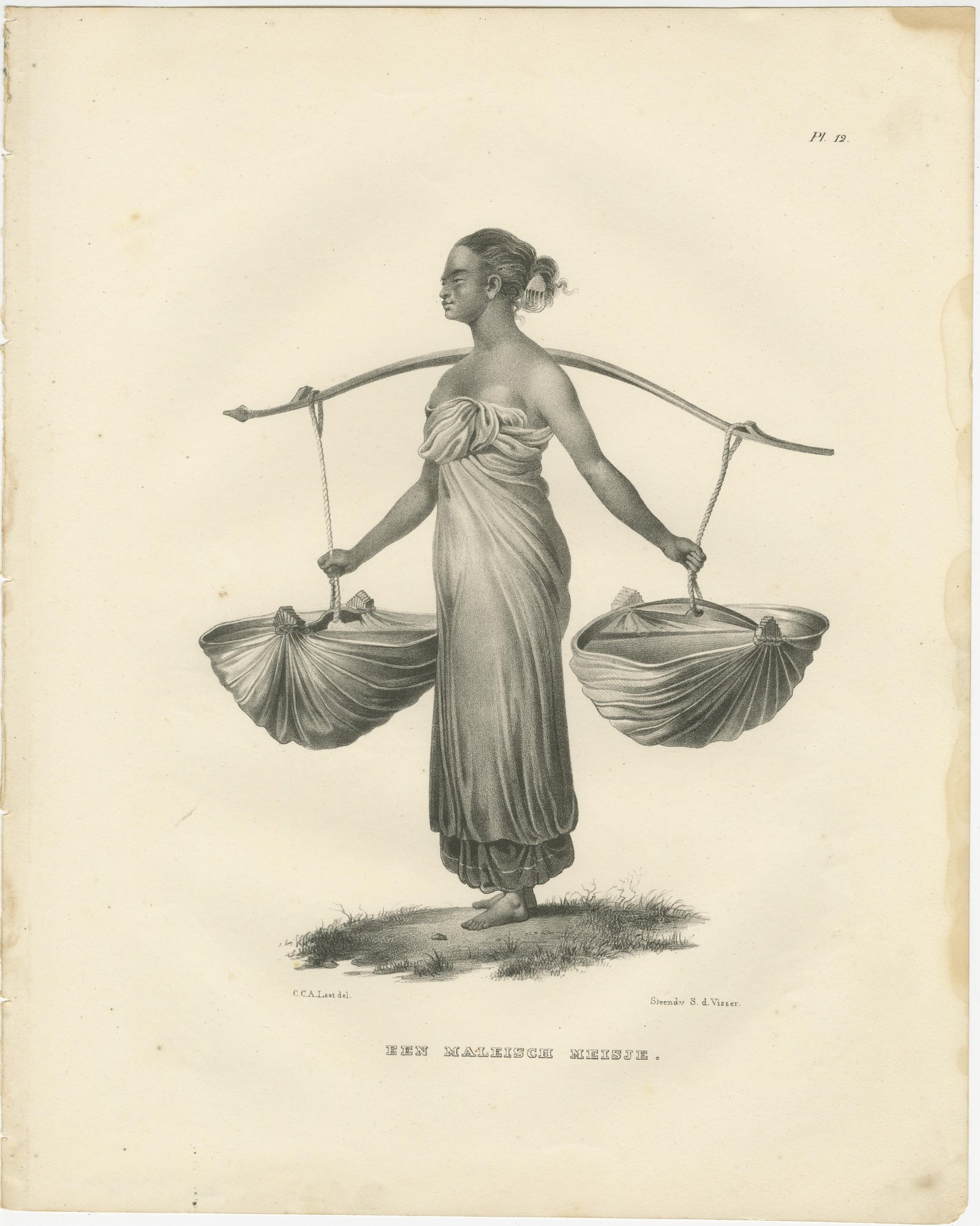
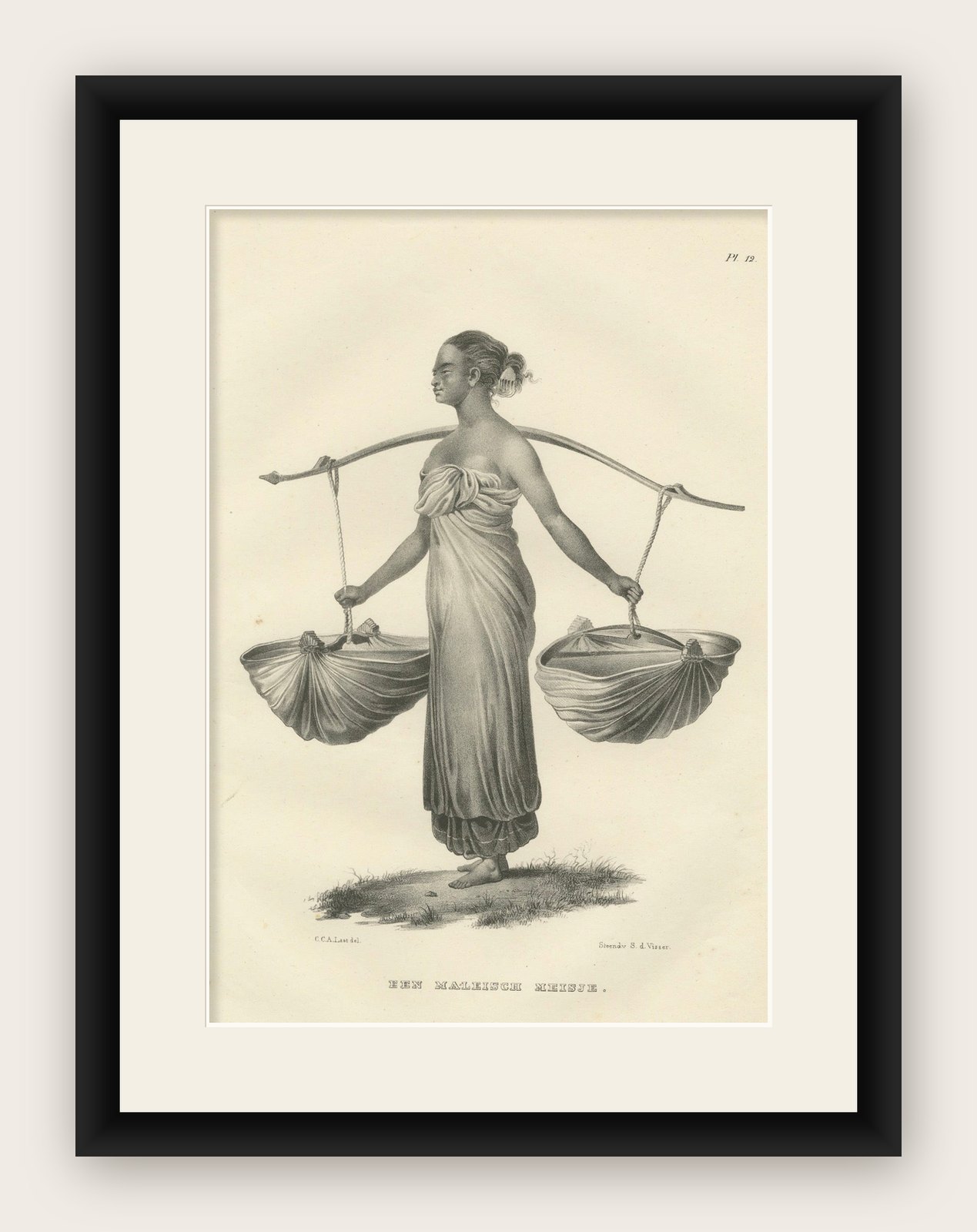
A Malaysian Girl Carrying Goods by Karl Joseph Brodtmann, 1836
$490
€440 · £370
Original print, not a reproduction
Ships worldwide from the Netherlands, insured and tracked. 14-day returns.
- Date
- 1836
- Sheet size
- 12.8 × 10.2 in (32.5 × 26 cm)
- Condition
- Good, given age. General age-related toning and/or occasional minor defects from handling. Some stains along the right border, not affecting the image. Please study scan carefully.
- Collection
- Peoples and Costume
- Period
- Raffles to the Cultivation System, 1800 to 1849
- Stock no.
- f_41515442
What the condition grades mean
- Excellent
- Bright and clean, with no faults worth mentioning.
- Very good
- Only light signs of age, such as faint toning.
- Good
- Normal signs of age for a sheet of this period: toning, some foxing, small marks or neat old repairs.
- Fair
- Clear faults such as staining, tears or repairs, priced to match.
Every fault we see is written in the condition note, and the whole sheet is shown uncropped in the photos.
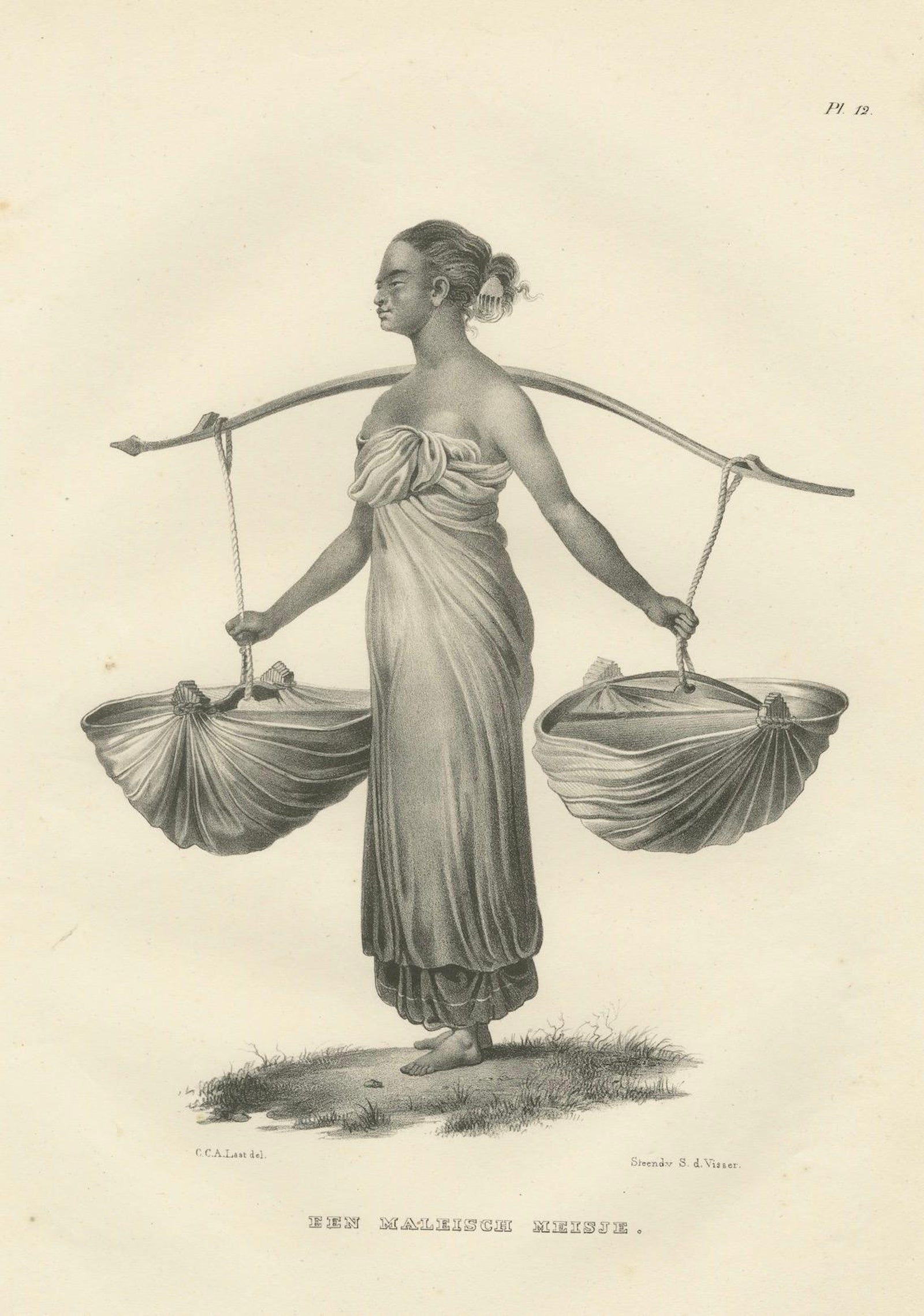
This lithograph, attributed to Karl Joseph Brodtmann, portrays a Malaysian girl engaged in an everyday activity, likely carrying goods using a traditional shoulder pole (yoke). The print reflects Brodtmann’s interest in ethnography, showing individuals from various cultures performing daily tasks or in traditional dress. This lithograph would have been part of his 19th-century efforts to visually document the cultural diversity of different regions.
Description:
The lithograph depicts a Malaysian girl carrying two baskets on a bamboo or wooden yoke balanced across her shoulders, a method common in many parts of Southeast Asia for transporting goods. The girl is shown in a graceful stance, with the yoke positioned behind her neck, holding each basket by its rope handles.
- Attire: The girl wears a simple, traditional sarong, wrapped around her body and tied above the chest, a typical garment for women in Southeast Asia. Her clothing and the way she carries the baskets indicate that she is likely involved in daily labor, possibly transporting goods to or from a market or home.
- Posture: Her posture is elegant yet practical, standing with a sense of balance that suggests she is used to carrying heavy loads. The positioning of her feet, one slightly raised as though in mid-step, adds a sense of motion to the scene.
- Baskets: The baskets themselves are tied in a way that shows they are likely filled with goods, but the fabric draped around them suggests an element of care in how the load is being transported, perhaps a way of securing the contents.
The composition emphasizes both the physical work involved and the gracefulness of the figure, combining ethnographic observation with artistic appreciation for daily life activities. The image is both informative and aesthetically pleasing, typical of Brodtmann’s ethnographic work.
Maker:
Karl Joseph Brodtmann (1787 to 1862) was a Swiss lithographer known for his detailed and realistic portrayals of both natural history subjects and the people of the world’s various regions. His works were often included in scientific and ethnographic publications, designed to educate European audiences about different cultures and their practices. His ethnographic studies of people from Africa, Asia, the Americas, and other regions were popular during the 19th century.
Technique and Style:
This work, like others by Brodtmann, was created using lithography, a process that allowed him to reproduce fine details with accuracy. His style is characterized by realism, focusing on an accurate representation of his subjects. The clean lines, careful shading, and balanced composition are all typical of his artistic method.
The subtle shading in the folds of the sarong and the baskets helps create a sense of texture and depth, while the figure’s calm expression and poised stance suggest a careful balance between labor and dignity. Brodtmann’s use of neutral backgrounds in his lithographs also serves to highlight the individual figure and their cultural practices without distraction.
Cultural Context:
The Malaysian girl shown in this lithograph reflects the importance of daily labor in Southeast Asian cultures during the 19th century, where women often played central roles in the transportation of goods, whether from farms, markets, or homes. The use of a shoulder pole or yoke for carrying heavy loads was a common practice in the region and is still seen in parts of Southeast Asia today.
This lithograph provides a glimpse into everyday life and cultural practices, illustrating the role of women in labor and the simplicity of traditional attire. It also reflects European fascination with exotic customs during the 19th century, as well as a desire to document and understand the diverse ways of life encountered during exploration and colonization.
This portrait would have contributed to European knowledge of life in Malaysia and other parts of Southeast Asia during a time when such visual representations were highly valued for their ability to provide insights into distant and often unfamiliar cultures.