Close-ups
Framed and on the wall

Frame and rooms are illustrations of how the print could look, drawn to its real size; it is sold unframed unless the description says otherwise.
Flora and Fauna
Exotic Flora of the Indies: The Cajus and Jambos Trees Copper Engraved in 1601
£410
$550 · €490
Original print, not a reproduction
Ships worldwide from the Netherlands, insured and tracked. 14-day returns.
- Date
- 1601
- Sheet size
- 11.8 × 7.9 in (30 × 20 cm)
- Condition
- Good. The condition of the print is very good, considering its age of over 400 years. Light brownish toning and some soiling due to handling, mainly around the edges. Please study this image carefully.
- Collection
- Flora and Fauna
- Period
- The spice race, before 1700
- Stock no.
- f_37756132
What the condition grades mean
- Excellent
- Bright and clean, with no faults worth mentioning.
- Very good
- Only light signs of age, such as faint toning.
- Good
- Normal signs of age for a sheet of this period: toning, some foxing, small marks or neat old repairs.
- Fair
- Clear faults such as staining, tears or repairs, priced to match.
Every fault we see is written in the condition note, and the whole sheet is shown uncropped in the photos.
Title: "Exotic Flora of the Indies: The Cajus and Jambos Trees in De Bry's 1601 Engraving"
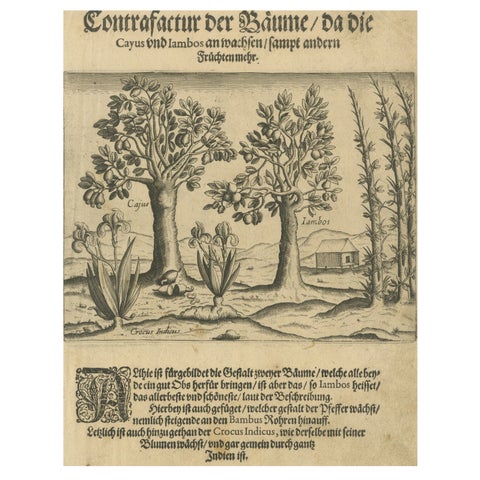
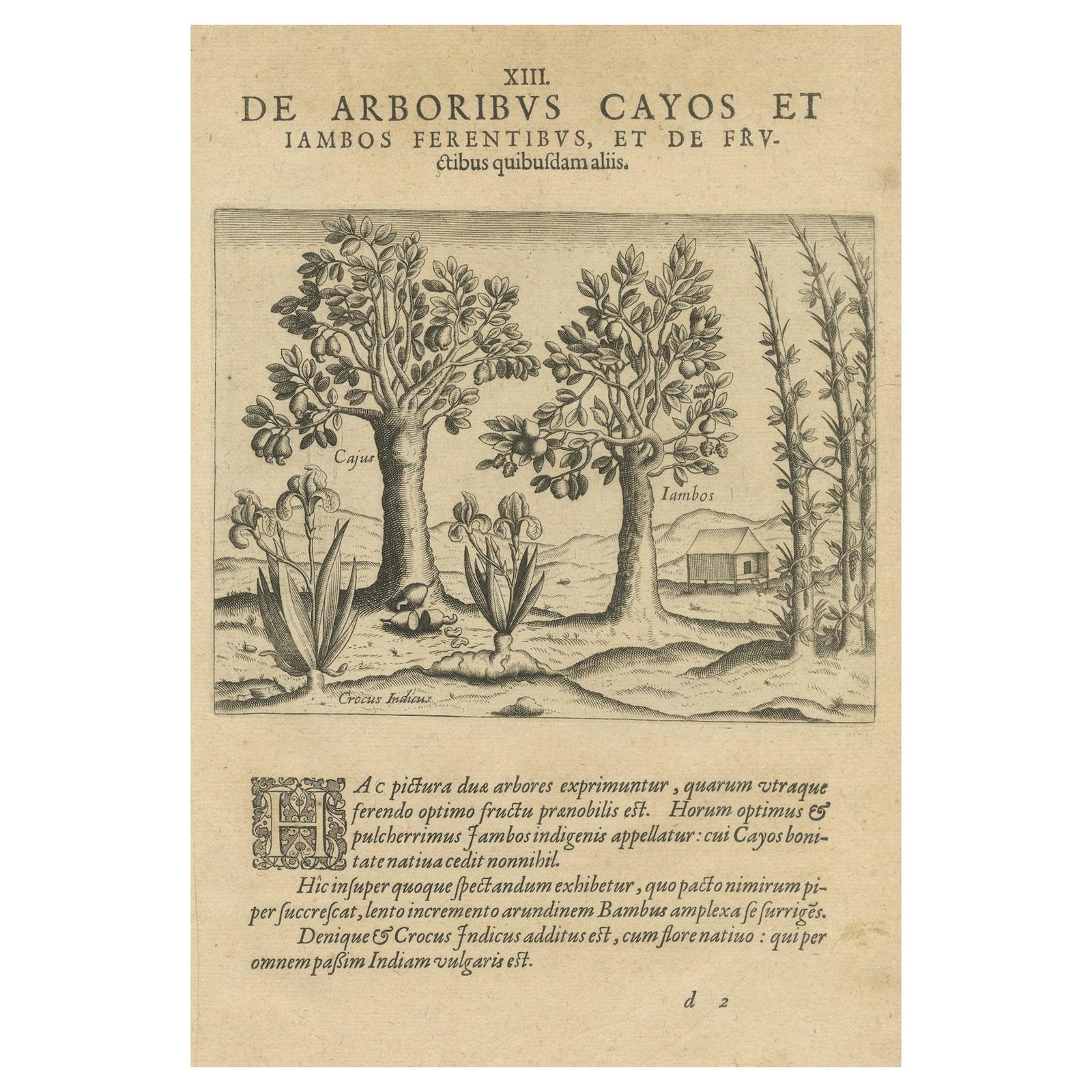
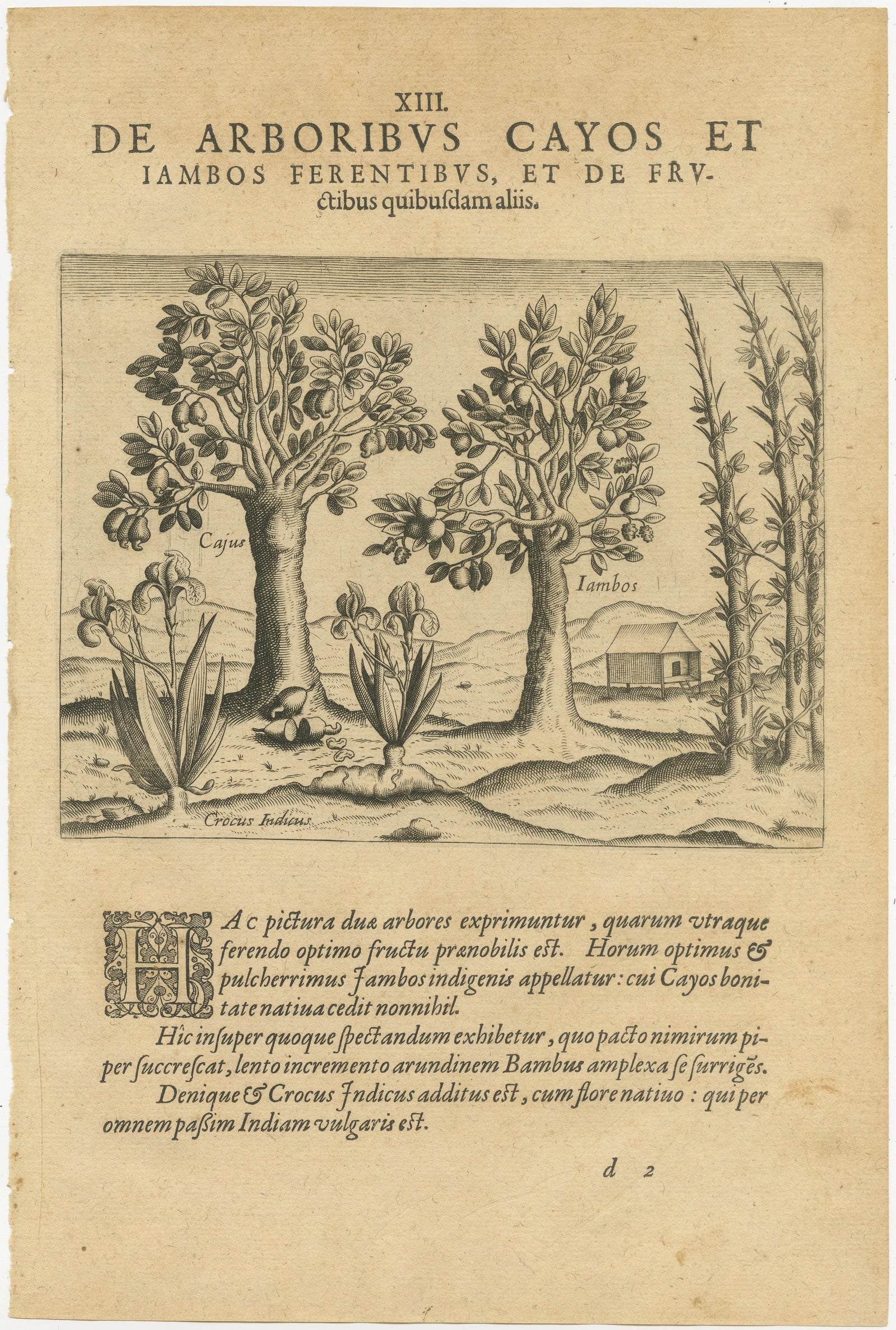
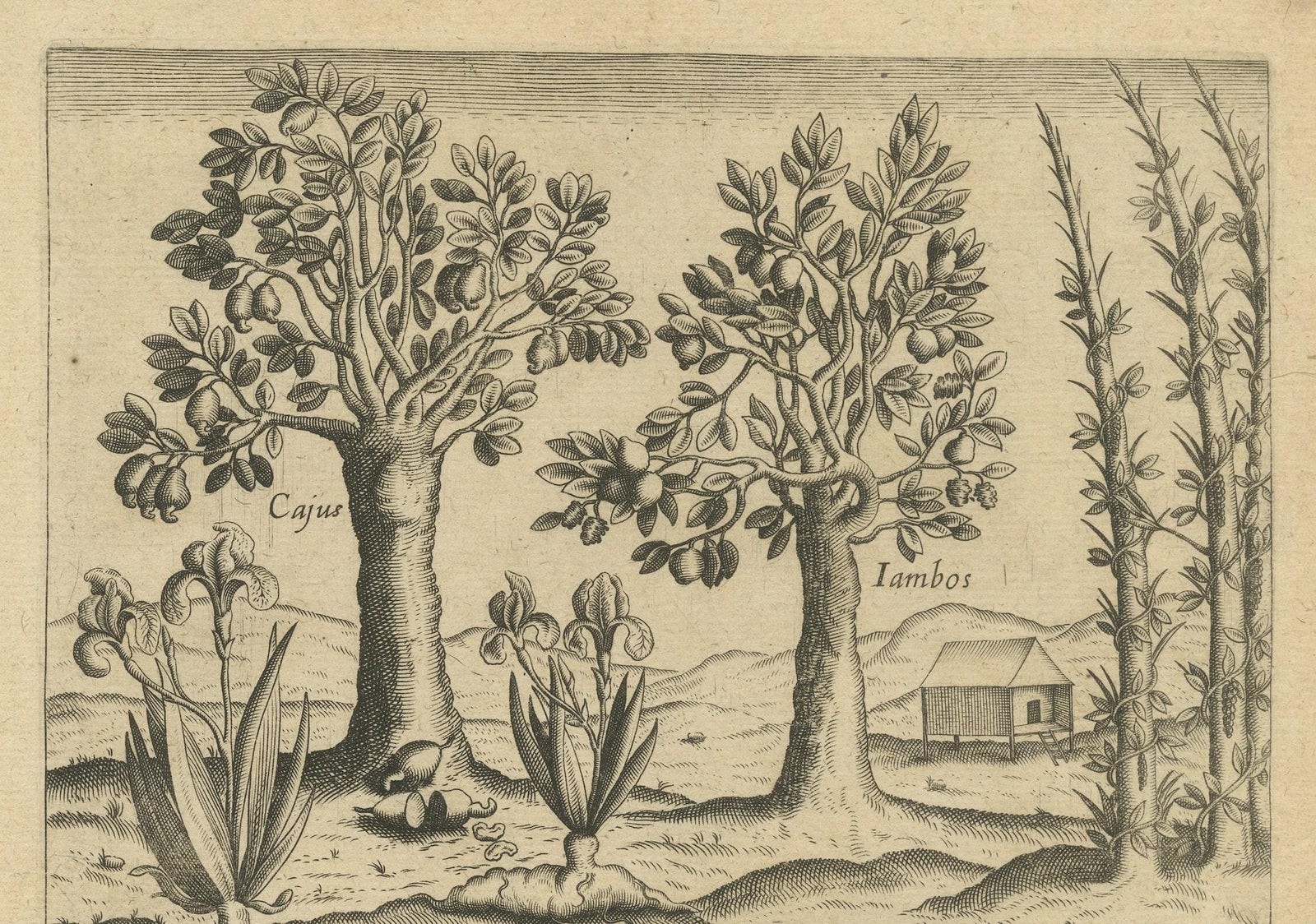
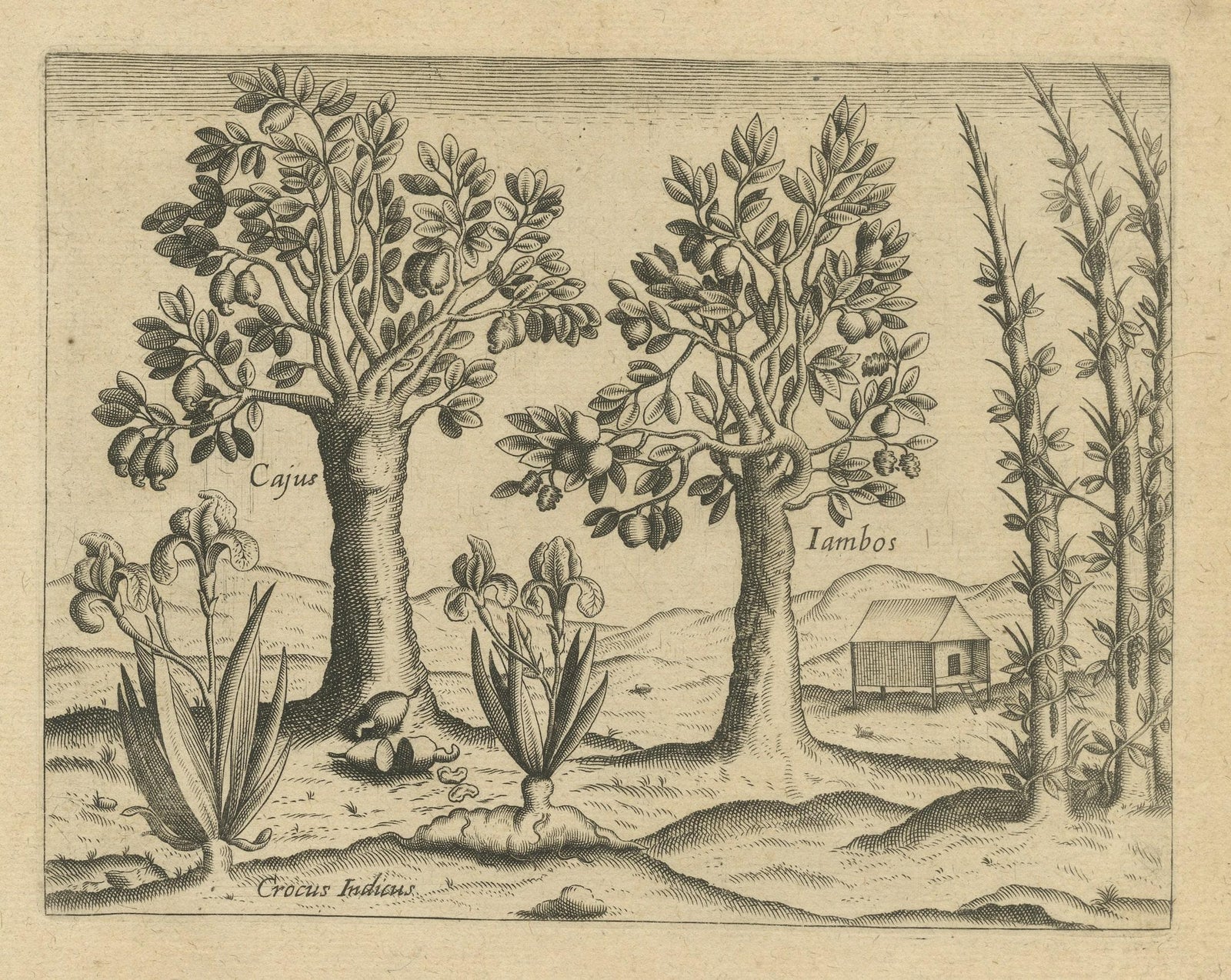
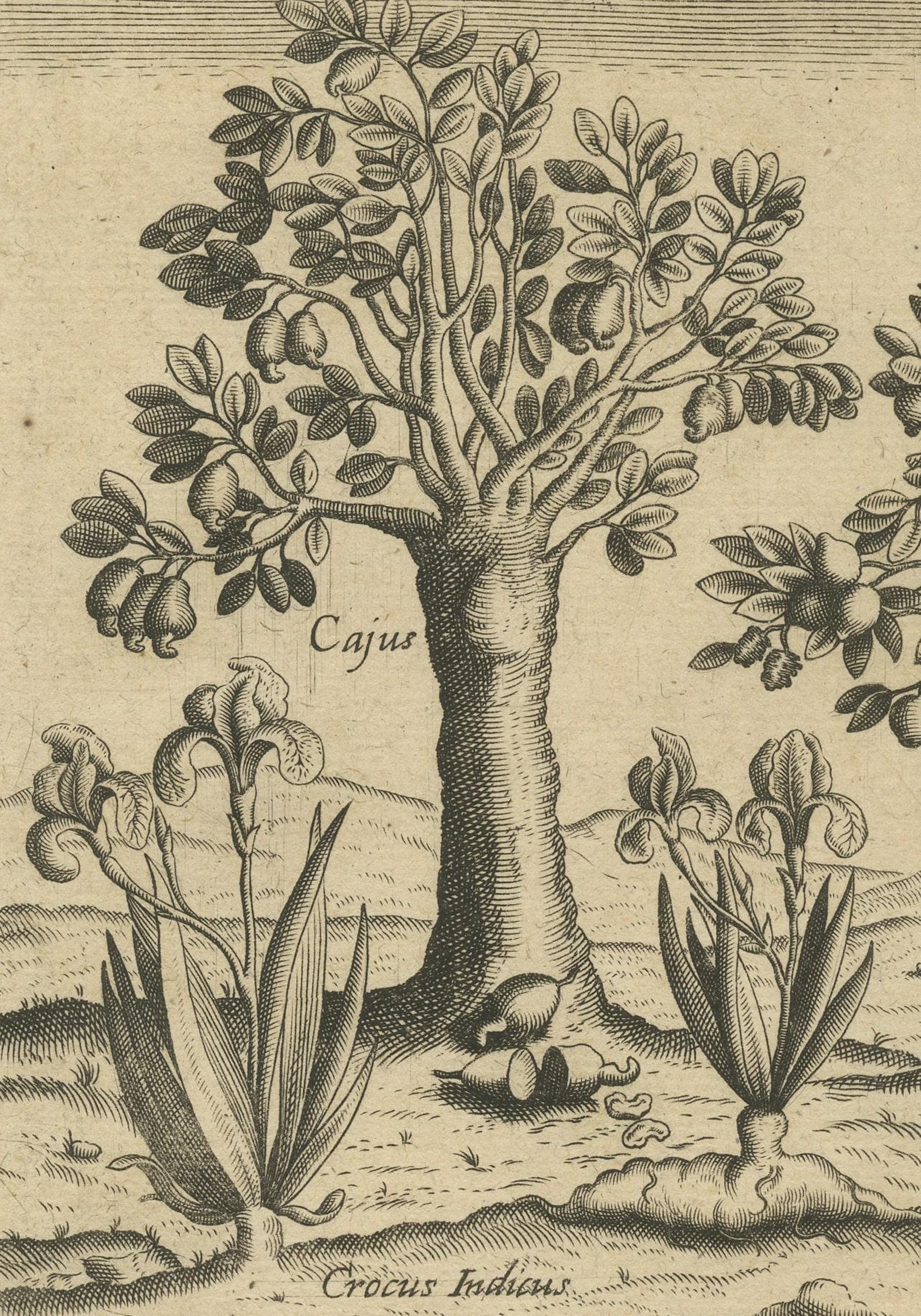
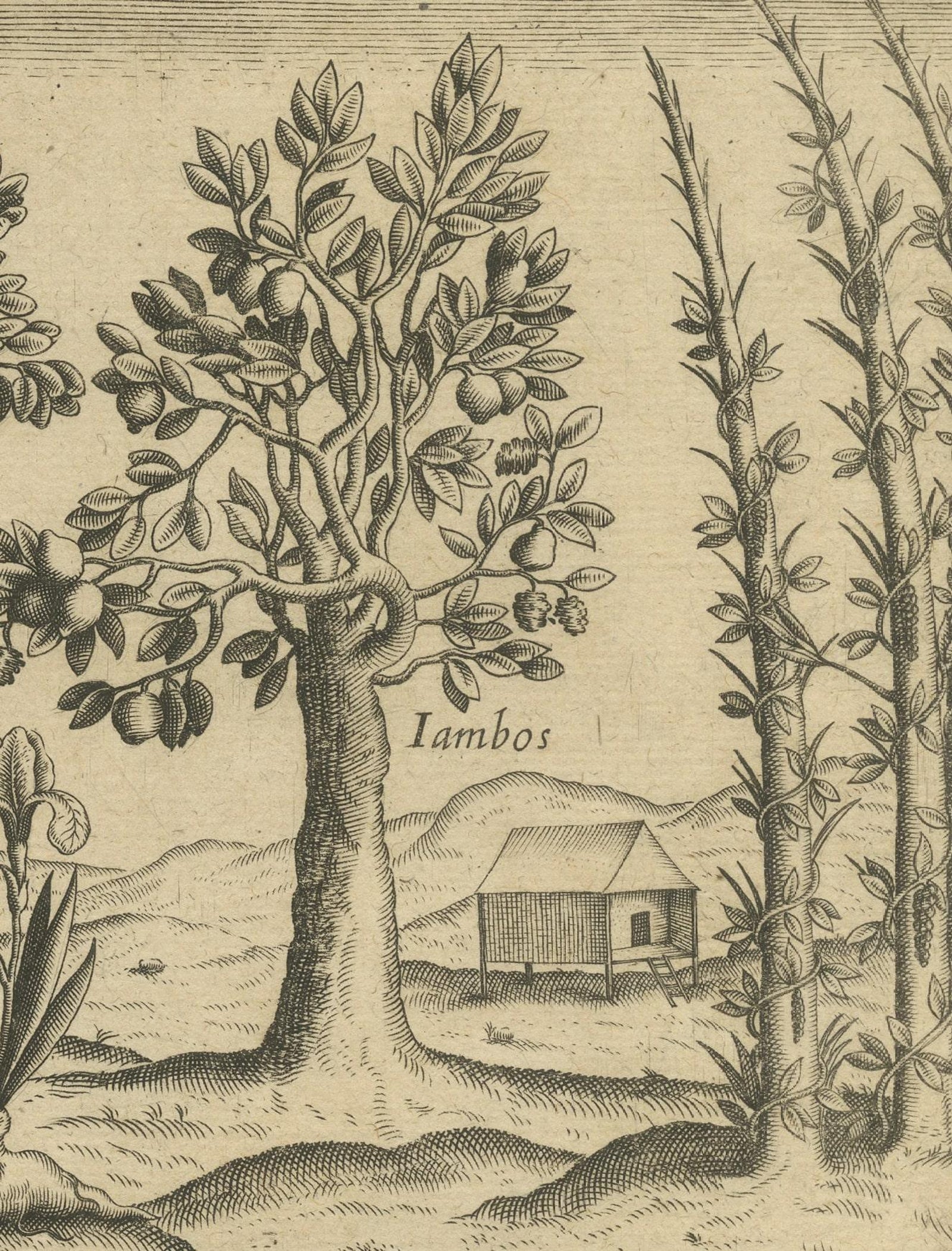
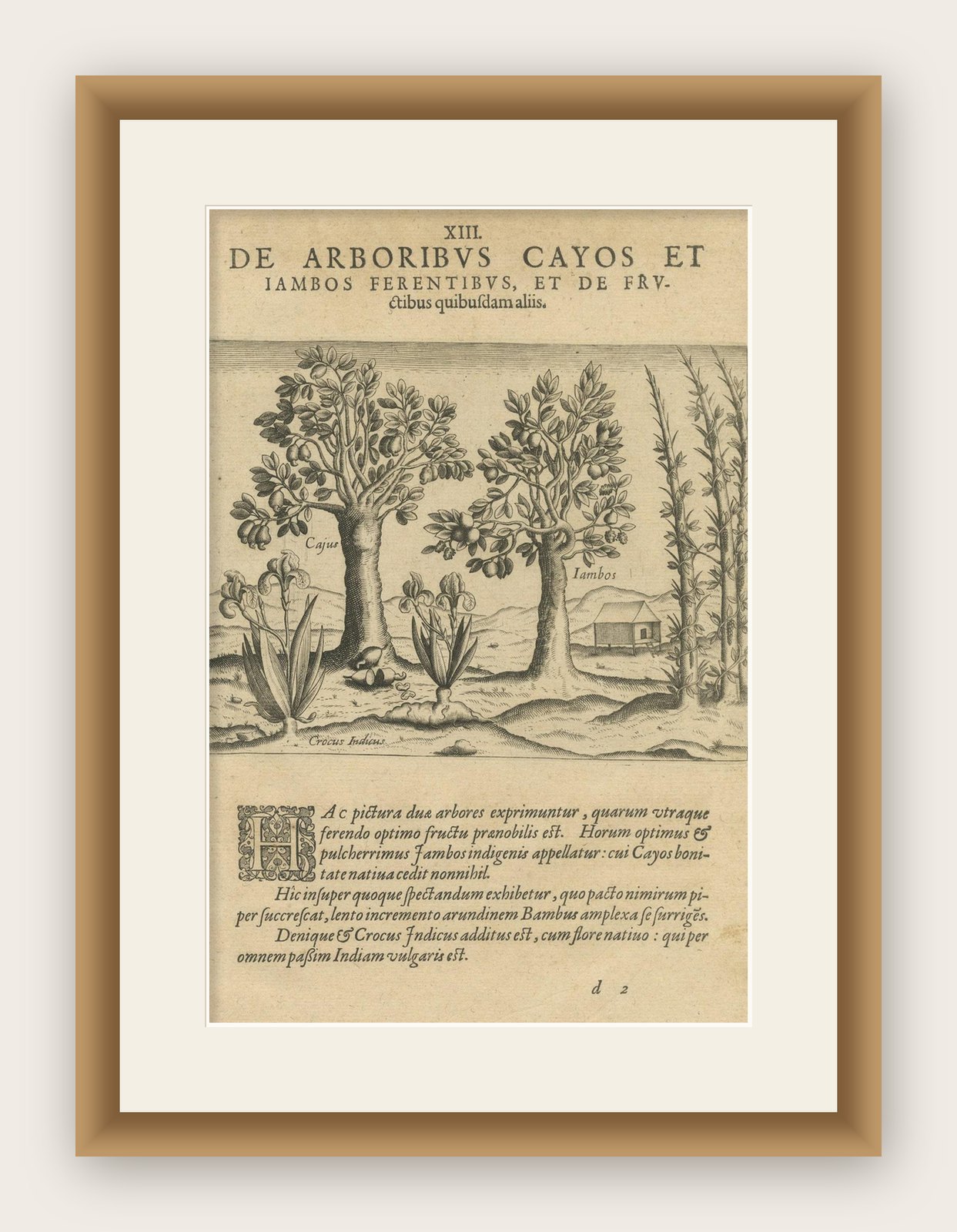
Description: This detailed engraving by Theodore de Bry, dating back to 1601, beautifully illustrates two tropical trees, the Cajus and the Jambos, both renowned for their delectable fruits in the regions of India. The Cajus tree, likely referring to what is known today as the cashew, is depicted with its distinctive fruit that dangles below the swollen pedicel, commonly called the cashew apple. The Jambos tree, with its lush, dense foliage and abundant fruiting, could be related to the rose apple, known for its fragrant, rose-scented fruit.
Included in the scene is a depiction of the Indian Crocus, adding a touch of the diverse understory vegetation of the tropical climate. The image conveys a peaceful coexistence with nature, as indicated by a modest dwelling in the background, suggesting the integration of these trees into the daily lives of the local inhabitants for both nourishment and commerce.
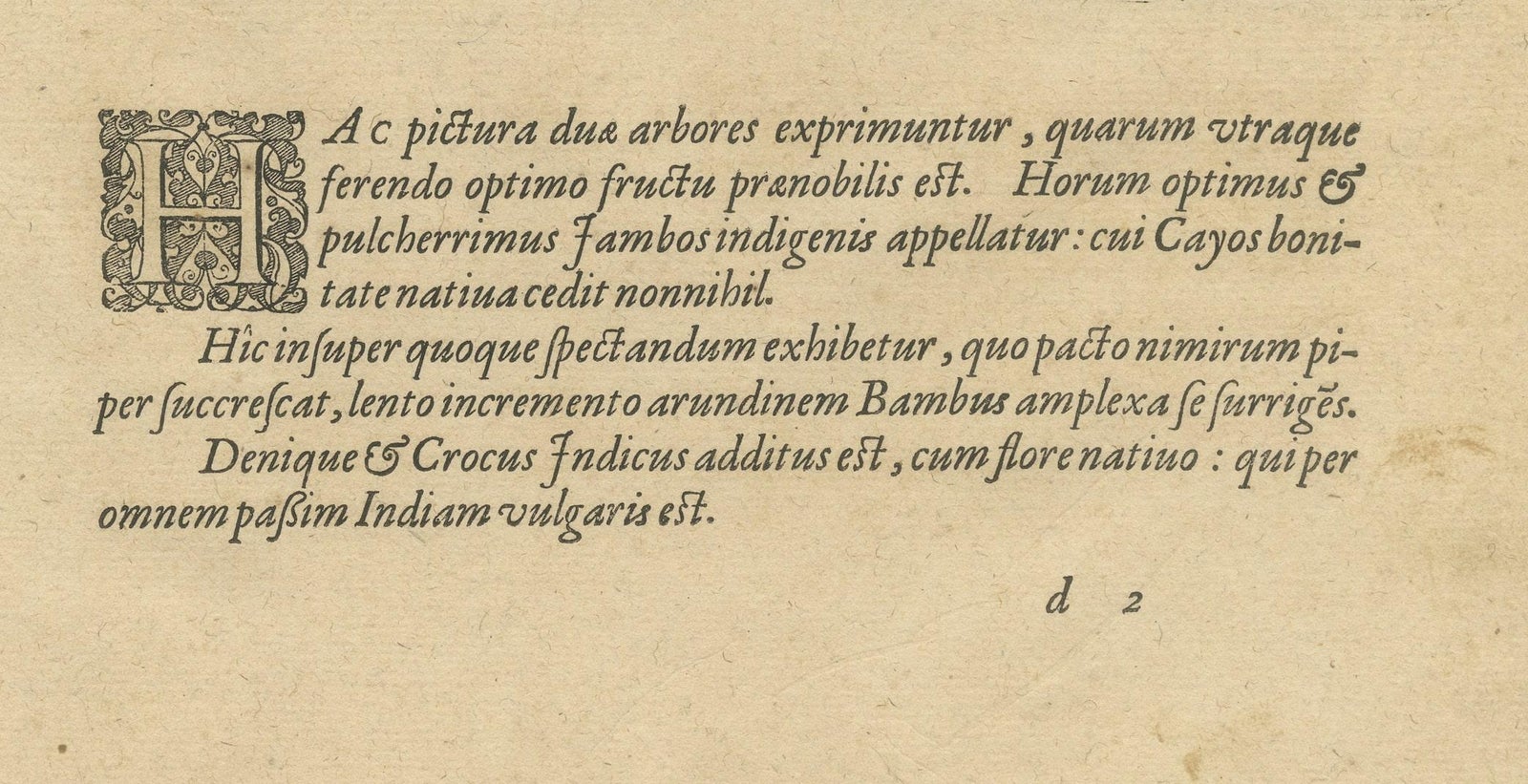
The text is in Latin, and here is the English translation:
"In this picture, two trees are shown, each of which bears the most excellent and noble fruit. The best of these is called the Jambos, native to the region, which the inhabitants call Cayos. On this tree, nothing of note is bestowed.
Moreover, this also represents a marvelous spectacle, in which the slow-growing cane bamboo surrounds itself. Finally, the Indian Crocus has been added, which blooms with its native flower; which is widespread throughout all of India."
De Bry's engravings were pivotal in bringing the natural wealth of the New World and the East Indies to the European imagination. His work not only served as an artistic endeavor but also as an educational tool that fed the European appetite for knowledge about the vast diversity of the world's flora and fauna. This engraving, with its precision and attention to botanical detail, remains a significant historical record of the natural world as seen through the lens of the early modern European explorers.
The engraving is a page from Part IV of de Bry's "Petits Voyages," which narrates significant expeditions to the East Indies, including those led by Jan Juygen van Linschoten and Cornelis de Houtman between 1595-97, as well as the journey by Jacob van Neck and Wybrandt van Warwijck in 1598-99. These works were not merely artistic endeavors but also ethnographic records, showcasing indigenous peoples, fauna, flora, and the diverse riches of lands like India, Madagascar, and the East Indies.
Though Theodore de Bry began this ambitious project, it was continued posthumously by his family and later completed by his son-in-law, Matthaus Merian, in 1644. This particular engraving, rich in detail and drama, offers a window into the perilous and wondrous experiences of early explorers, and the ways in which these moments were captured and communicated to a European audience hungry for knowledge of the wider world.
Explore