Close-ups
Framed and on the wall
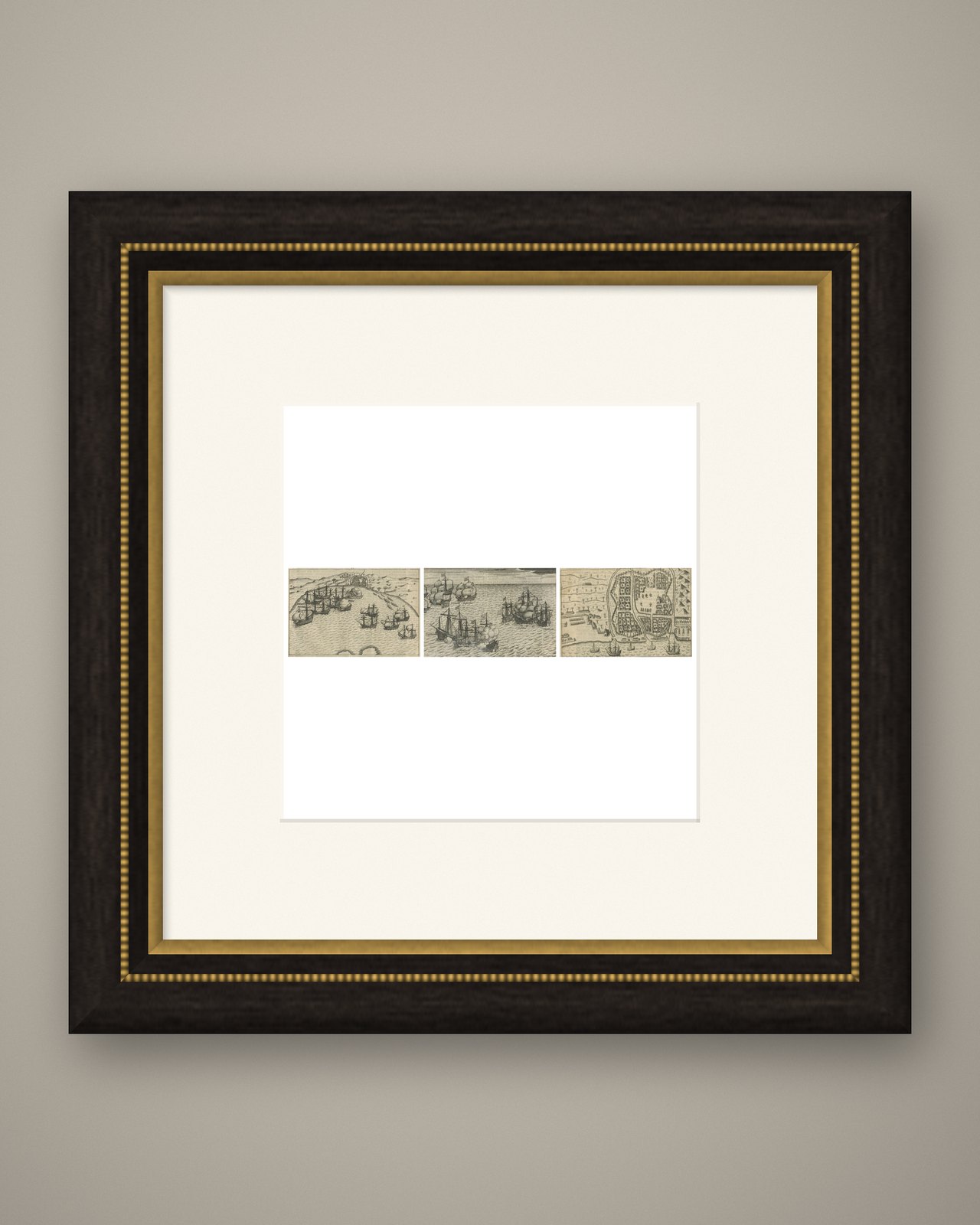

Frame and rooms are illustrations of how the print could look, drawn to its real size; it is sold unframed unless the description says otherwise.
The Company
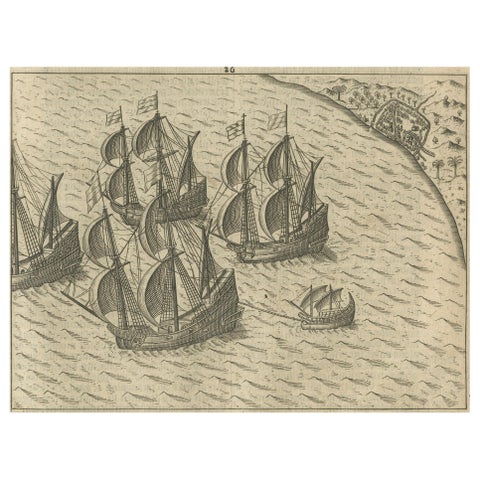
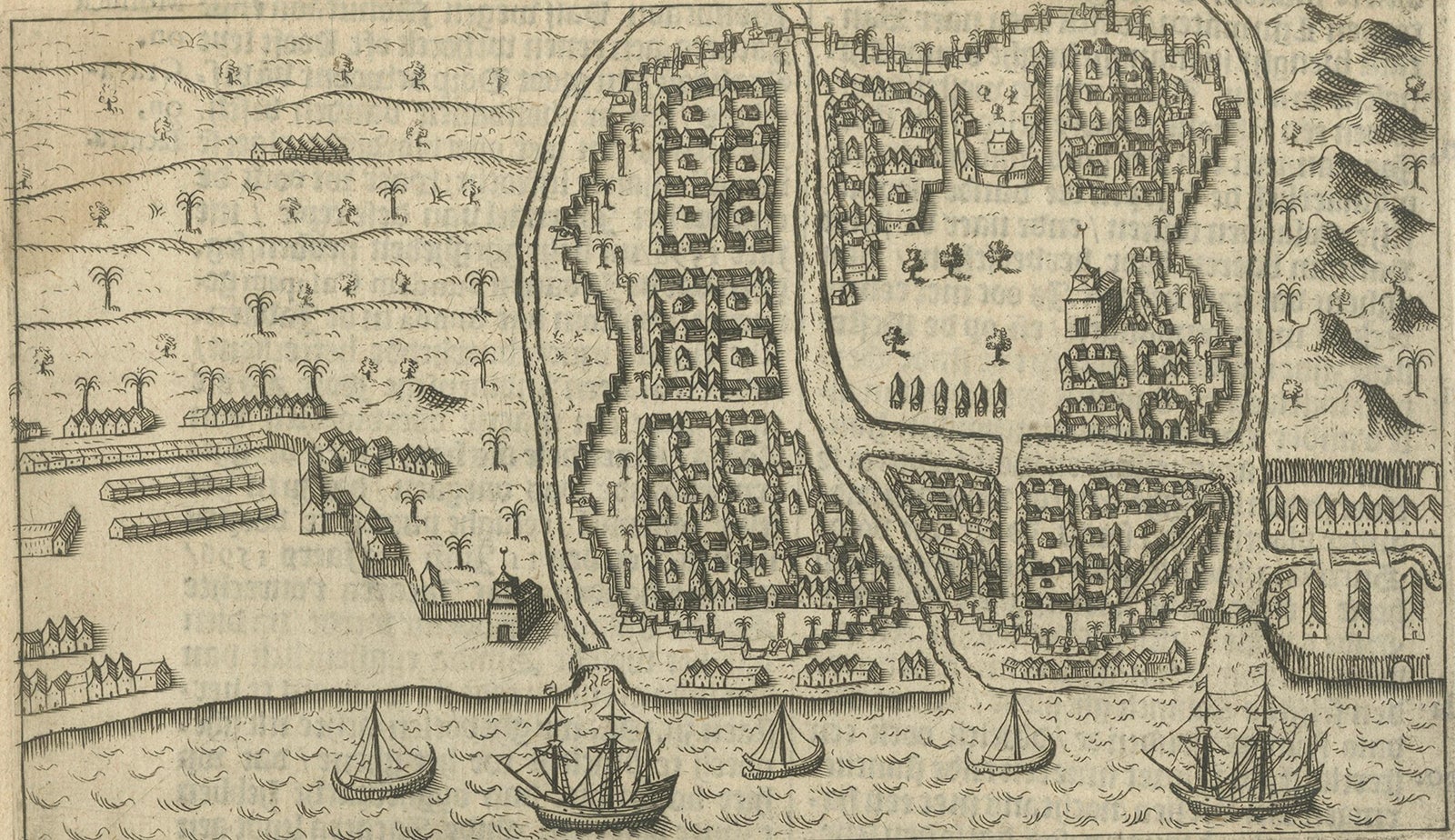
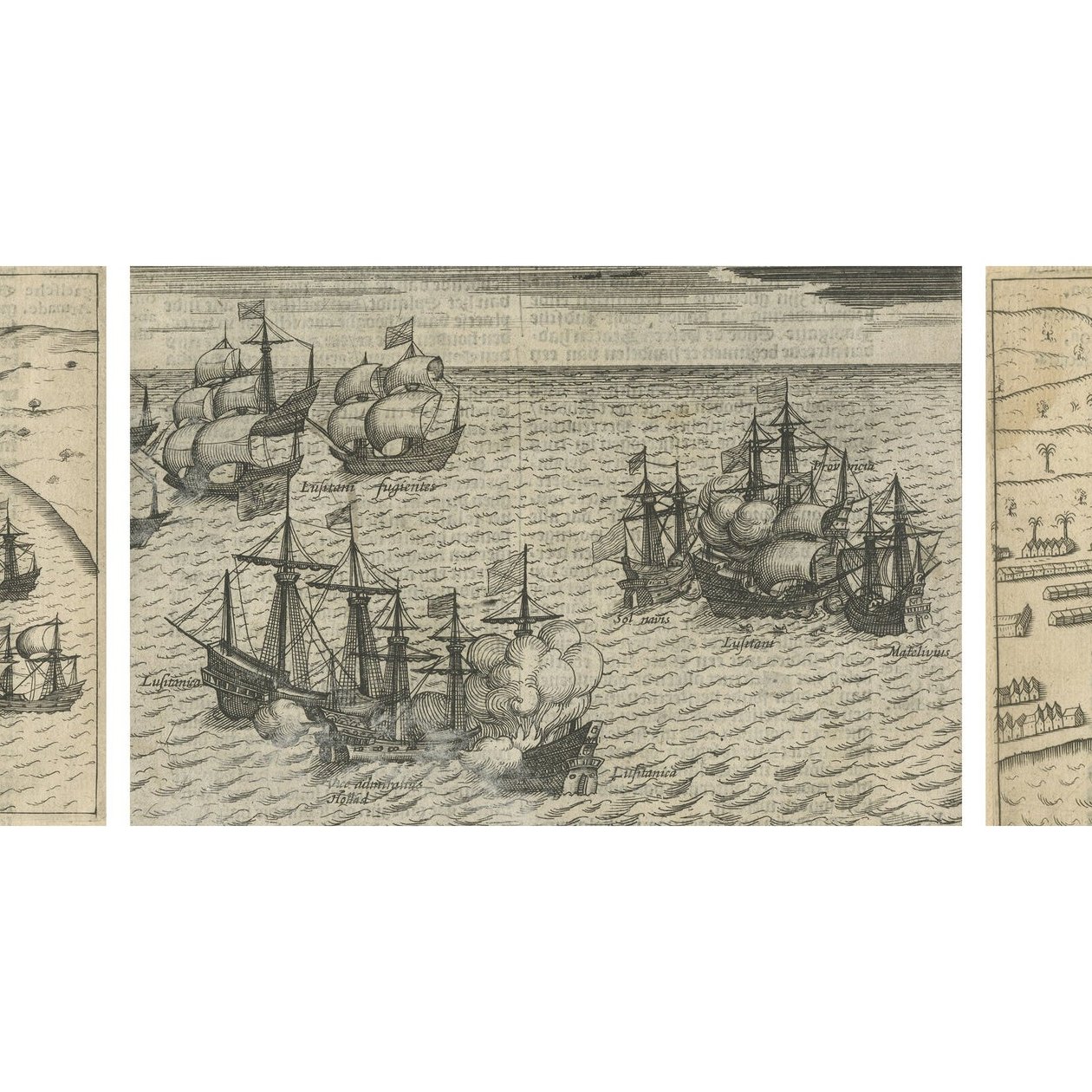
Dutch Fleet and Fortified Port City of Bantam, from History of Amsterdam, 1611
Bantam is now Banten.
£370
$490 · €440
Original print, not a reproduction
Ships worldwide from the Netherlands, insured and tracked. 14-day returns.
- Date
- 1611
- Sheet size
- 9.4 × 7.2 in (24 × 18.2 cm)
- Condition
- Good. For its age, with light toning, minor text show-through, and some edge wear typical of early 17th-century paper. Strong impression with clear plate marks.
- Island
- Java
- Place names
- Bantam is now Banten
- Collection
- The Company
- Period
- The spice race, before 1700
- Stock no.
- f_46950652
What the condition grades mean
- Excellent
- Bright and clean, with no faults worth mentioning.
- Very good
- Only light signs of age, such as faint toning.
- Good
- Normal signs of age for a sheet of this period: toning, some foxing, small marks or neat old repairs.
- Fair
- Clear faults such as staining, tears or repairs, priced to match.
Every fault we see is written in the condition note, and the whole sheet is shown uncropped in the photos.
Dutch Fleet and Fortified Port City of Bantam, from Pontanus’ History of Amsterdam, 1611
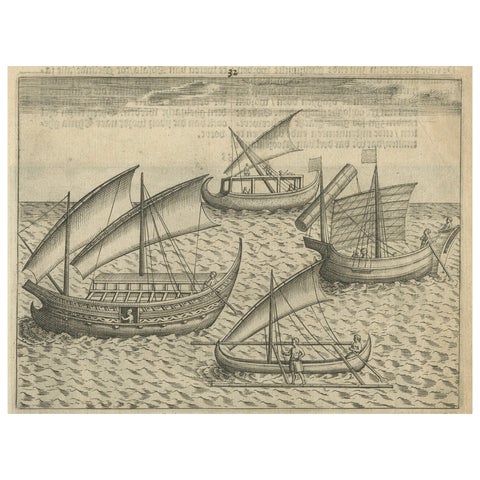
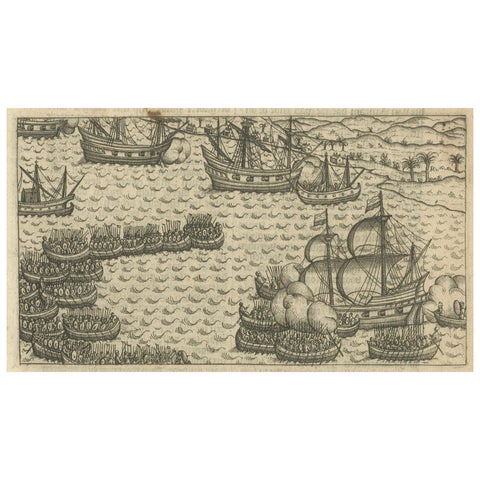
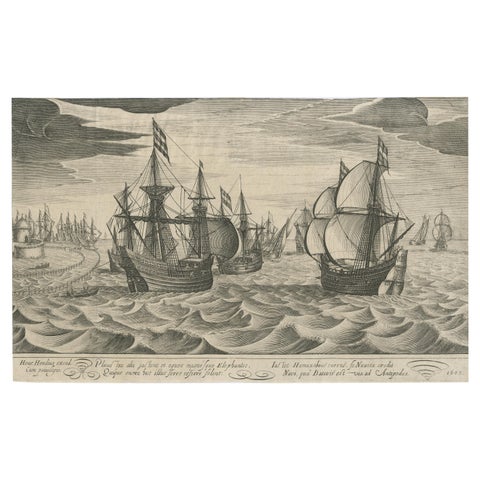
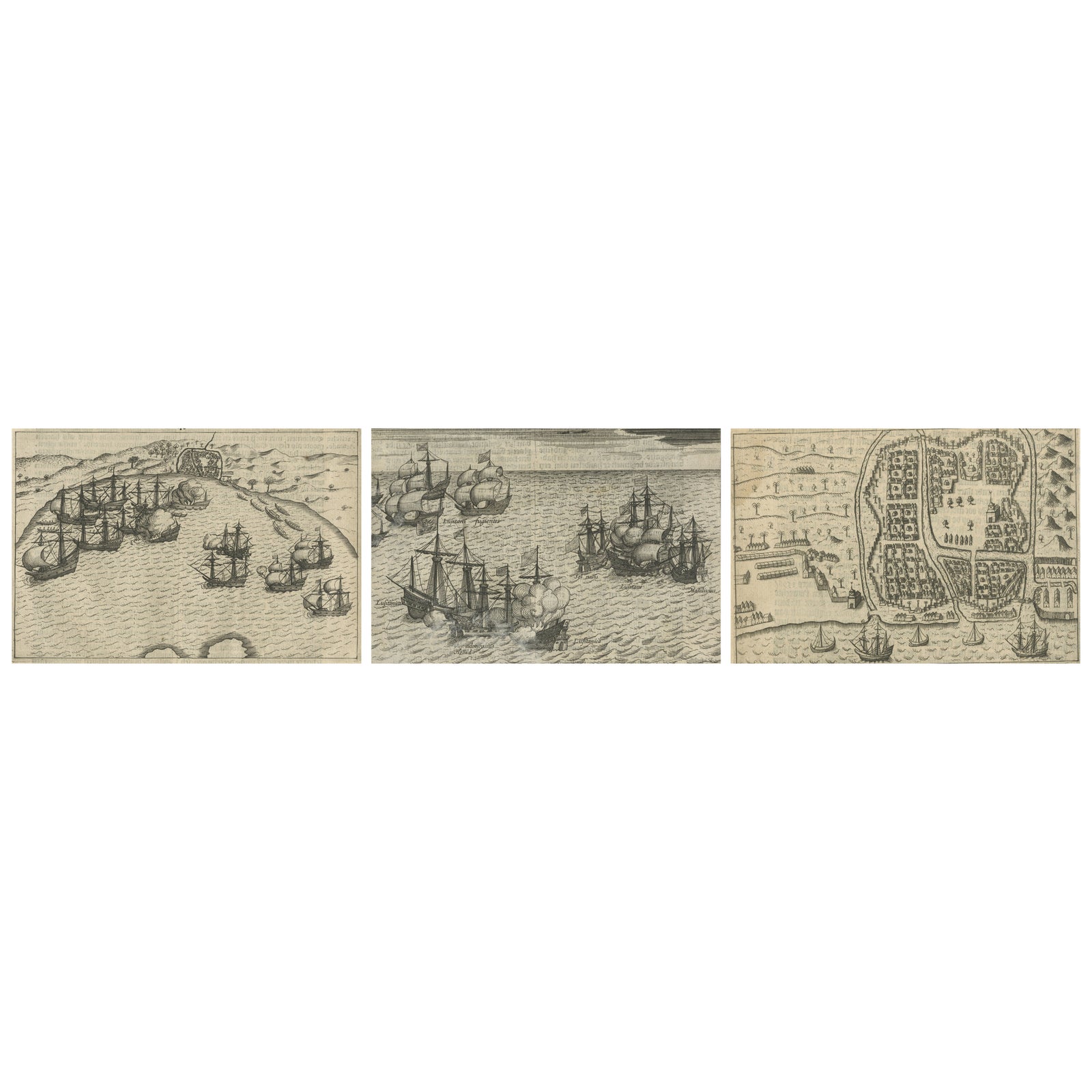
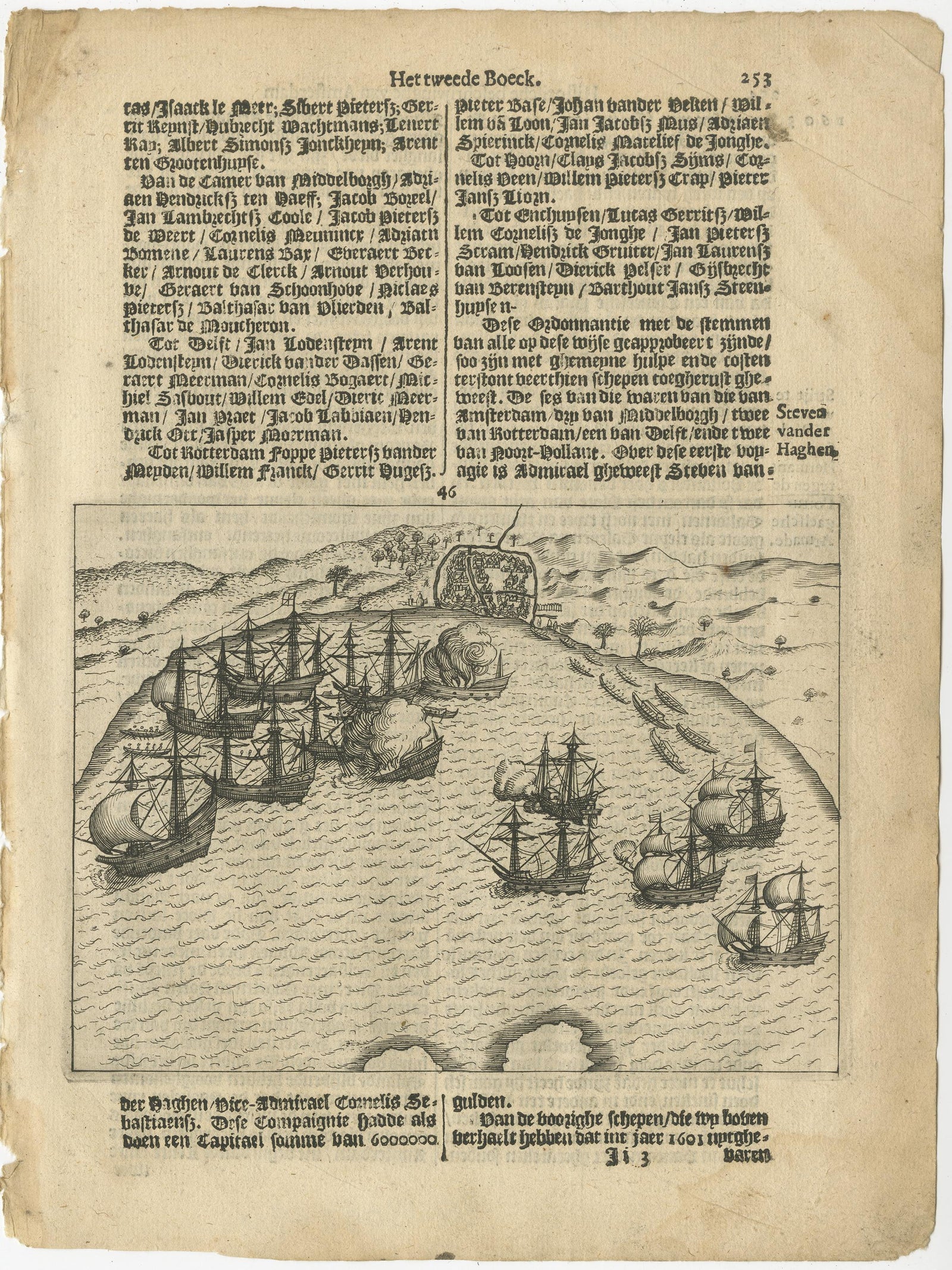
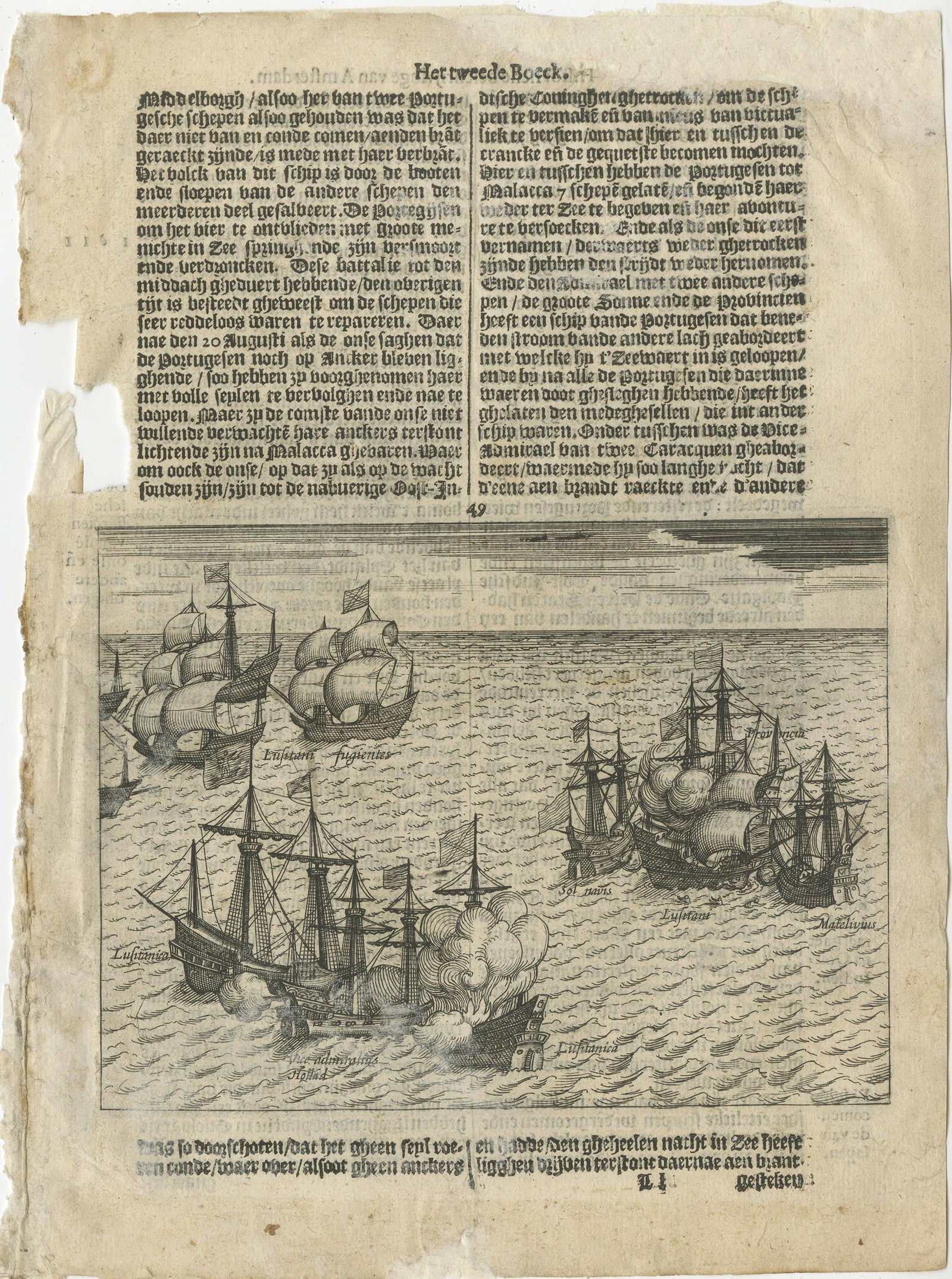
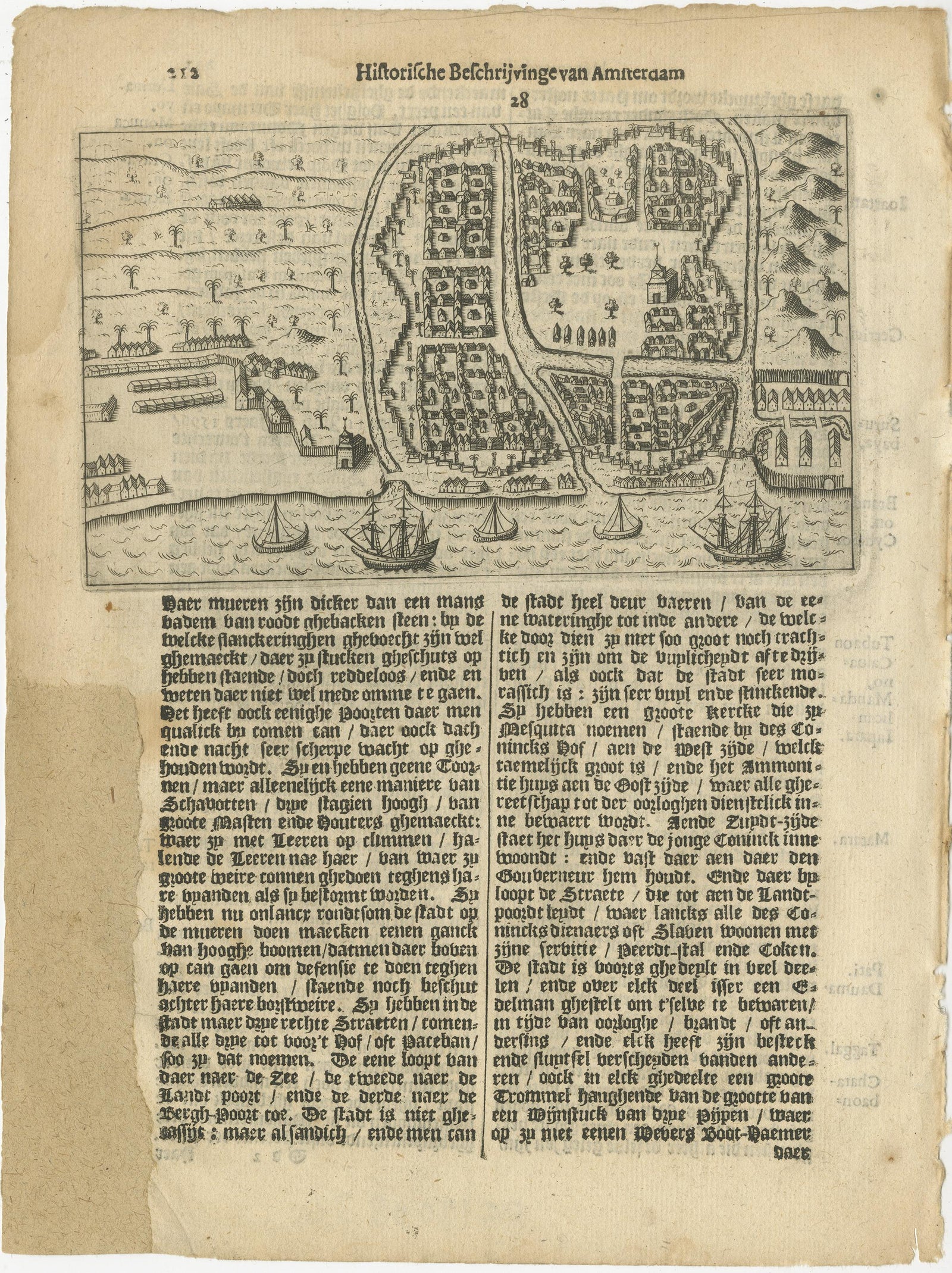
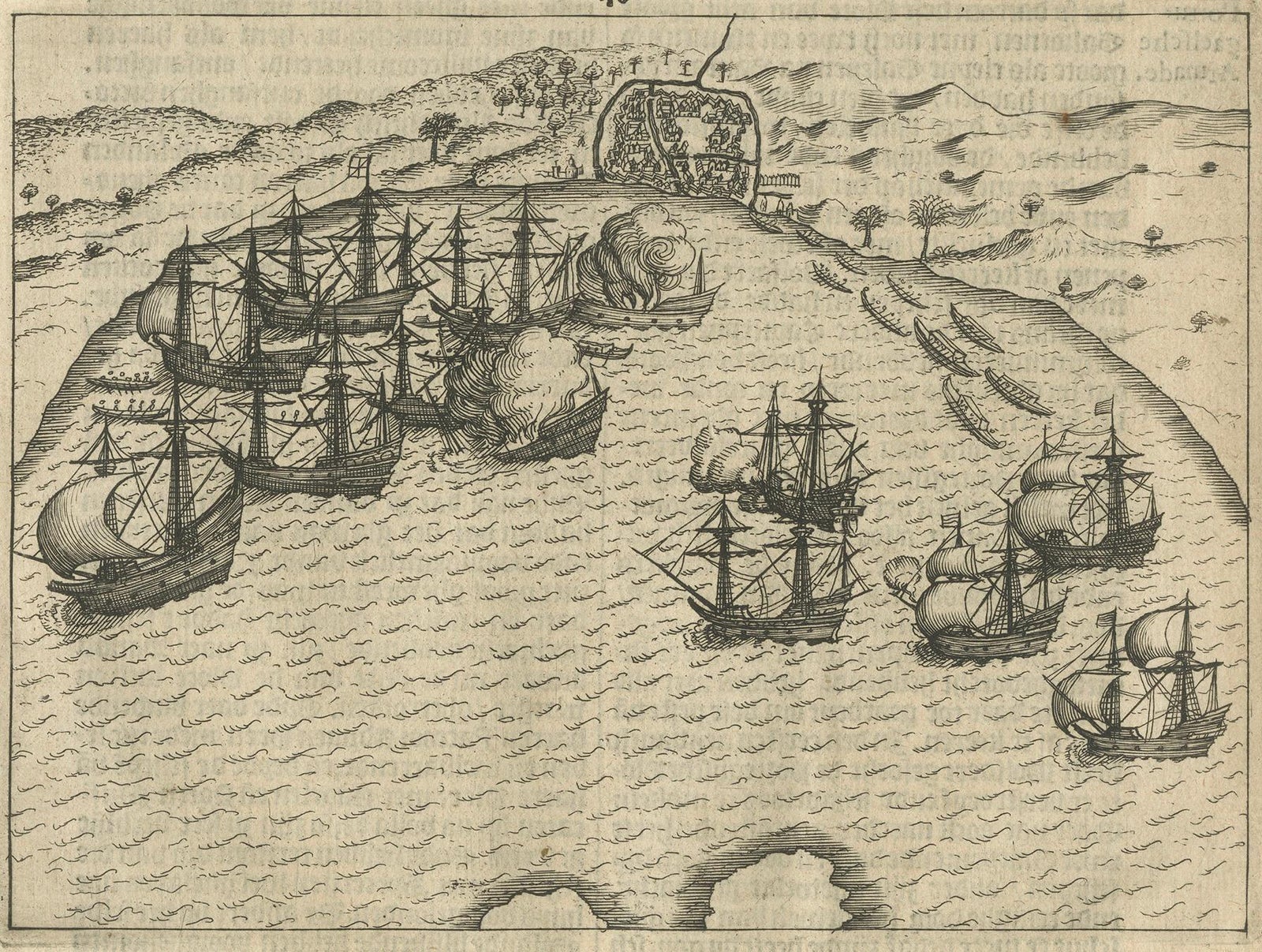
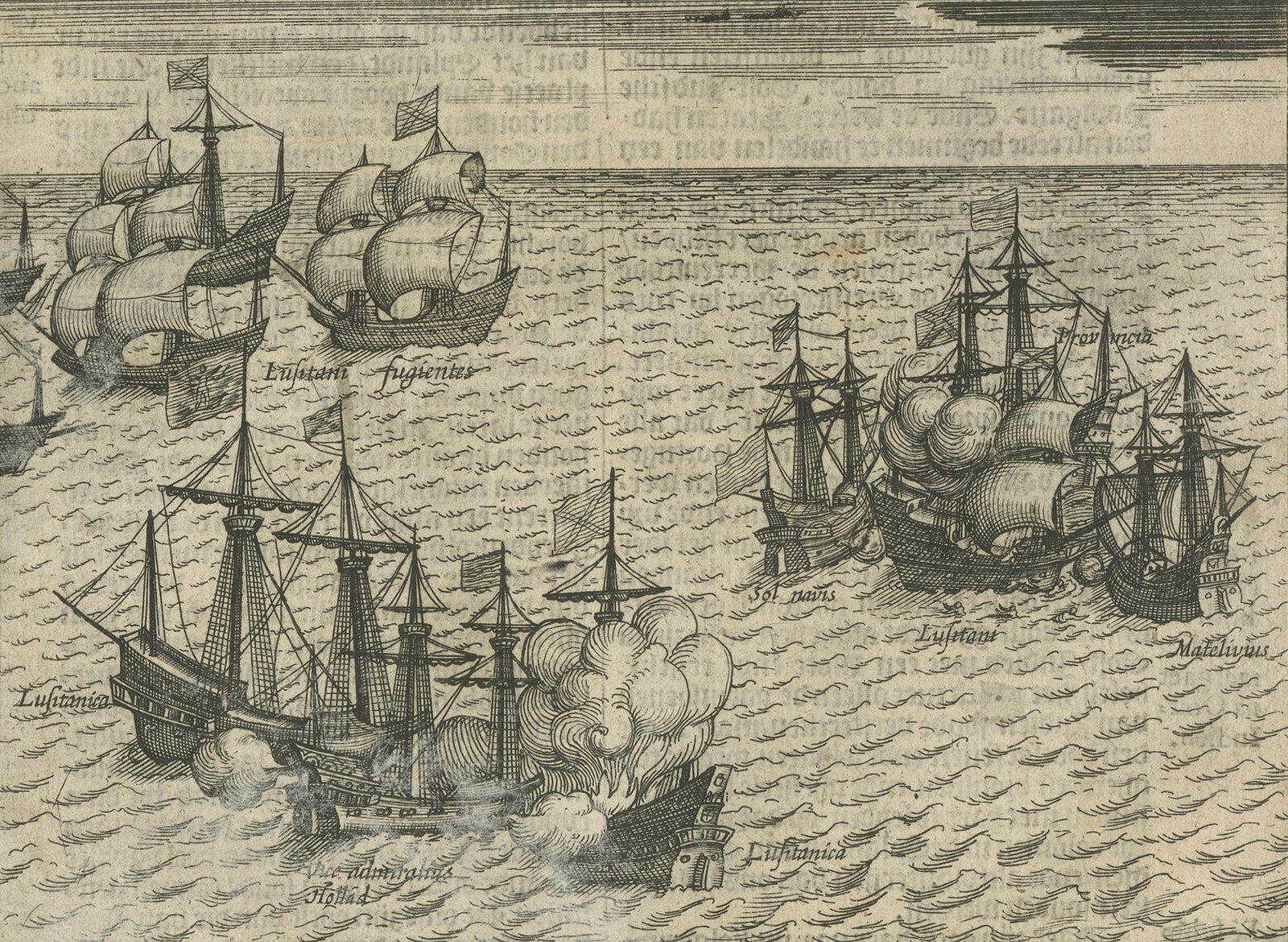
This remarkable 1611 engraving triptych originates from Johannes Isacius Pontanus’ Rerum et urbis Amstelodamensium historia (History of Amsterdam), a seminal chronicle of the city’s rise during the Dutch Golden Age. These detailed engravings document the early Dutch voyages to the East Indies and the founding of trade relations in Java, one of the most significant turning points in maritime history.
The first scene depicts the Dutch fleet anchored off the Javanese coast, its ships positioned before a fortified town, likely Bantam (Banten), the primary hub of Dutch trade before Batavia was established. Cannons fire from both ship and shore as clouds of smoke drift across the waves, capturing the tension between diplomacy and conflict that defined early European contact with Southeast Asia.
The second scene illustrates a naval encounter between the Dutch and Portuguese, with ships identified by name, “Hollandia,” “Zeelandia,” “Mauritius,” and “Amsterdam”, representing the fleet of the Second Dutch Expedition to the Indies (1598 to 1600) under Admiral Jacob van Neck. The detailed rigging, the billowing sails, and the smoke of cannon fire convey both the grandeur and peril of maritime warfare in the early modern era.
The final scene offers a bird’s-eye plan of Bantam, complete with its harbor, defensive walls, warehouses, and mosques, as well as ships lying at anchor. The engraving provides one of the earliest cartographic depictions of a Javanese trading city, serving as both a geographic record and a celebration of Amsterdam’s new global reach through trade.
Together, these engravings form a powerful visual narrative of the Dutch Republic’s emergence as a maritime superpower, its voyages, battles, and first settlements in Asia. The sheet exemplifies the exceptional documentary artistry and ambition of early 17th-century Amsterdam printing.
Framing tips: Ideally presented as a panoramic triptych within a single wide frame or as three separately mounted prints in identical dark wood frames. Use warm ivory or light cream mats to enhance the paper tone and the fine linear engraving.
Technique: Engraving
Maker: Anonymous engraver after designs for Johannes Isacius Pontanus, Amsterdam, 1611