Close-ups
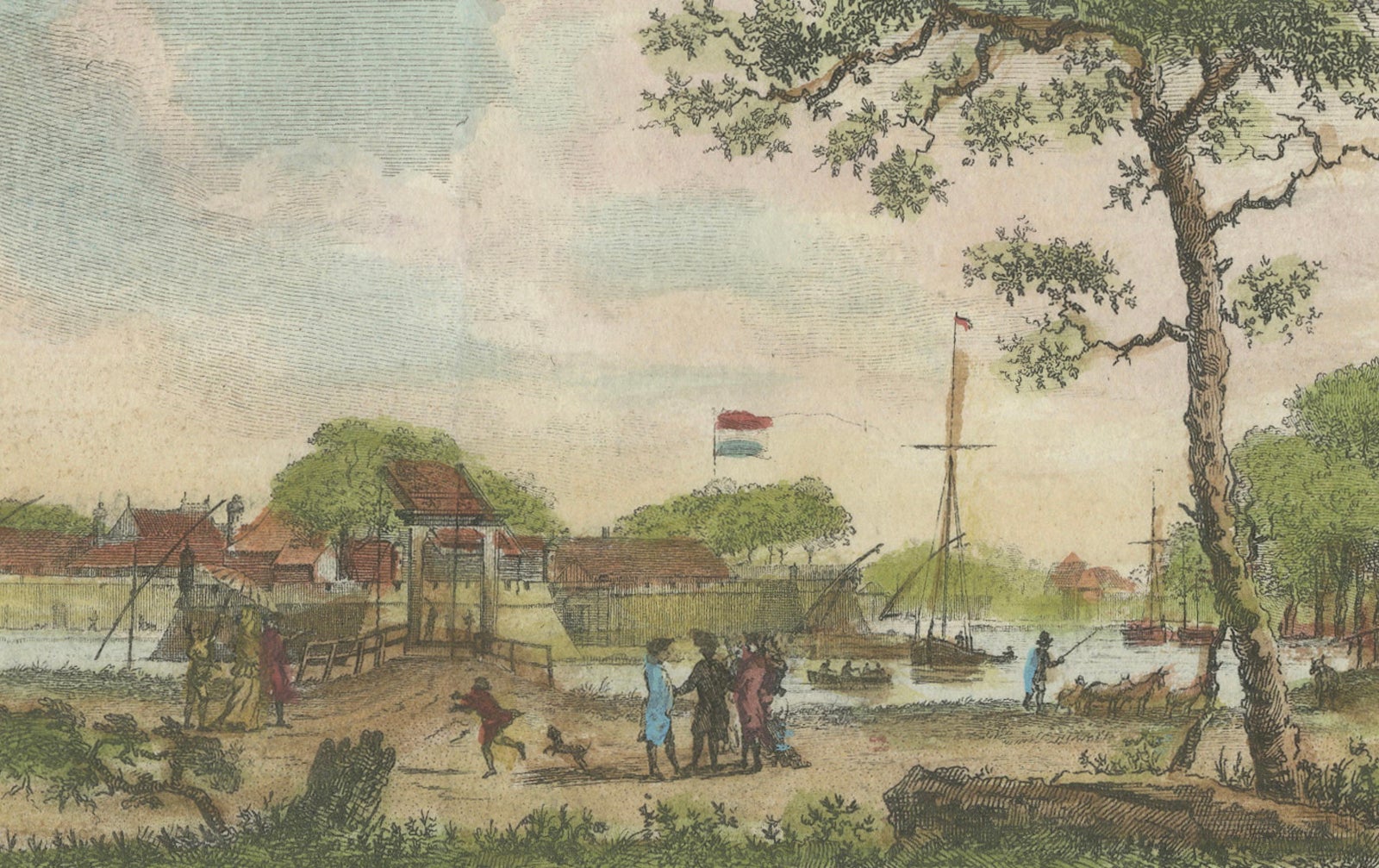
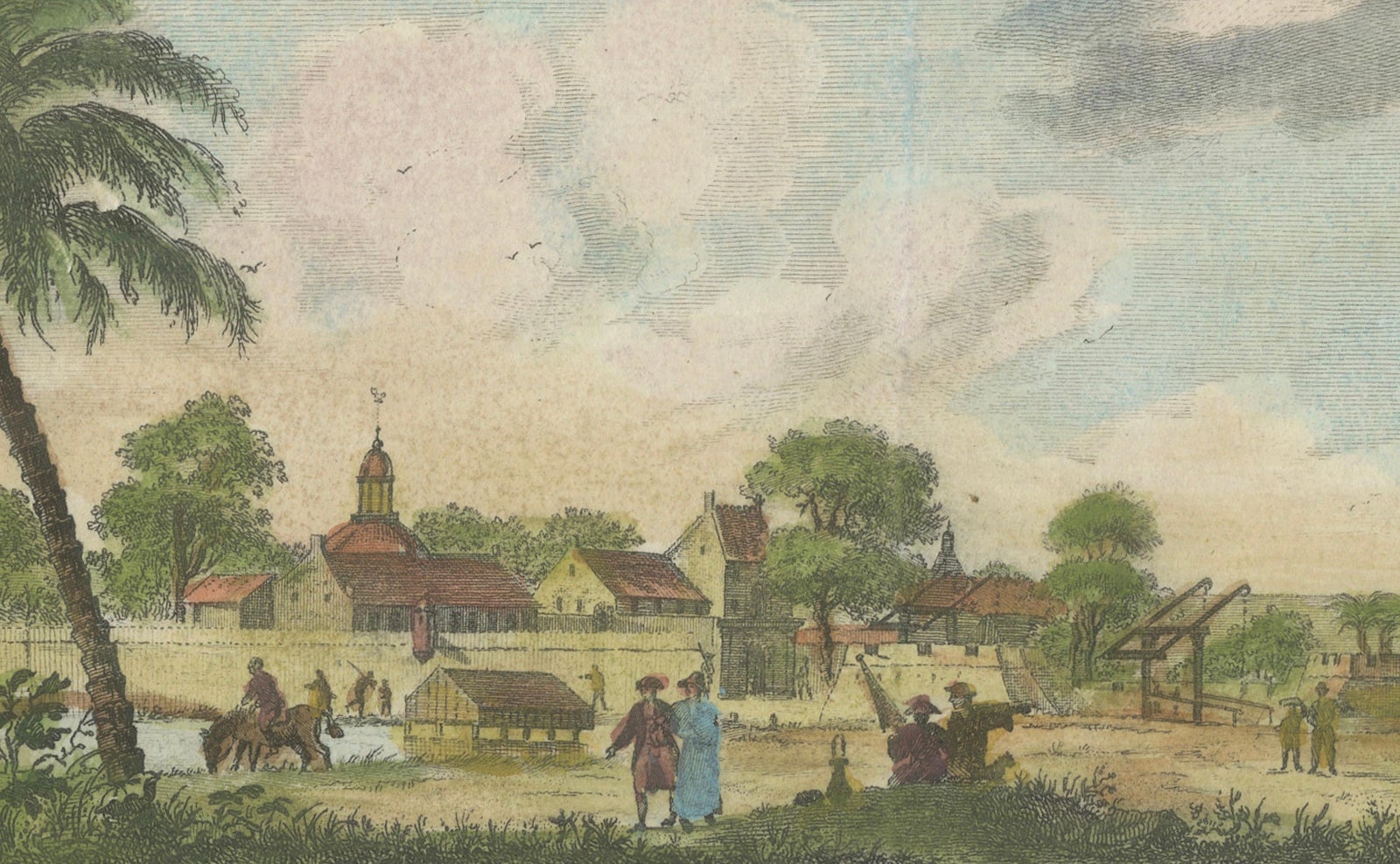
Framed and on the wall
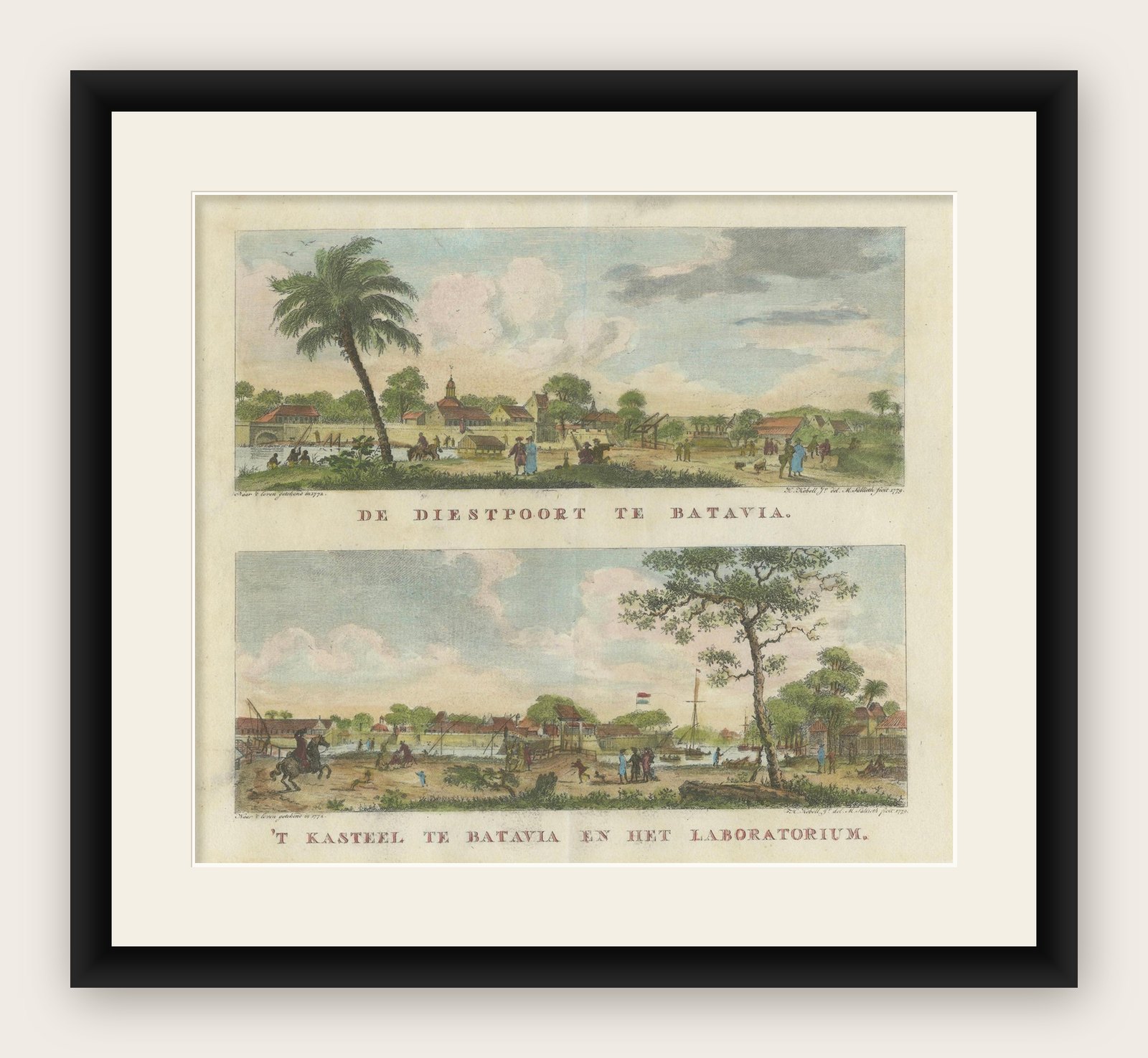

Frame and rooms are illustrations of how the print could look, drawn to its real size; it is sold unframed unless the description says otherwise.
The Company
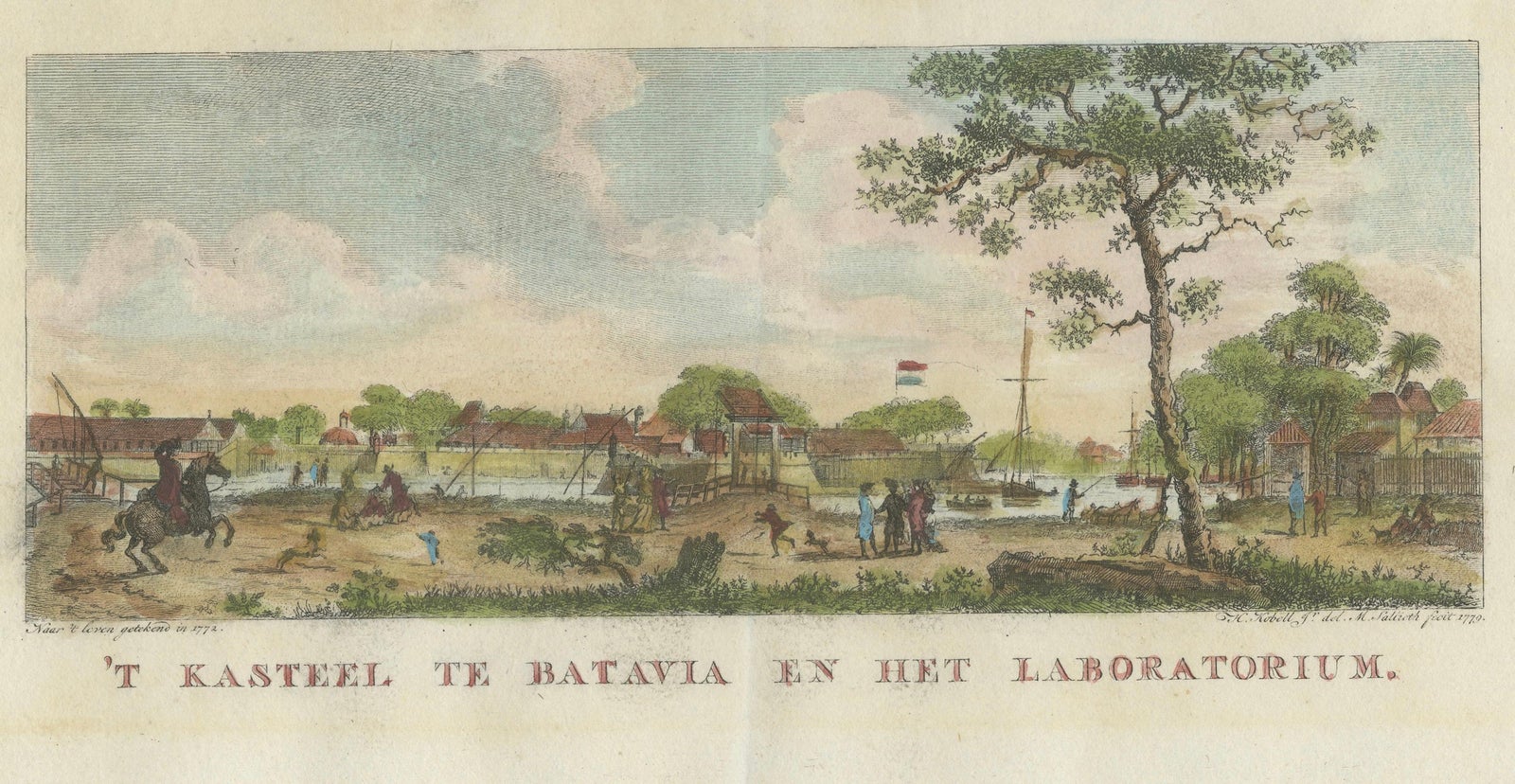
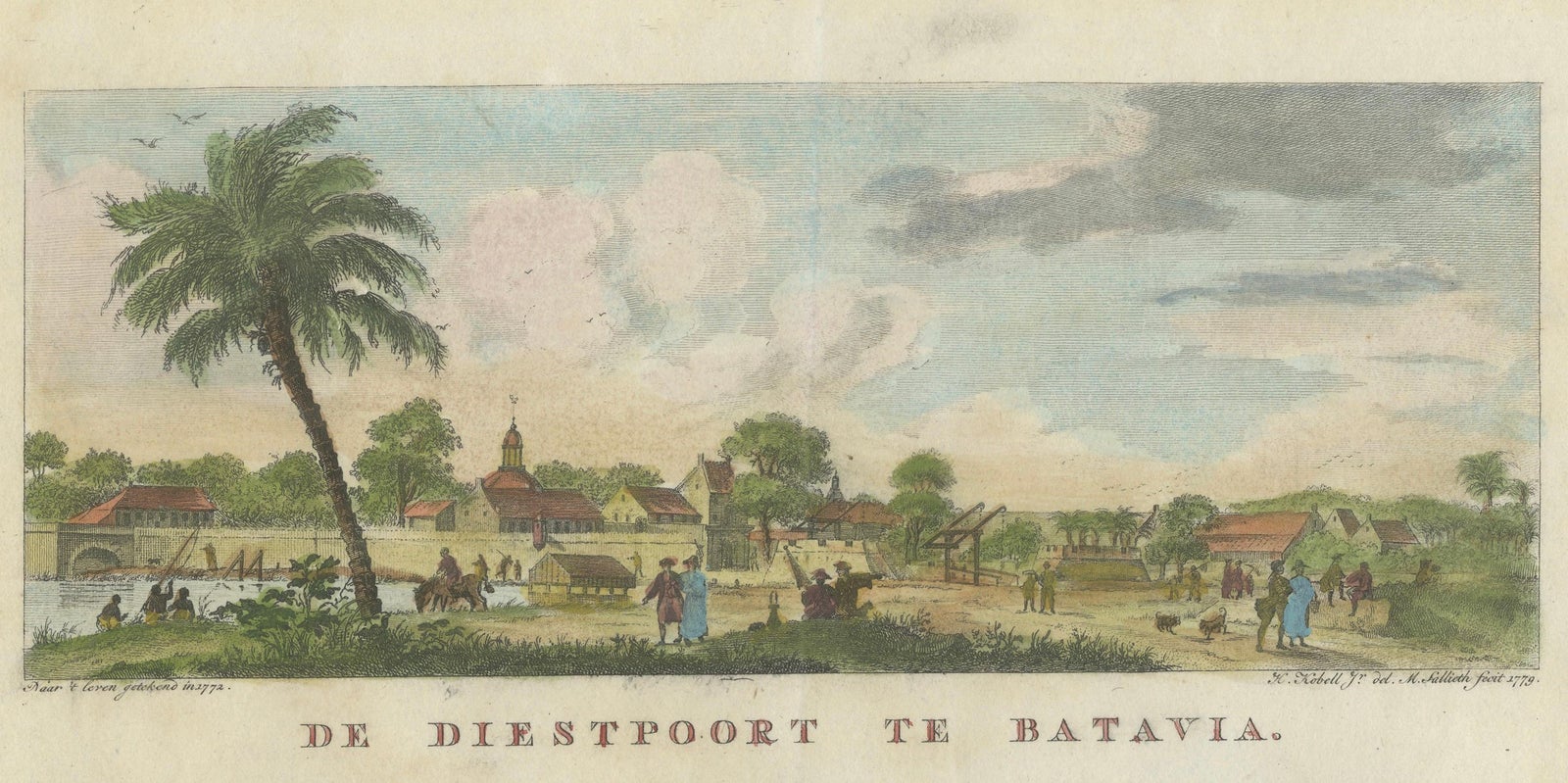
Dutch Colonial Views of Batavia, Diestpoort and Castle with Laboratory, c.1780
Batavia is now Jakarta.
£285
$380 · €340
Original print, not a reproduction
Ships worldwide from the Netherlands, insured and tracked. 14-day returns.
- Date
- 1780
- Sheet size
- 9.3 × 11.4 in (23.7 × 29 cm)
- Condition
- Good. Condition with strong original hand coloring. Clean margins, minor faint toning near edges, and sharp impression. Plate mark visible around each image.
- Island
- Java
- Place names
- Batavia is now Jakarta
- Collection
- The Company
- Period
- The Company, 1700 to 1799
- Stock no.
- f_46173032
- Color
- Hand colored
What the condition grades mean
- Excellent
- Bright and clean, with no faults worth mentioning.
- Very good
- Only light signs of age, such as faint toning.
- Good
- Normal signs of age for a sheet of this period: toning, some foxing, small marks or neat old repairs.
- Fair
- Clear faults such as staining, tears or repairs, priced to match.
Every fault we see is written in the condition note, and the whole sheet is shown uncropped in the photos.
Dutch Colonial Views of Batavia, Diestpoort and the Castle with Laboratory, c.1780
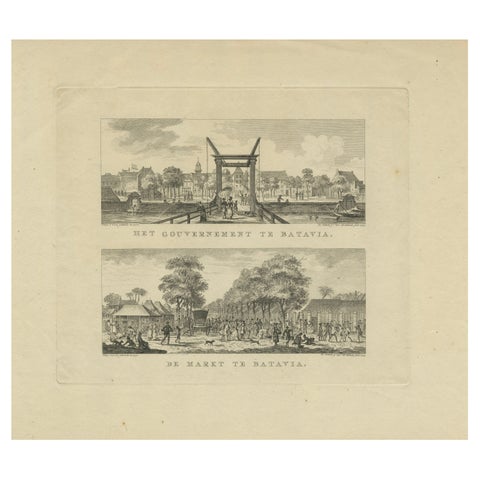
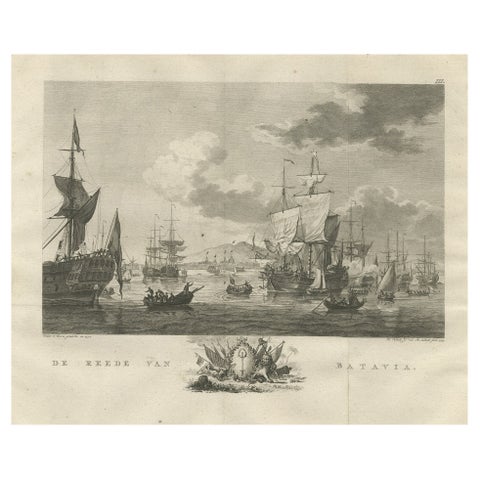
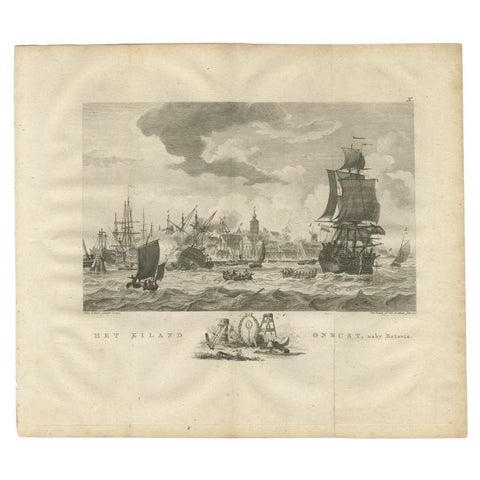
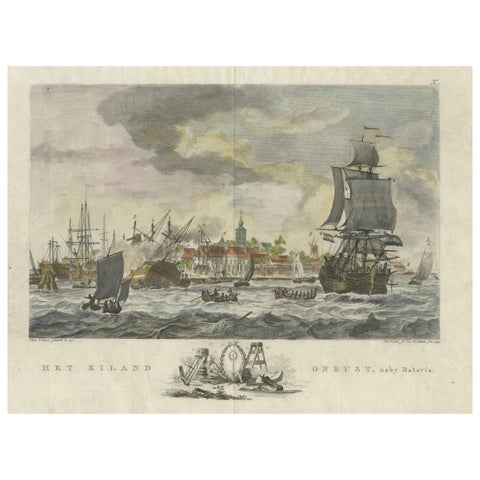
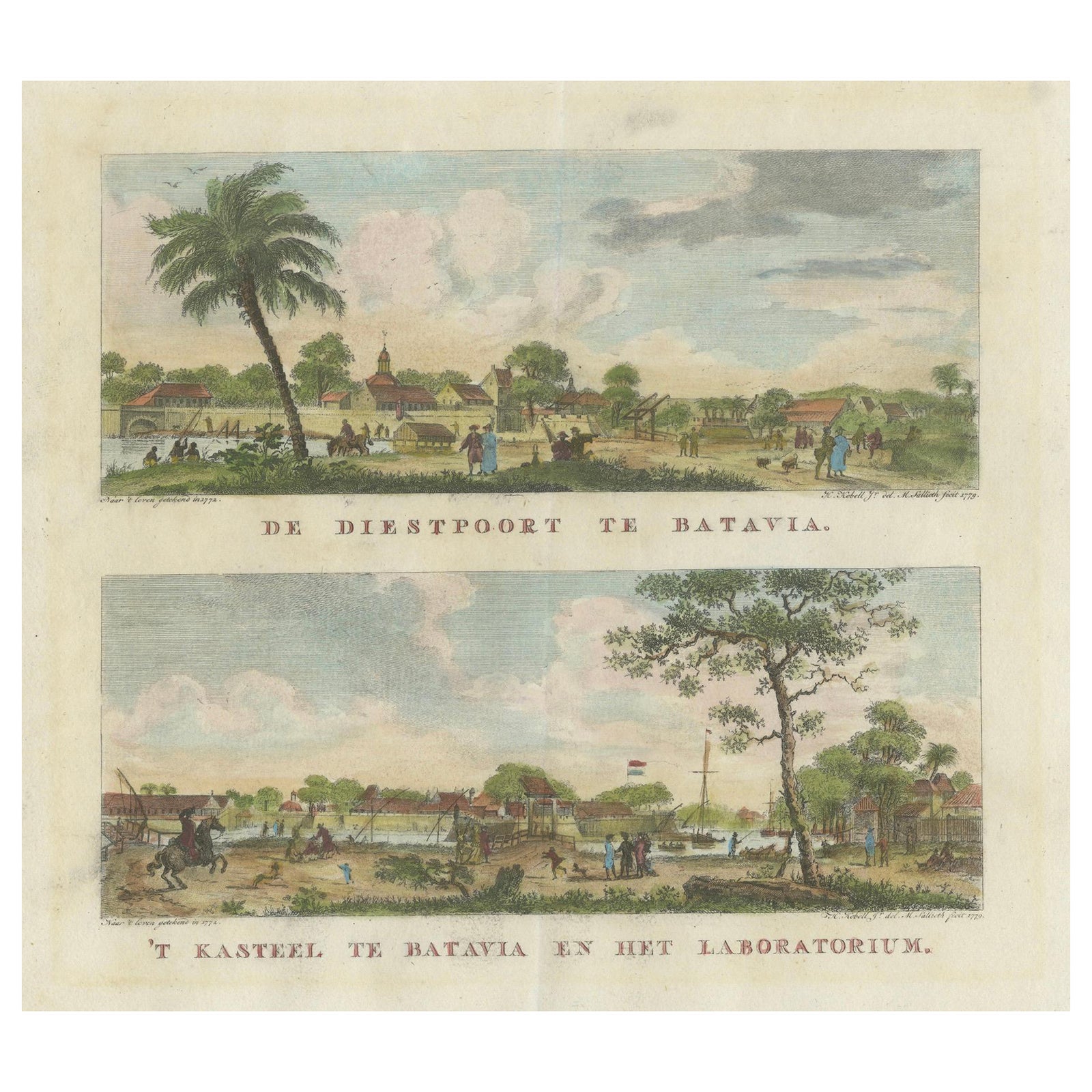
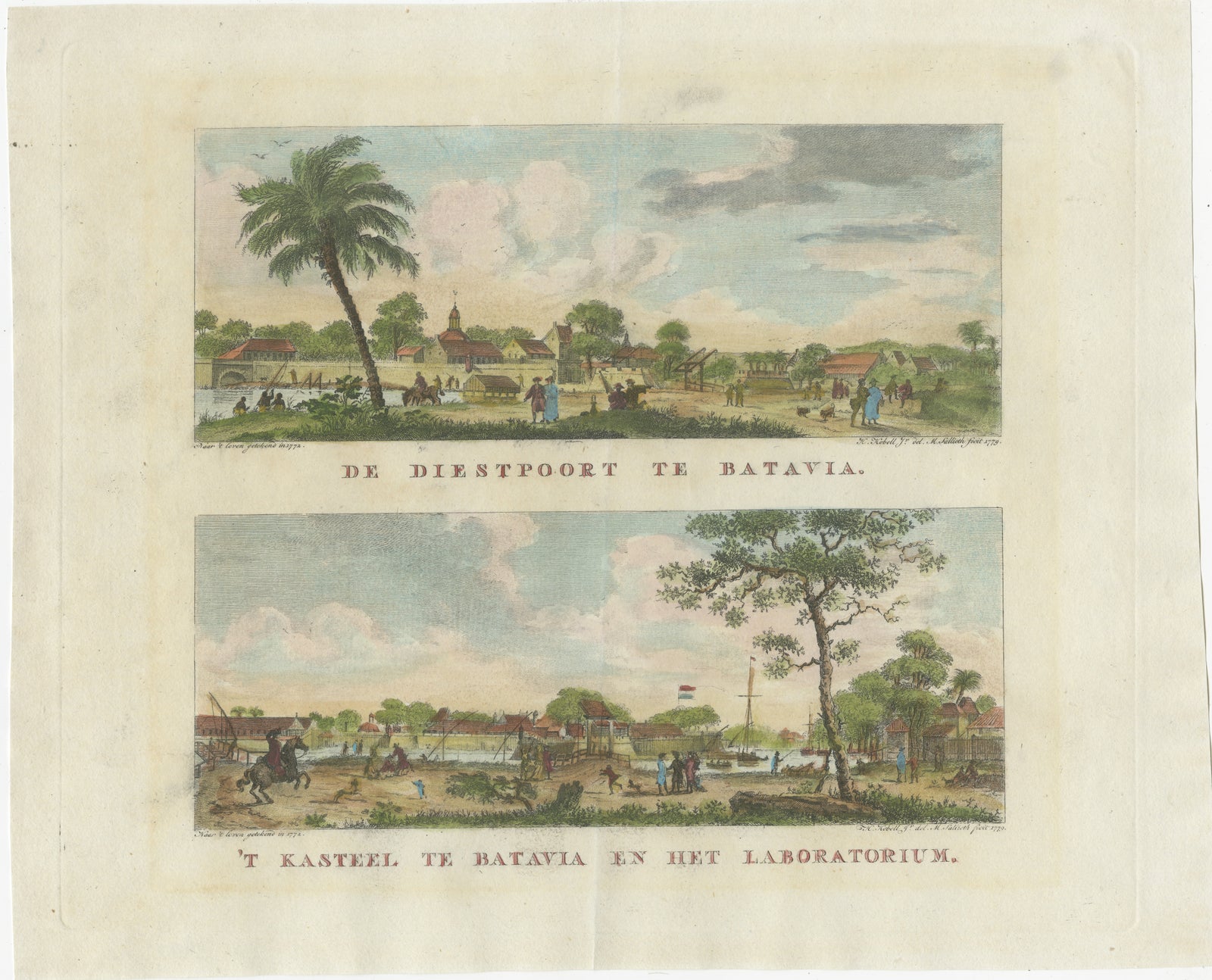
This hand-colored copper engraving features two finely rendered views of Batavia (now Jakarta), the capital of the Dutch East Indies, as it appeared in the late 18th century. These scenes were created by the Dutch artist J. van Schley after a drawing by J. Rach, and published circa 1780 as part of a Dutch illustrated travel or historical account documenting the VOC (Dutch East India Company) colonies in Asia.
The top view is titled De Diestpoort te Batavia, depicting the Diest Gate, one of the city's principal entrances. A prominent palm tree dominates the foreground, while behind it unfolds a vibrant townscape with Dutch-style buildings, a church spire, bridges, and local residents engaged in everyday activities. European and native figures mix in the lively setting, reflecting Batavia’s multicultural character as a colonial trading hub.
The bottom view, ’t Kasteel te Batavia en het Laboratorium, shows the Castle of Batavia, an important VOC fortification and administrative center, along with its adjacent laboratory. The composition presents a mix of local life and military presence: a Dutch soldier on horseback, workers near the waterfront, families, ships, and architecture typical of both European and Southeast Asian styles. The Dutch flag flies visibly above the fort, emphasizing colonial authority.
These engravings are based on original drawings by Johannes Rach (1720 to 1783), a Danish artist who lived in Batavia and documented its people, architecture, and environment with precision. The engraver Jacobus van der Schley (1715 to 1779) was known for his detailed interpretations of such scenes for printed books. These views are particularly valuable for their historical documentation of urban colonial life in the Dutch East Indies.
Framing tips: Displayed together in a vertical double mat within a single frame, or separated and framed individually, these prints are well suited to colonial or maritime interiors. Use a warm-toned wooden frame and off-white or cream matting to highlight the tropical landscape and historic detail.
Technique: Copper engraving with original hand coloring
Maker: After Johannes Rach, engraved by Jacobus van der Schley, published c.1780, Netherlands
Explore