Close-ups
Framed and on the wall

Frame and rooms are illustrations of how the print could look, drawn to its real size; it is sold unframed unless the description says otherwise.
Peoples and Costume
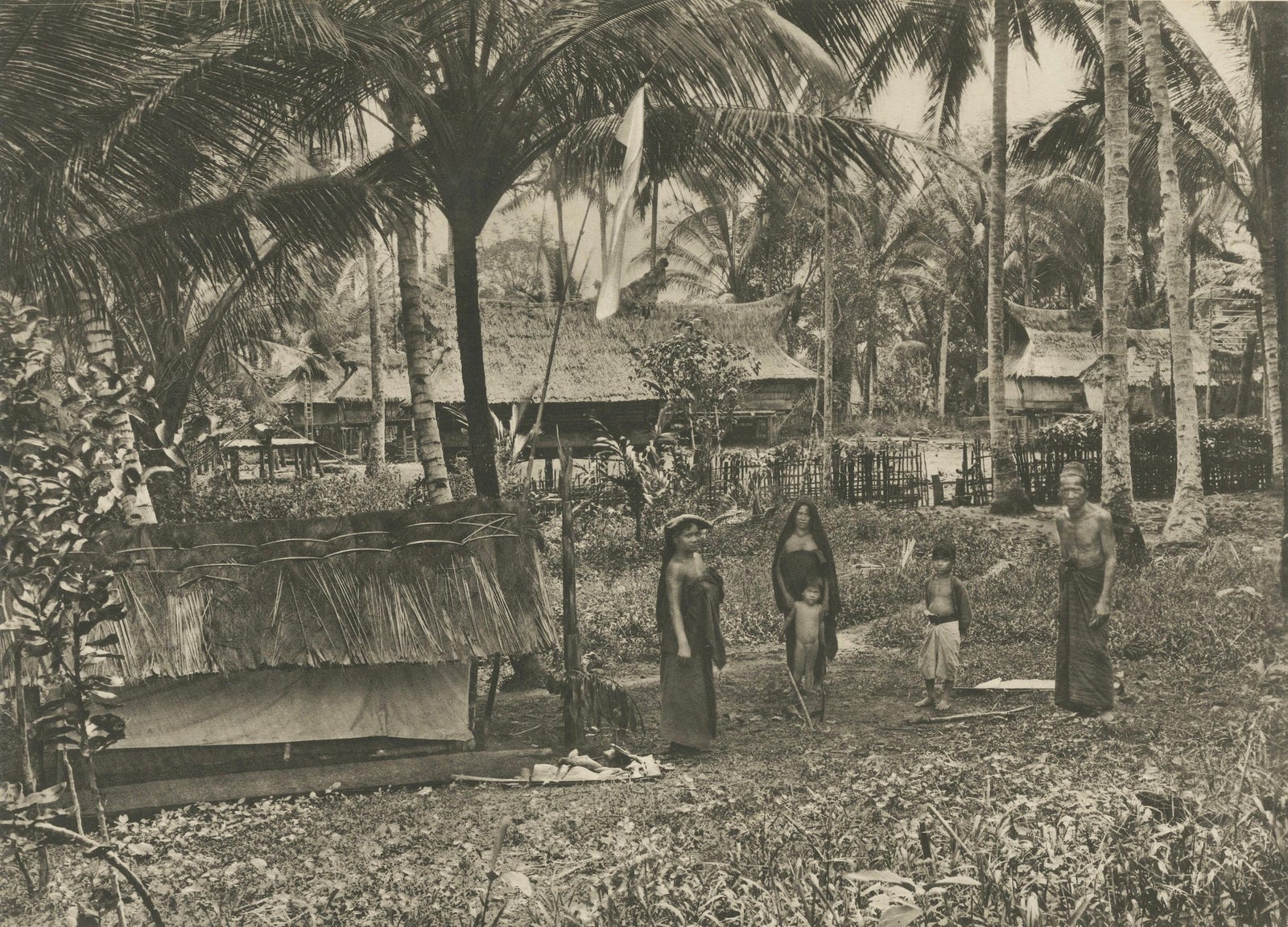
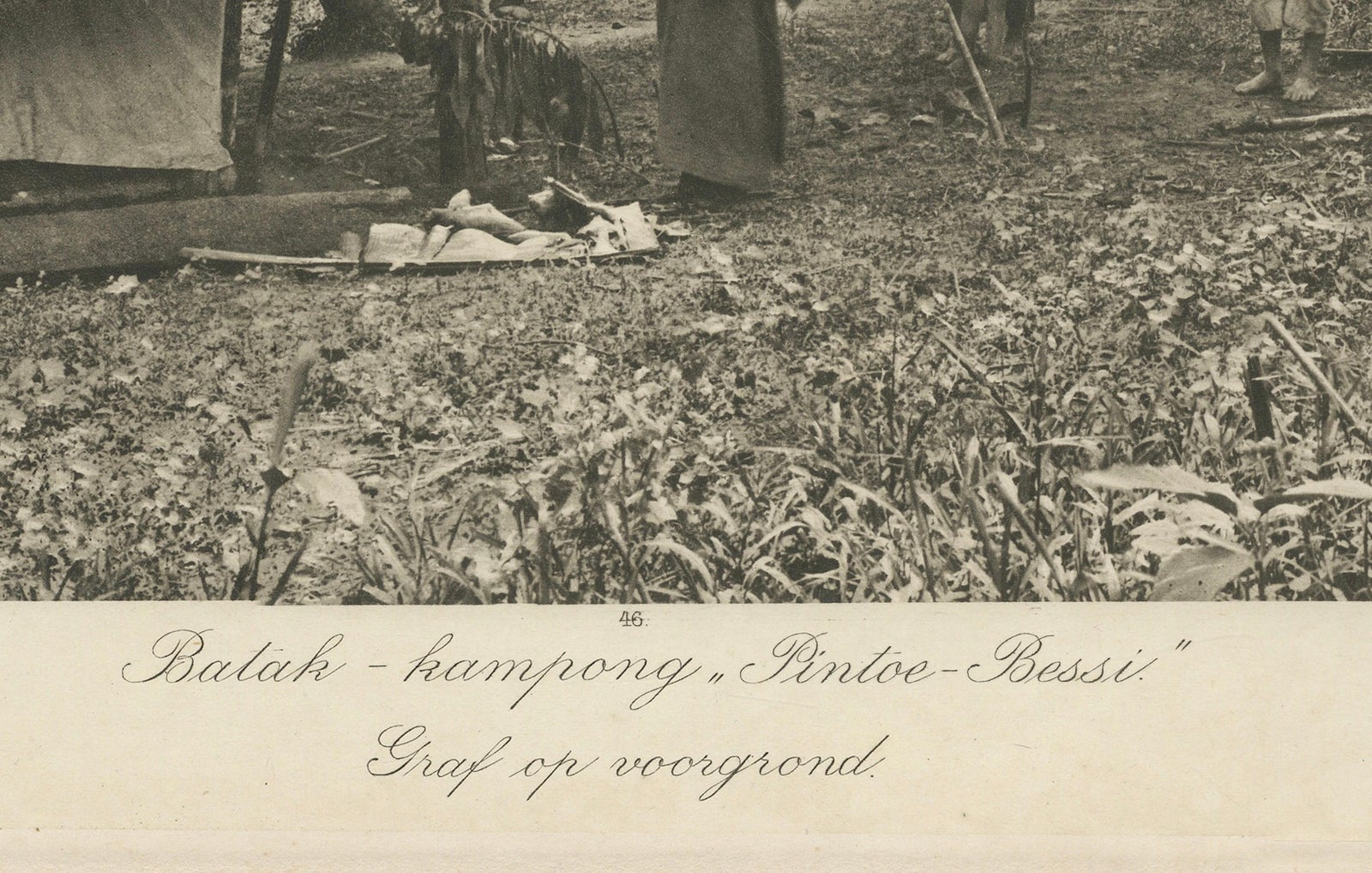
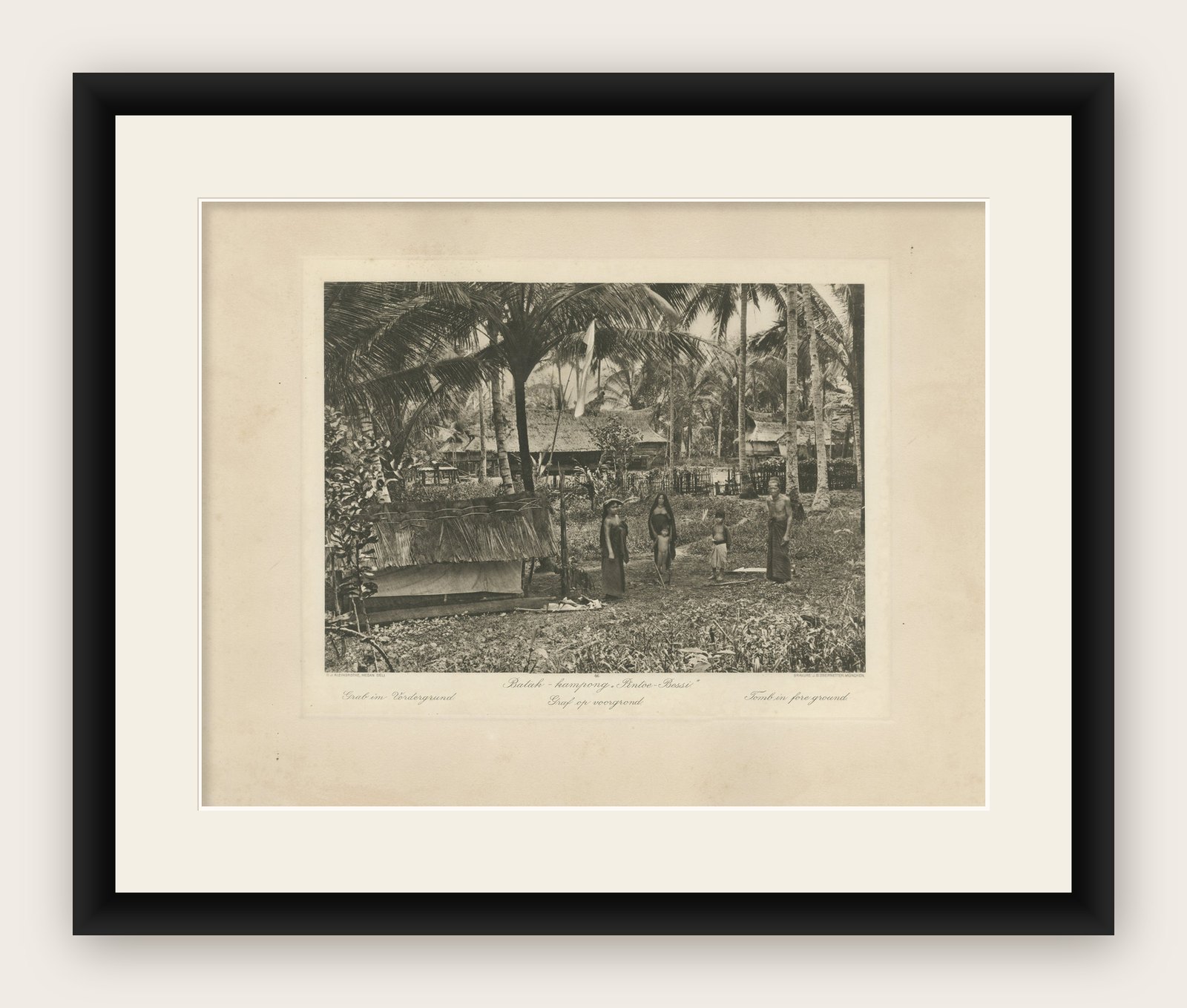
Batak Village Pintoe-Bessi, Tomb, Kleingrothe Photo, Dutch East Indies c1910
£225
$300 · €270
Original print, not a reproduction
Ships worldwide from the Netherlands, insured and tracked. 14-day returns.
- Date
- circa 1910
- Sheet size
- 13.4 × 17.7 in (34 × 45 cm)
- Condition
- Good. Condition report: Very good. The image area is clean and well preserved. Some light foxing and toning scattered in the margin only. Card mount edges remain sharp with no tears or creases. Verso clean.
- Island
- Sumatra
- Collection
- Peoples and Costume
- Period
- Netherlands Indies, 1850 and after
- Stock no.
- f_47660212
What the condition grades mean
- Excellent
- Bright and clean, with no faults worth mentioning.
- Very good
- Only light signs of age, such as faint toning.
- Good
- Normal signs of age for a sheet of this period: toning, some foxing, small marks or neat old repairs.
- Fair
- Clear faults such as staining, tears or repairs, priced to match.
Every fault we see is written in the condition note, and the whole sheet is shown uncropped in the photos.
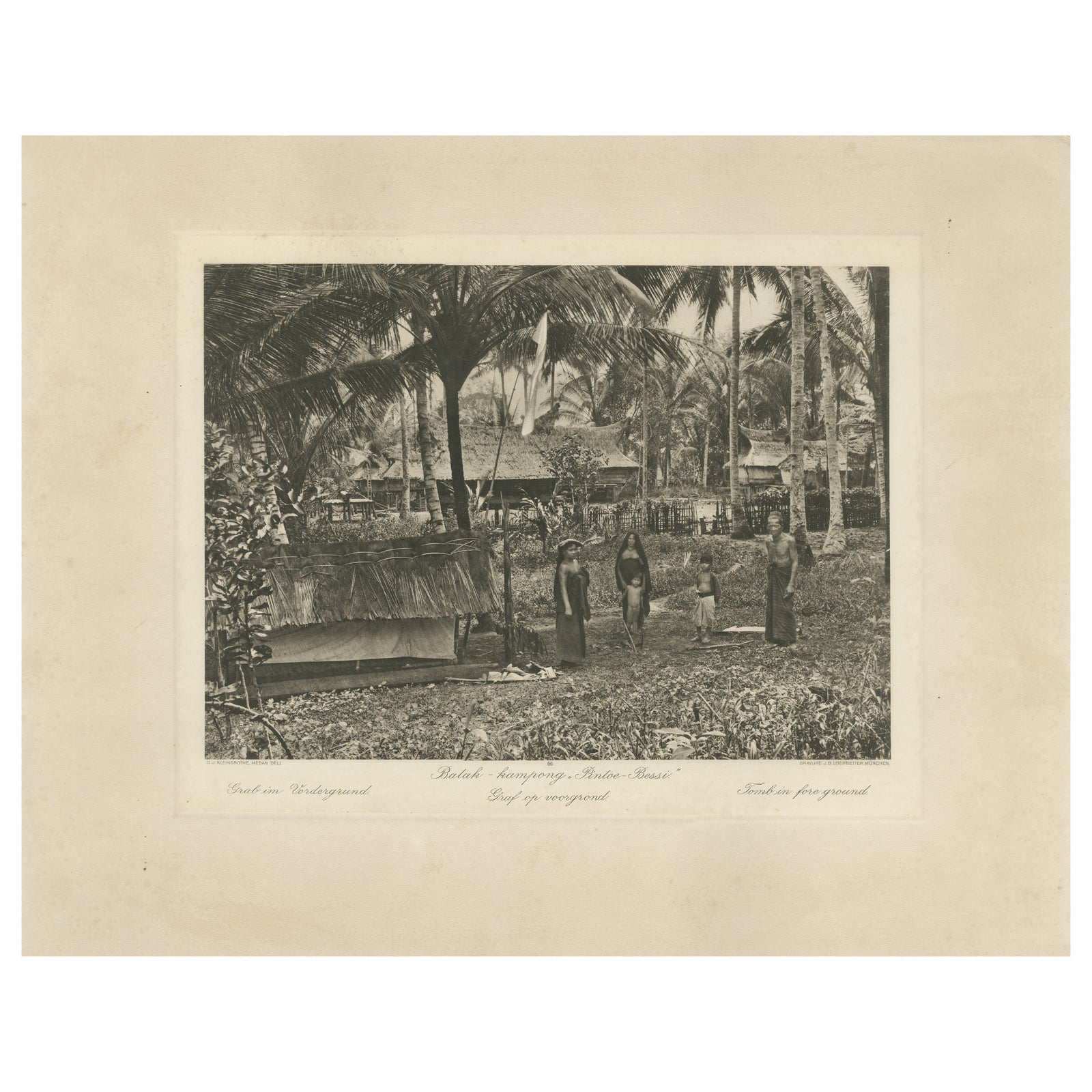
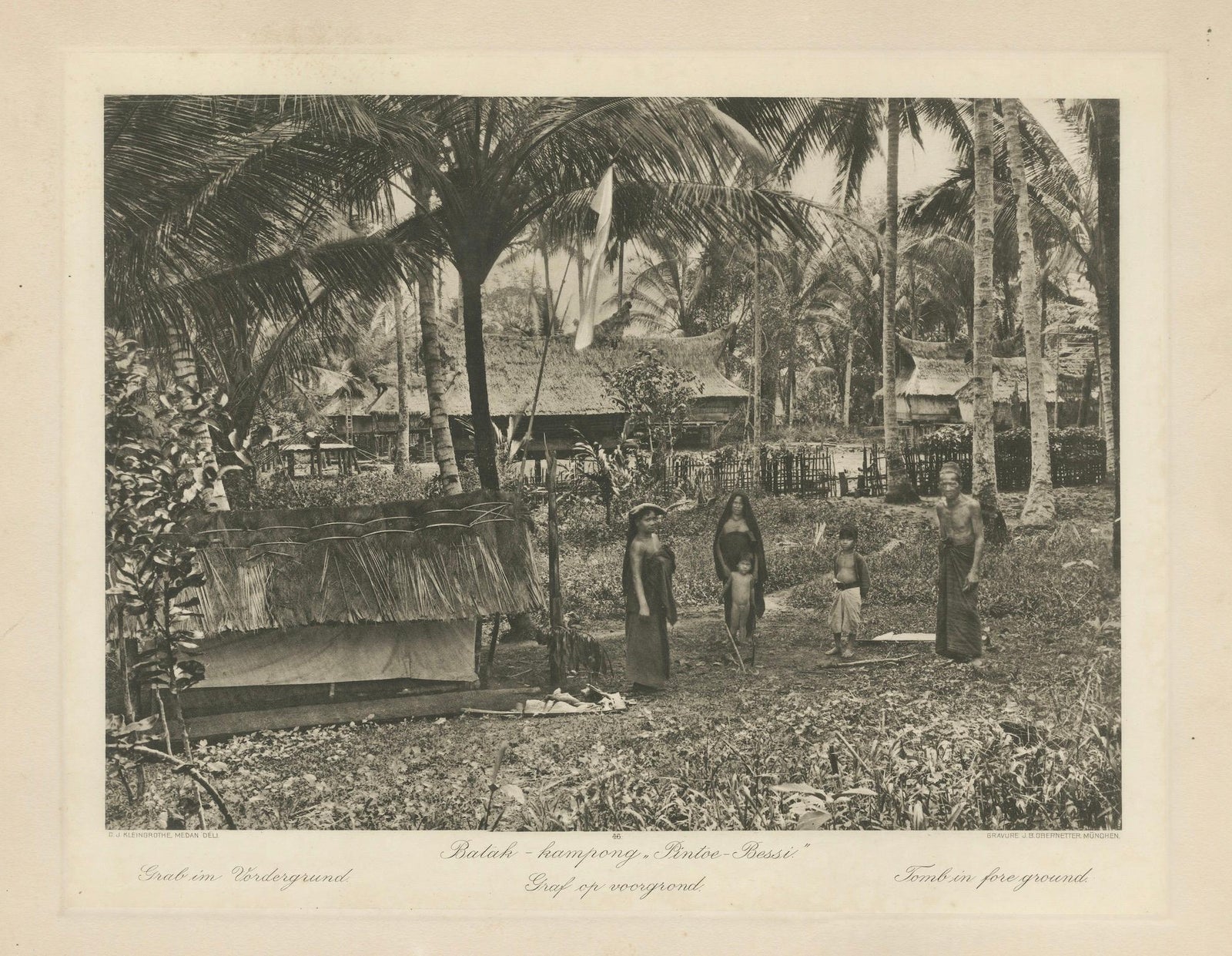
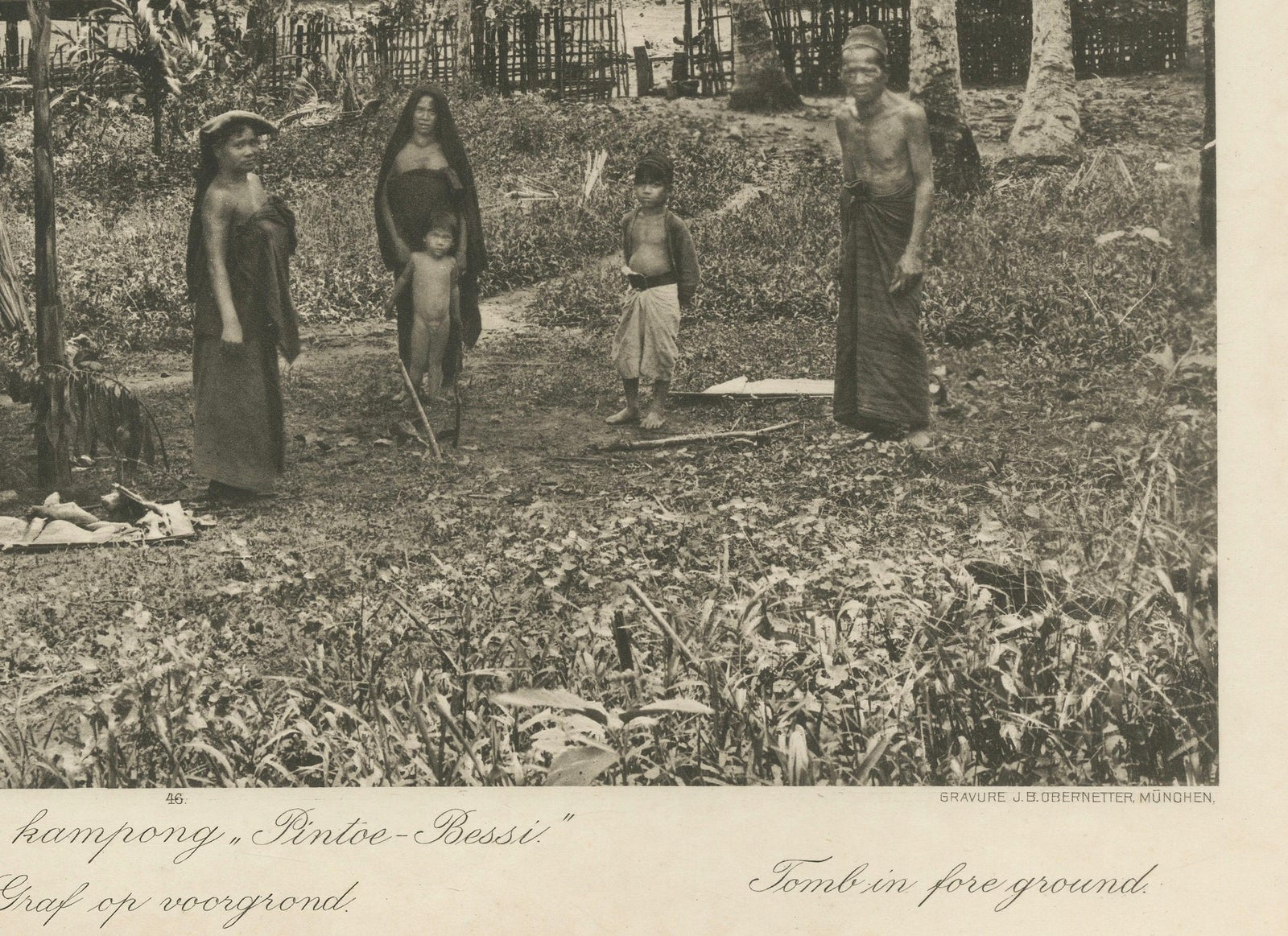
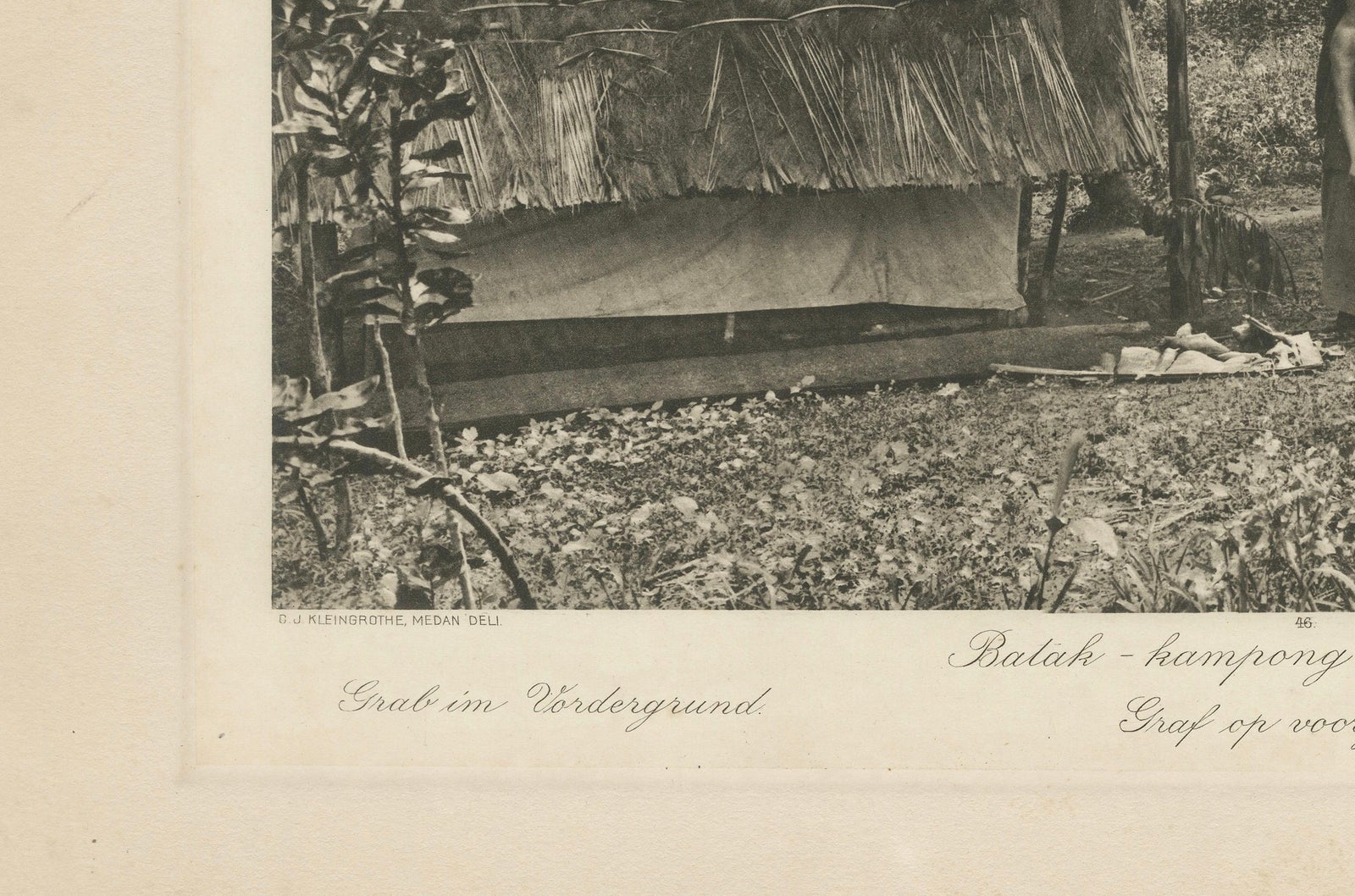
Batak village “Pintoe-Bessi”, Tomb in Foreground, C.J. Kleingrothe, Medan, ca. 1910
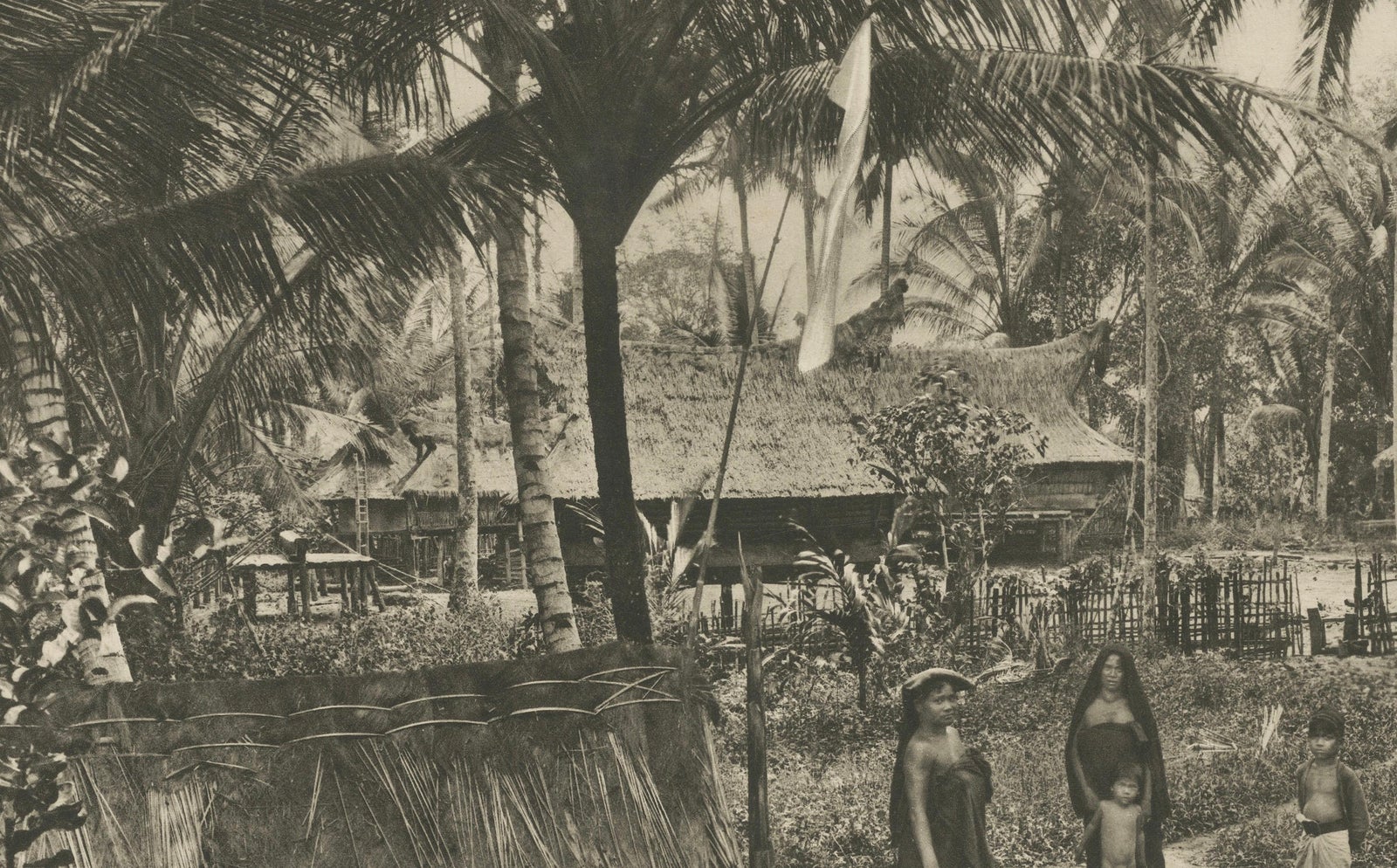
Early 20th-century photogravure depicting daily life in a Batak village in the East Sumatran interior, published by the renowned Medan photographer Charles J. Kleingrothe as part of his important Sumatra’s O.K. portfolio. The image focuses on a family group standing among coconut palms, stilted houses, and woven fences typical of Batak architecture, with a traditional raised grave structure prominently situated in the foreground.
Kleingrothe’s studio played a central role in documenting the cultures, labor forces, plantation economy, and urban development of colonial Sumatra during the Deli expansion. His images are now valued historical sources on Indigenous communities during a period of rapid industrial and agricultural transformation driven by tobacco, rubber, and palm oil. Views of Batak kampongs from this era are particularly significant due to the major cultural transitions that followed.
The photogravure is printed in strong warm tones with fine detail visible in foliage, textiles, and architecture. The original publisher’s studio credit appears lower left, while the German printing house J.B. Obernetter München is credited lower right. Title and descriptive captions are printed below the image in German, Dutch, and English. Kleingrothe plates in such clean and complete condition are increasingly scarce, making this work an appealing acquisition for collectors of Indonesian history, ethnography, or Southeast Asian visual culture.
Condition report: Very good. The image area is clean and well preserved. Some light foxing and toning scattered in the margin only. Card mount edges remain sharp with no tears or creases. Verso clean.
Framing tips: A natural wood frame or dark walnut finish works beautifully with the organic subject matter. A soft ivory mat enhances the warm photogravure palette. Museum-grade UV glass is recommended to protect printing quality.
Technique: Photogravure on original card mount
Maker: C.J. Kleingrothe, Medan, ca. 1910
Printer: J.B. Obernetter, München