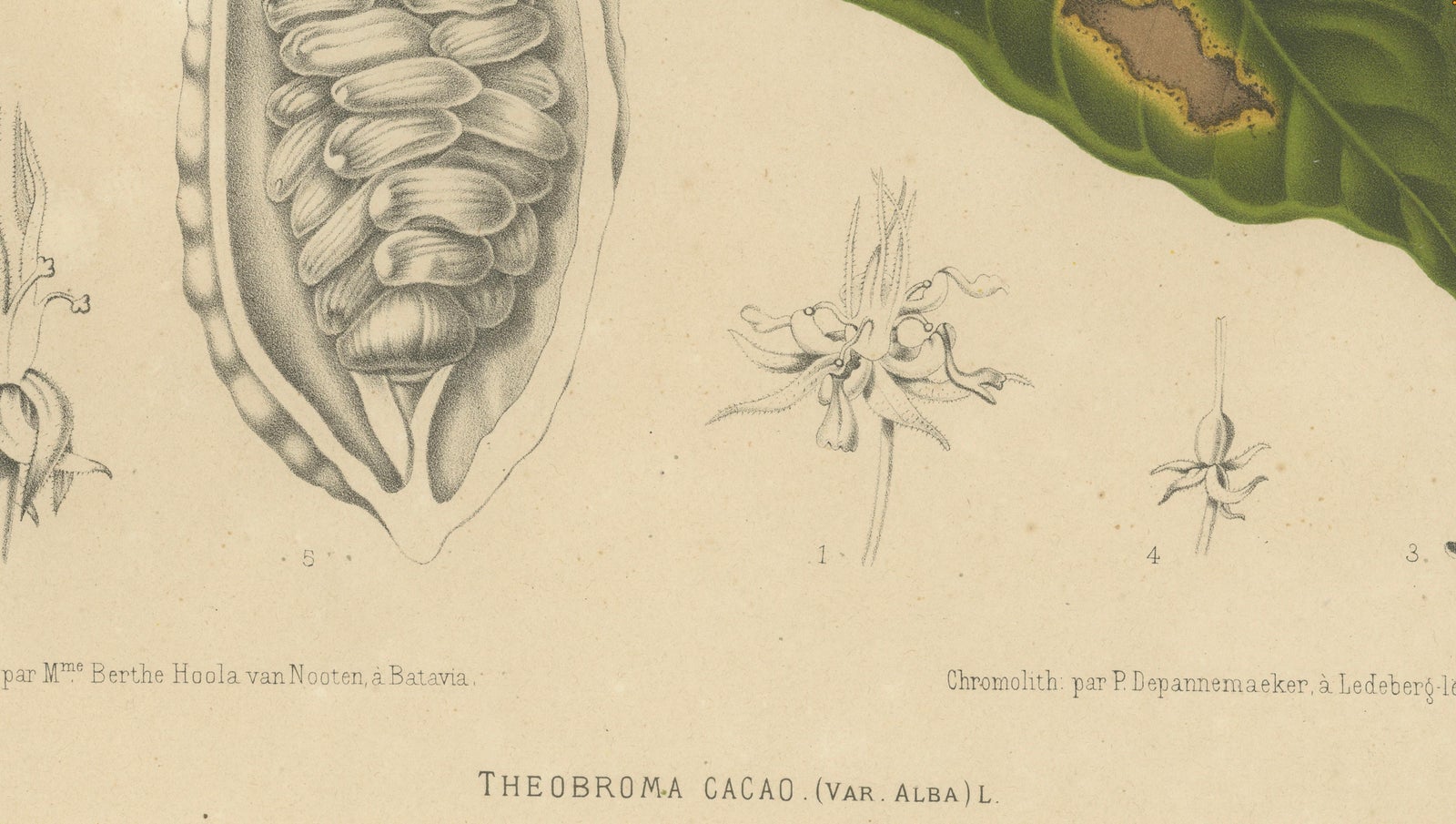
Close-ups
Framed and on the wall
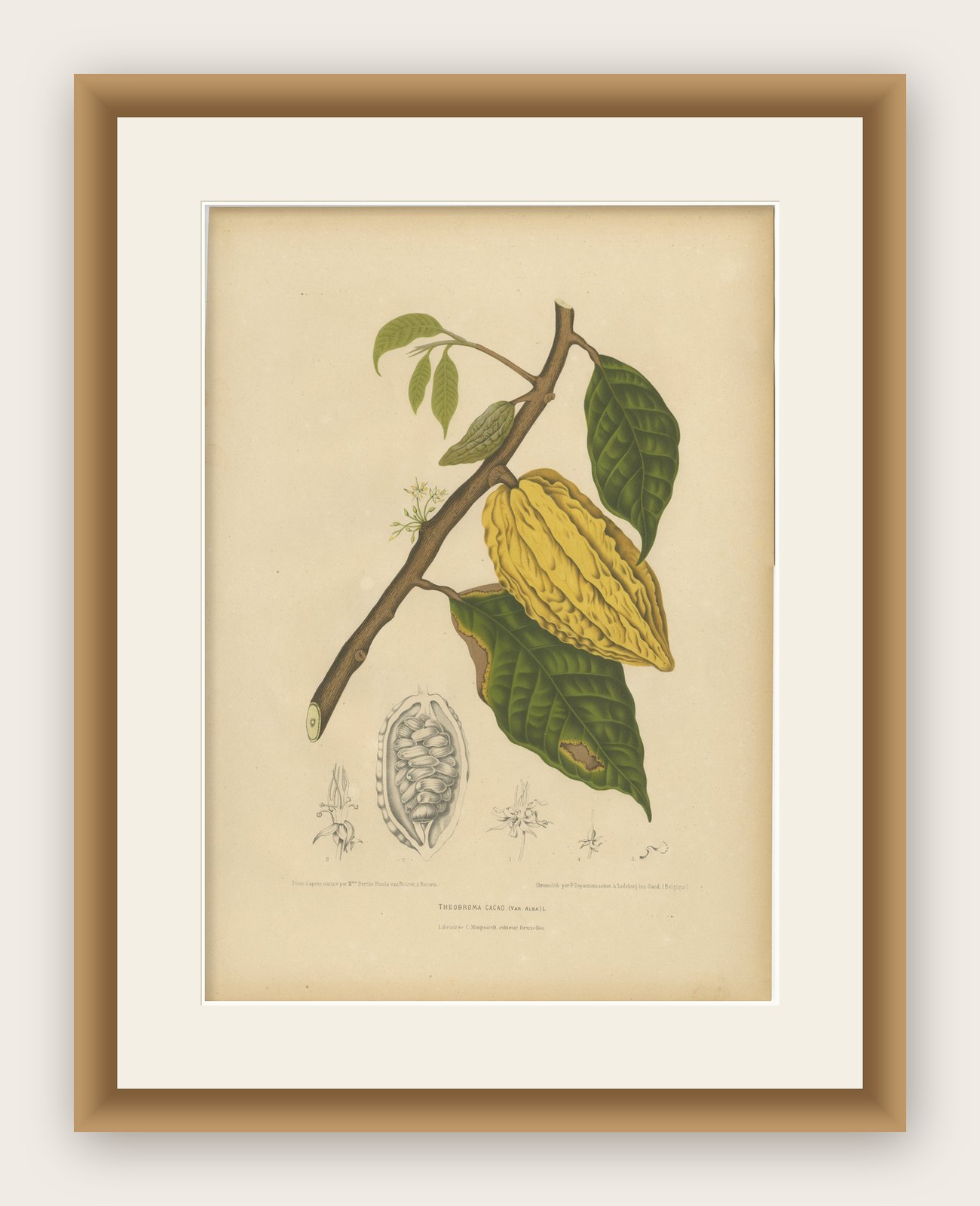
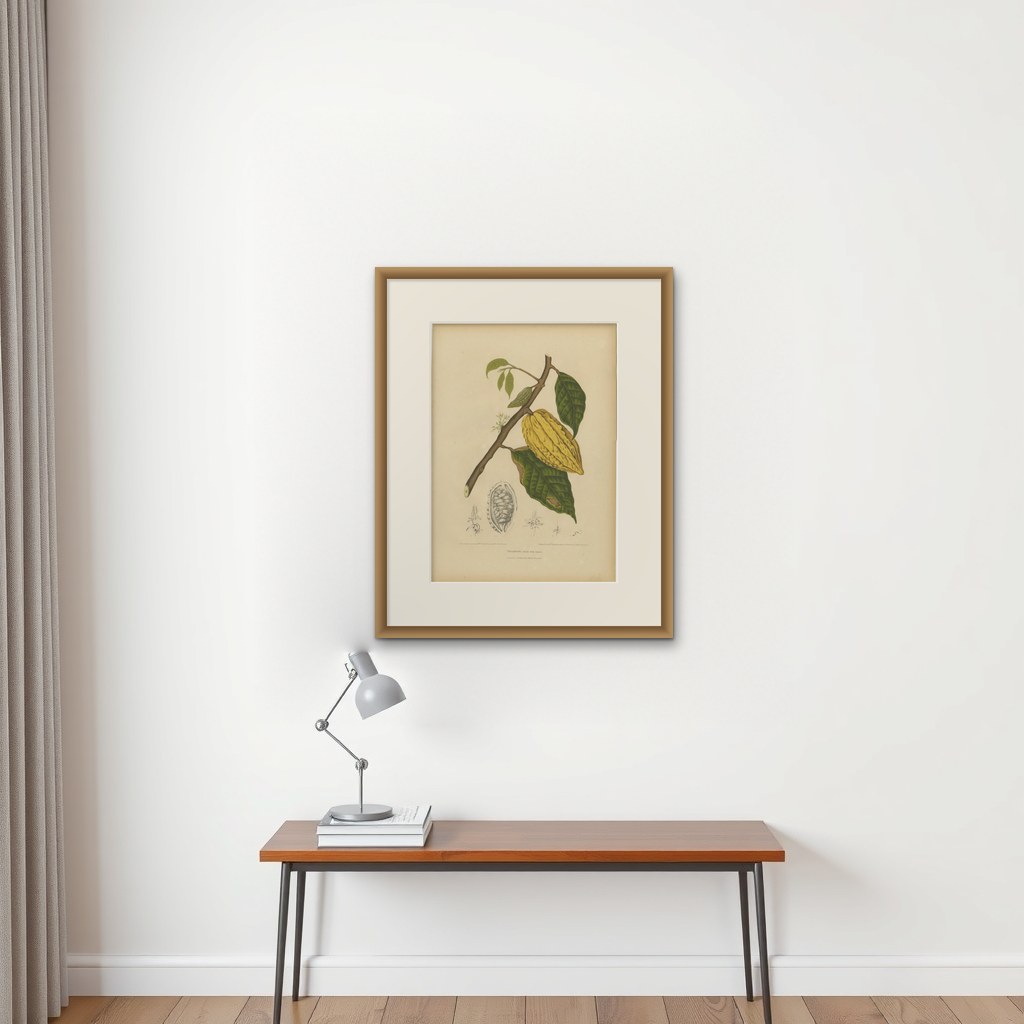

Frame and rooms are illustrations of how the print could look, drawn to its real size; it is sold unframed unless the description says otherwise.
Flora and Fauna
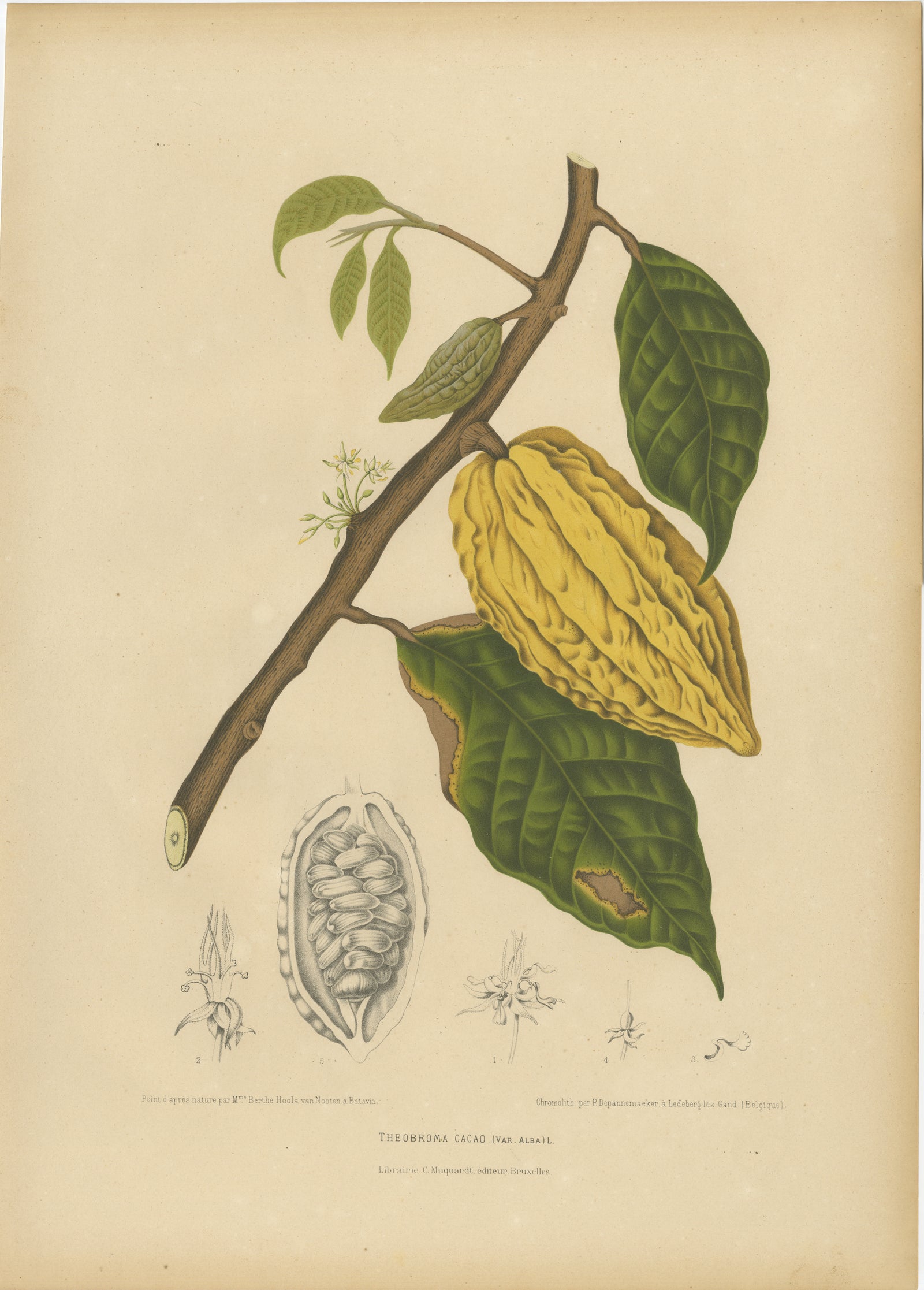
Antique White Cacao Botanical Chromolithograph by Hoola van Nooten, c. 1880
$1,555
€1,390 · £1,165
Original print, not a reproduction
Ships worldwide from the Netherlands, insured and tracked. 14-day returns.
- Date
- 1880
- Sheet size
- 21.9 × 15.7 in (55.5 × 40 cm)
- Condition
- Good. Good antique condition with age-related toning, occasional foxing and light handling wear consistent with age. Please examine all photographs carefully, as they form part of the description.
- Collection
- Flora and Fauna
- Period
- Netherlands Indies, 1850 and after
- Stock no.
- f_51121902
- Color
- Printed color
What the condition grades mean
- Excellent
- Bright and clean, with no faults worth mentioning.
- Very good
- Only light signs of age, such as faint toning.
- Good
- Normal signs of age for a sheet of this period: toning, some foxing, small marks or neat old repairs.
- Fair
- Clear faults such as staining, tears or repairs, priced to match.
Every fault we see is written in the condition note, and the whole sheet is shown uncropped in the photos.
Antique White Cacao Botanical Chromolithograph by Hoola van Nooten, c. 1880
Description:
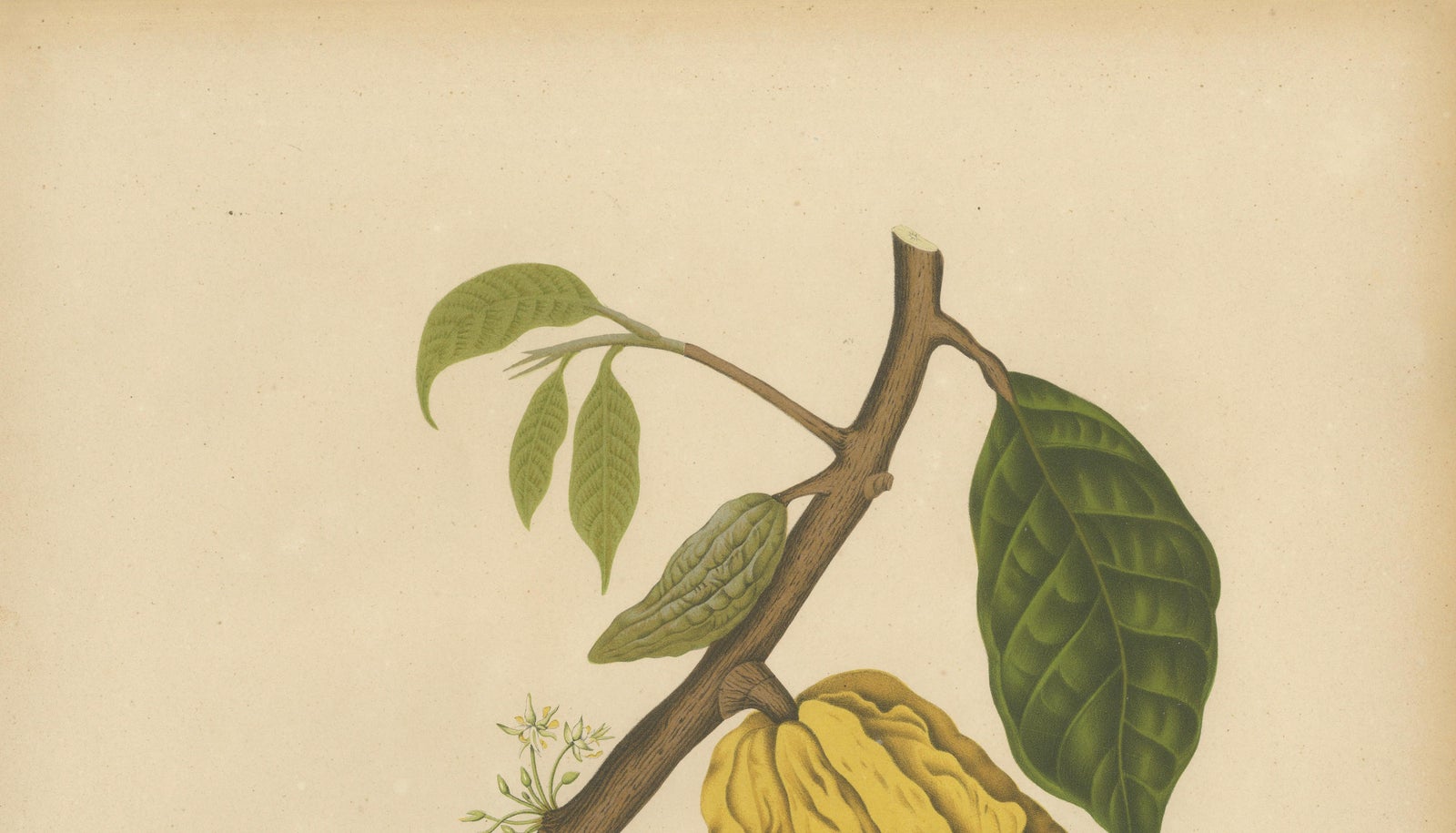
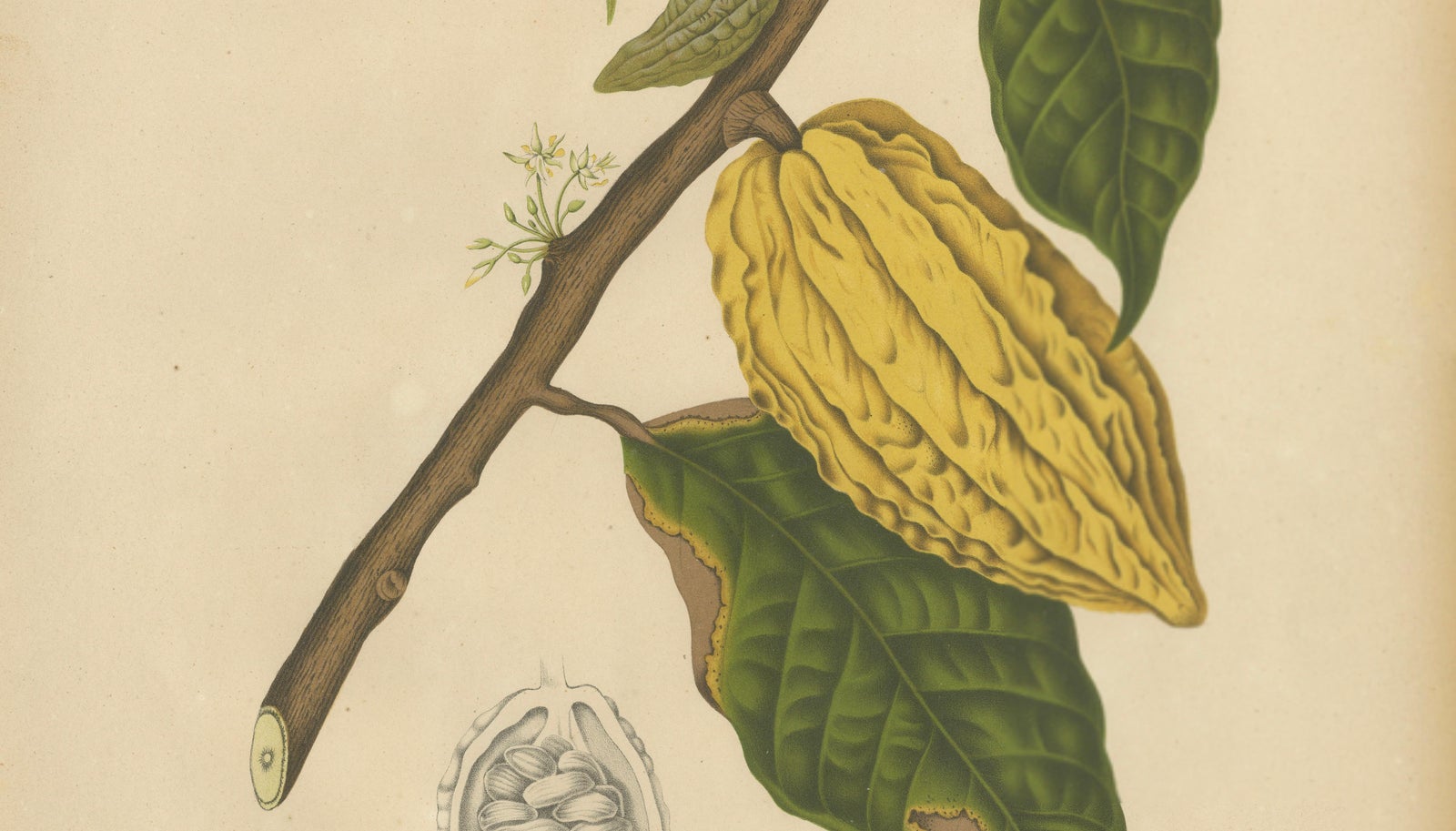
A magnificent original antique botanical chromolithograph depicting Theobroma cacao var. alba L., commonly known as White Cacao or White Cocoa. A rare variety of the cacao tree, White Cacao is highly prized for its pale beans, exceptional flavor, and rarity in cultivation. It is one of the most desirable botanical subjects from Berthe Hoola van Nooten's celebrated masterpiece, illustrating one of the world's most important economic plants.
Native to tropical America, cacao was introduced to Southeast Asia by European traders and became an important plantation crop throughout Java and the Dutch East Indies. White Cacao remained considerably rarer than the common varieties, making botanical illustrations of this cultivar especially sought after.
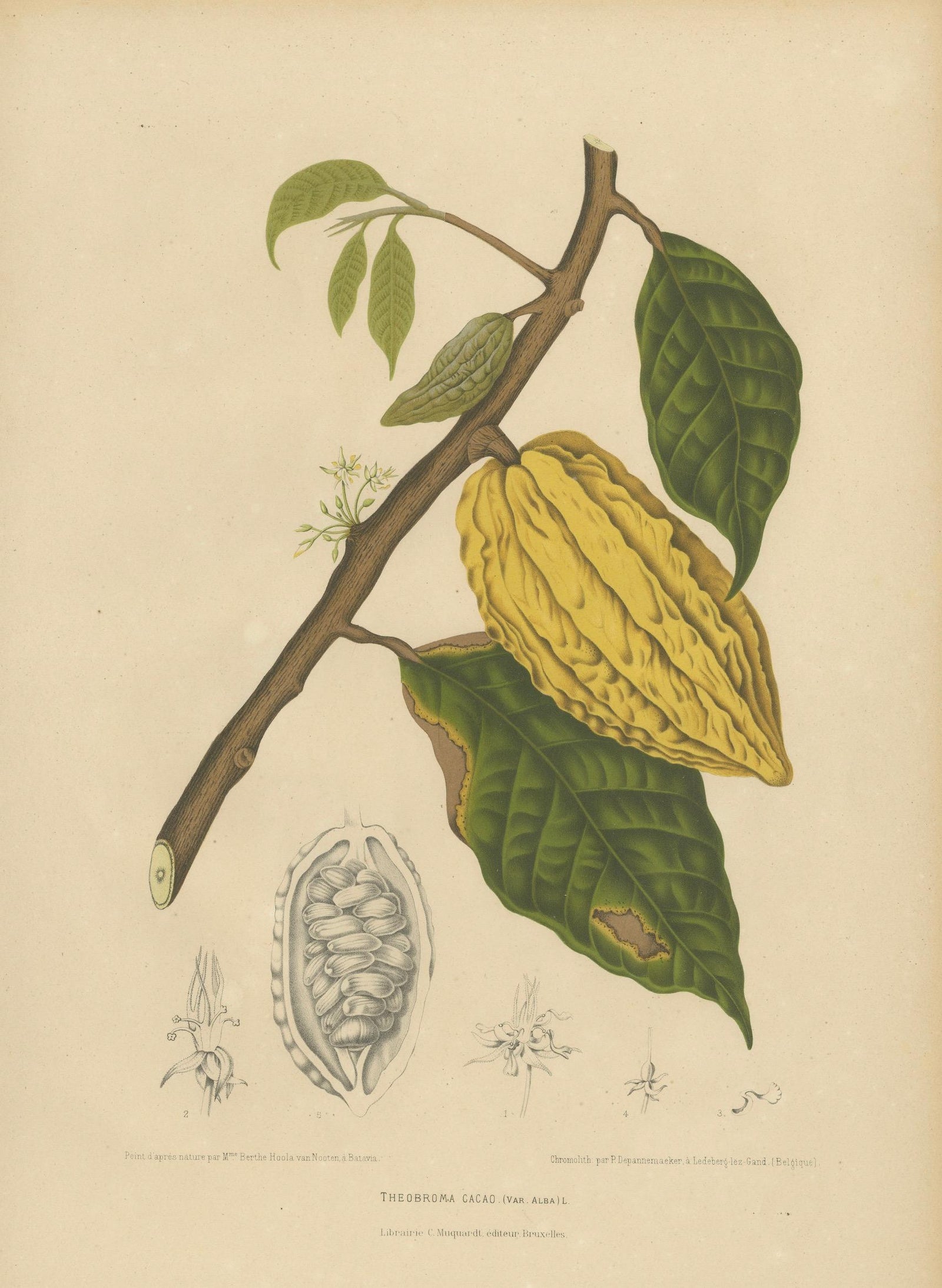
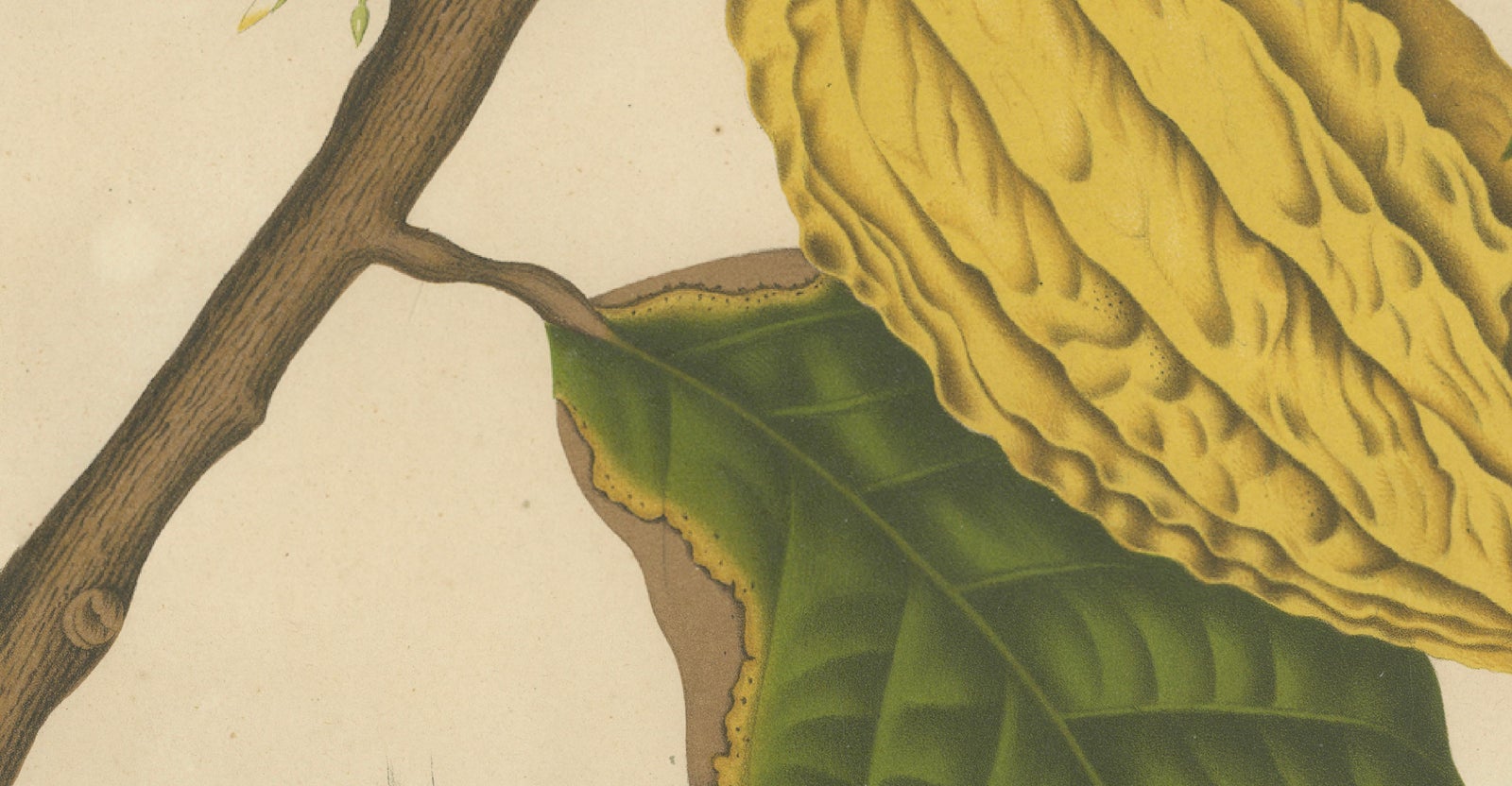
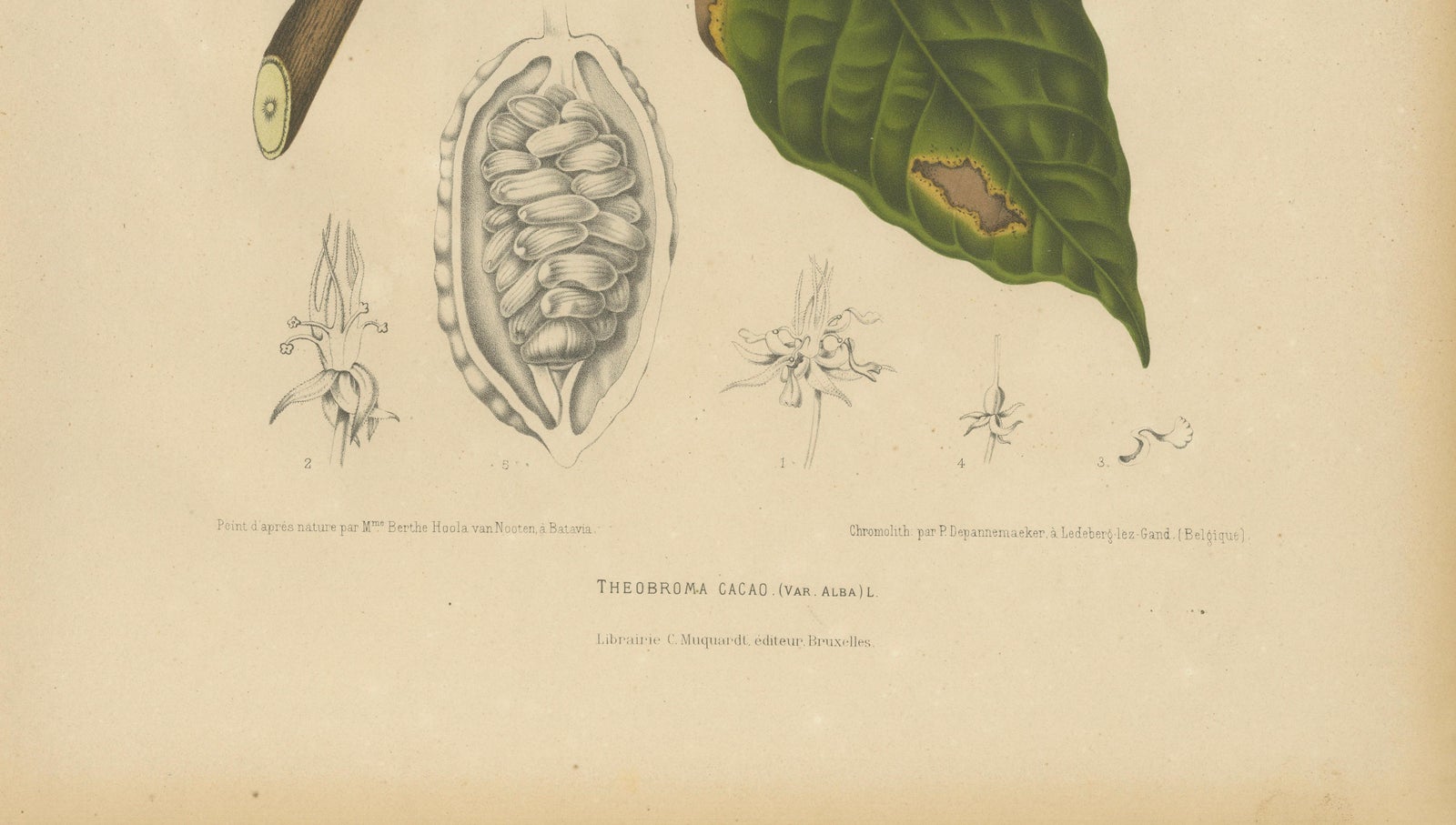
The composition beautifully illustrates a mature ribbed cacao pod suspended from the branch together with glossy evergreen foliage, delicate flowers emerging directly from the trunk and branch, and a detailed cross-section revealing the neatly arranged white cacao beans. The elegant balance of fruit, foliage and scientific detail makes this one of the finest and most decorative cacao plates ever produced.
The artwork was painted from life on the island of Java by the distinguished Dutch botanical artist Berthe Hoola van Nooten (1817 to 1892). It was published in her masterpiece, Fleurs, Fruits et Feuillages Choisis de l'Ile de Java, widely regarded as one of the finest nineteenth-century botanical publications devoted to the flora of the Dutch East Indies. Printed in rich chromolithography by P. De Pannemaeker of Ghent, this plate was issued in the third edition published in Brussels by Librairie Européenne C. Muquardt around 1880.
Theobroma, meaning "Food of the Gods," supplied the beans from which chocolate is made and remains one of the world's most economically significant tropical crops. The rare White Cacao variety is particularly valued by artisan chocolate makers for its delicate flavor profile and limited production. This original antique print combines scientific importance, historical significance and exceptional decorative beauty, making it one of the finest plates in the entire Hoola van Nooten series.
This is an original antique print, printed circa 1880, and not a modern reproduction or later copy.
Artist:
Berthe Hoola van Nooten (1817 to 1892)
Publication:
Fleurs, Fruits et Feuillages Choisis de l'Ile de Java
Publisher:
Librairie Européenne C. Muquardt, Brussels
Printer:
P. De Pannemaeker, Ghent
Circa 1880
Medium:
Original chromolithograph on wove paper.
Good antique condition with age-related toning, occasional foxing and light handling wear consistent with age. Please examine all photographs carefully, as they form part of the description.
The print is sold unframed.
Among all the fruit subjects in the Hoola van Nooten series, this is one of the rarest and most desirable.