Close-ups
Framed and on the wall
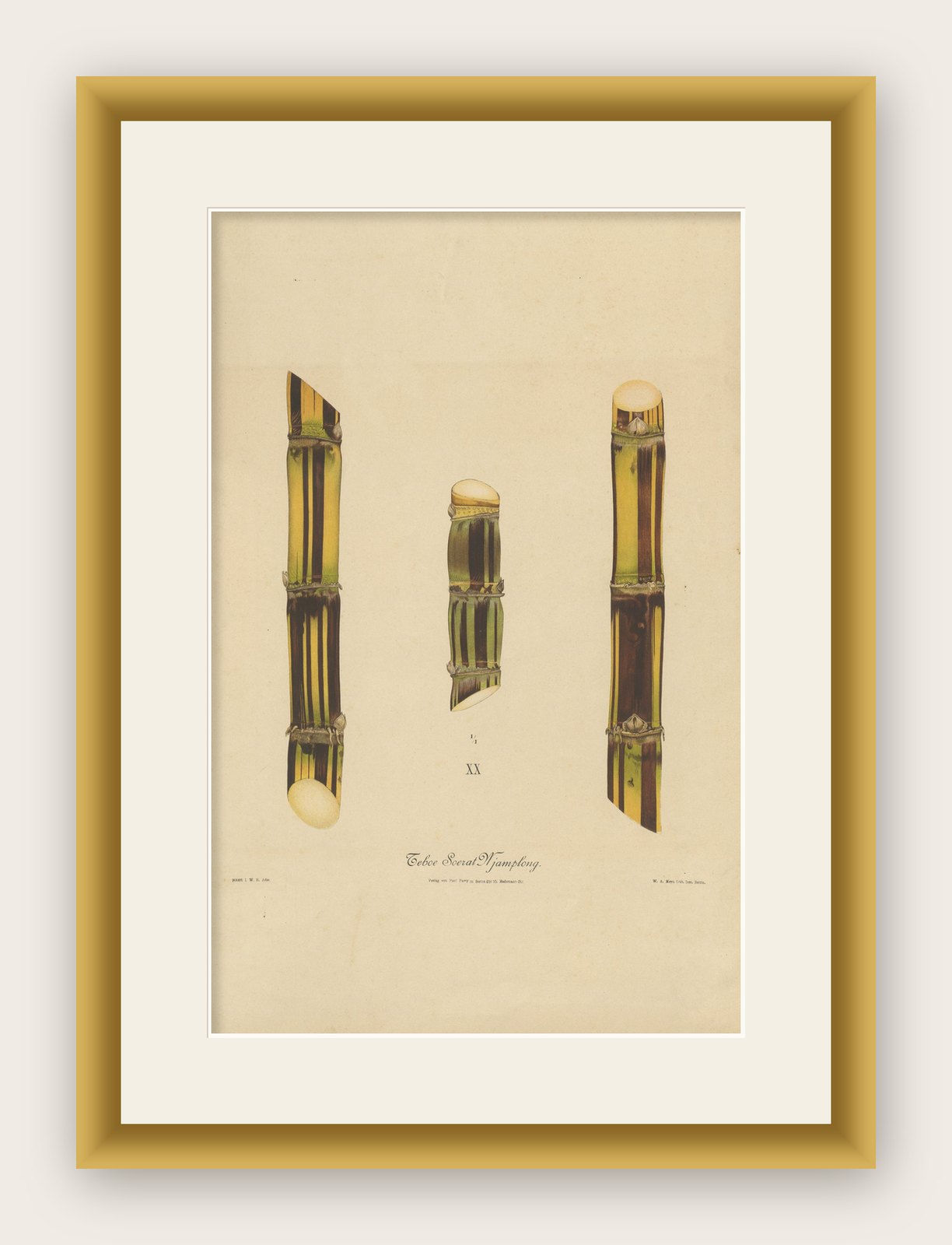
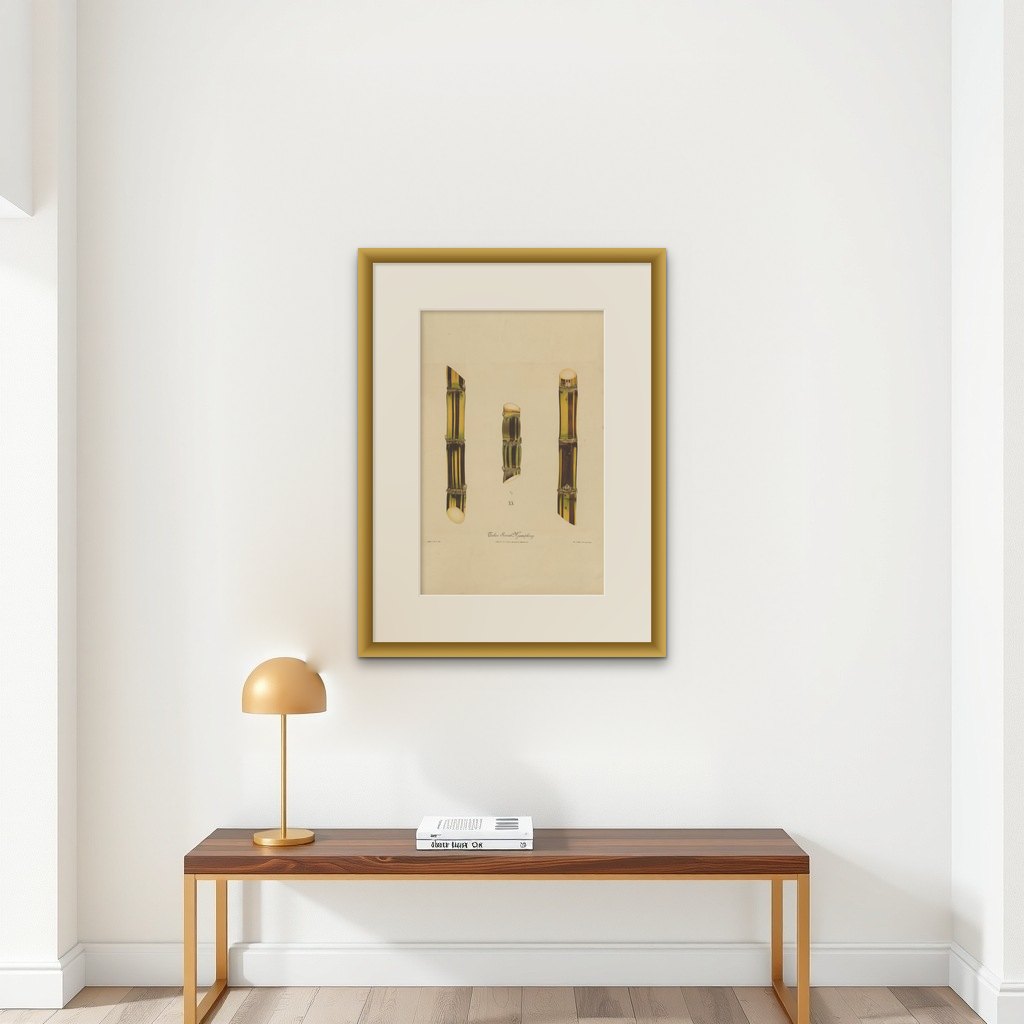
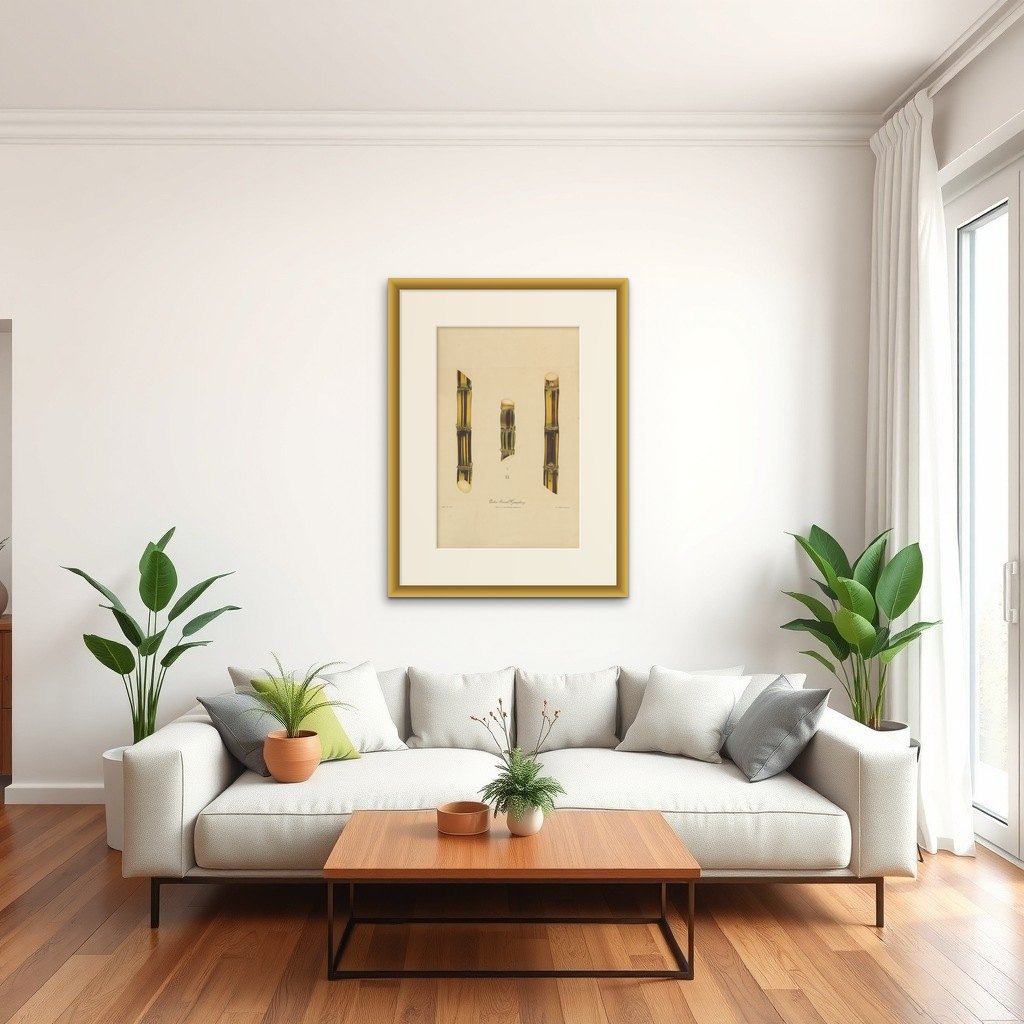
Frame and rooms are illustrations of how the print could look, drawn to its real size; it is sold unframed unless the description says otherwise.
Flora and Fauna
Antique Sugarcane Chromolithograph, Teboe Soerat Njaplong, Java 1892
€895
$1,000 · £750
Original print, not a reproduction
Ships worldwide from the Netherlands, insured and tracked. 14-day returns.
- Date
- 1892
- Sheet size
- 23.6 × 15.7 in (60 × 40 cm)
- Condition
- Good. Original chromolithograph on paper. Light overall toning consistent with age, with minor scattered spotting and faint edge wear, primarily confined to the margins. A small area of edge wear visible at the lower right margin. Image area remains clean.
- Island
- Java
- Collection
- Flora and Fauna
- Period
- Netherlands Indies, 1850 and after
- Stock no.
- f_48059052
- Color
- Printed color
What the condition grades mean
- Excellent
- Bright and clean, with no faults worth mentioning.
- Very good
- Only light signs of age, such as faint toning.
- Good
- Normal signs of age for a sheet of this period: toning, some foxing, small marks or neat old repairs.
- Fair
- Clear faults such as staining, tears or repairs, priced to match.
Every fault we see is written in the condition note, and the whole sheet is shown uncropped in the photos.
Antique Sugarcane Chromolithograph, Teboe Soerat Njaplong, Java 1892
Description
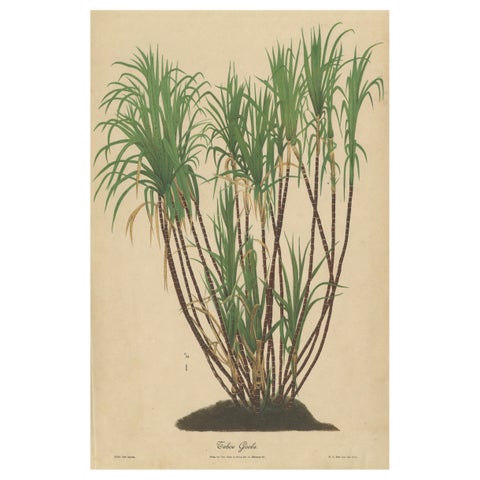
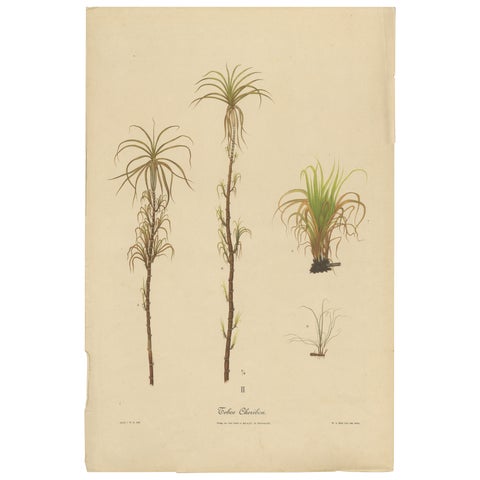
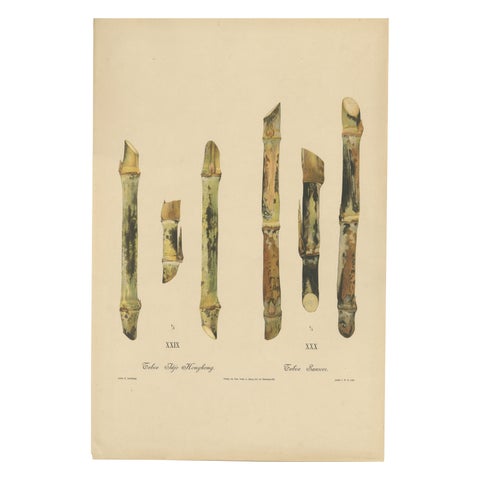
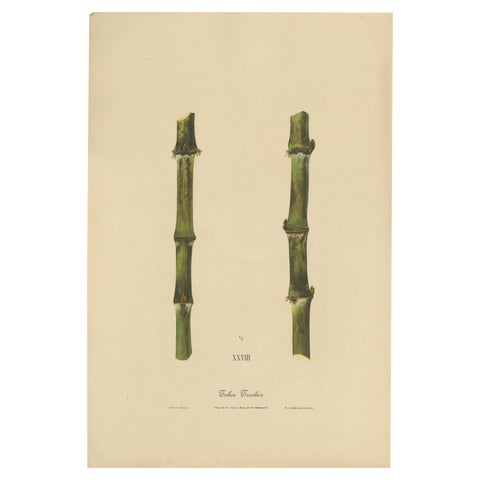
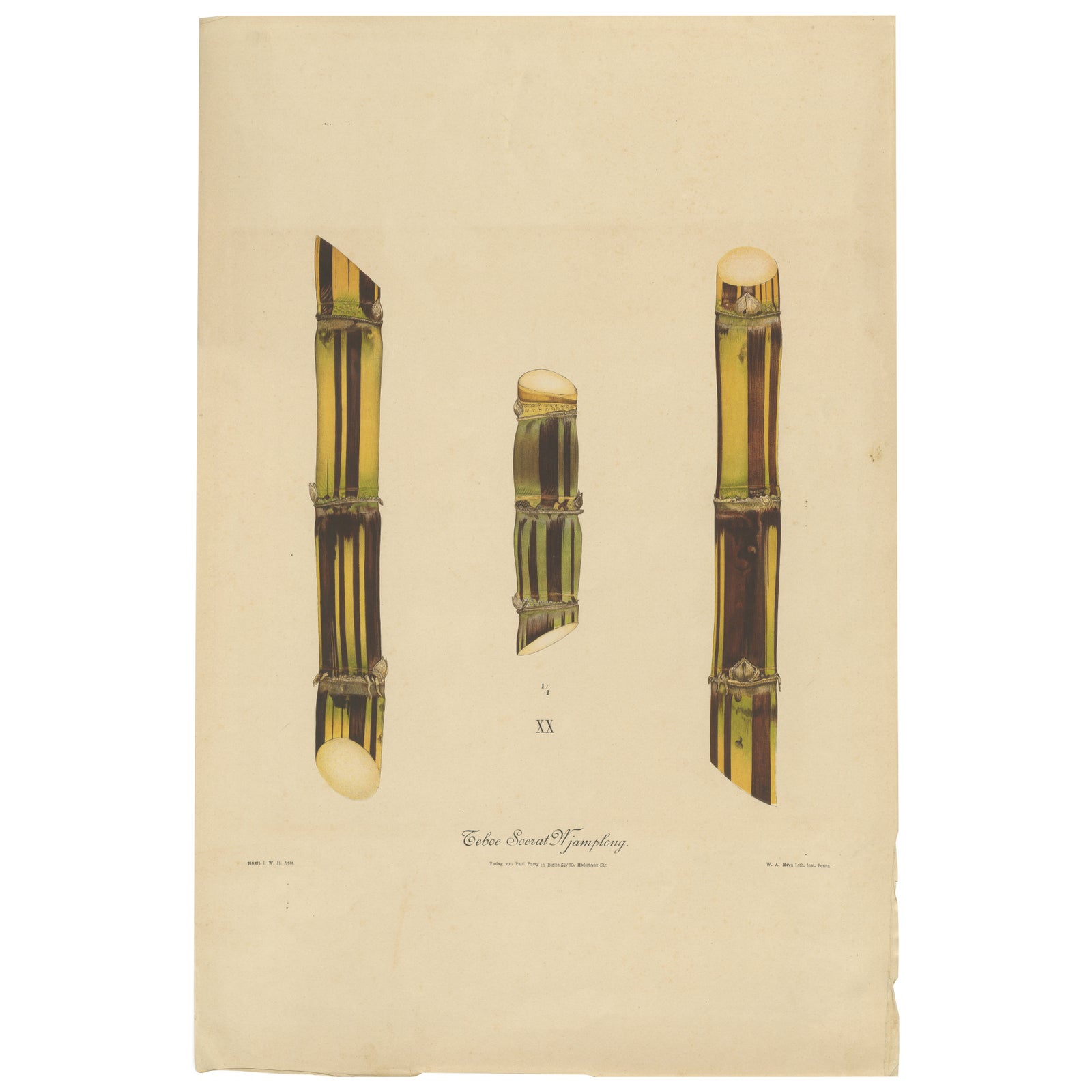
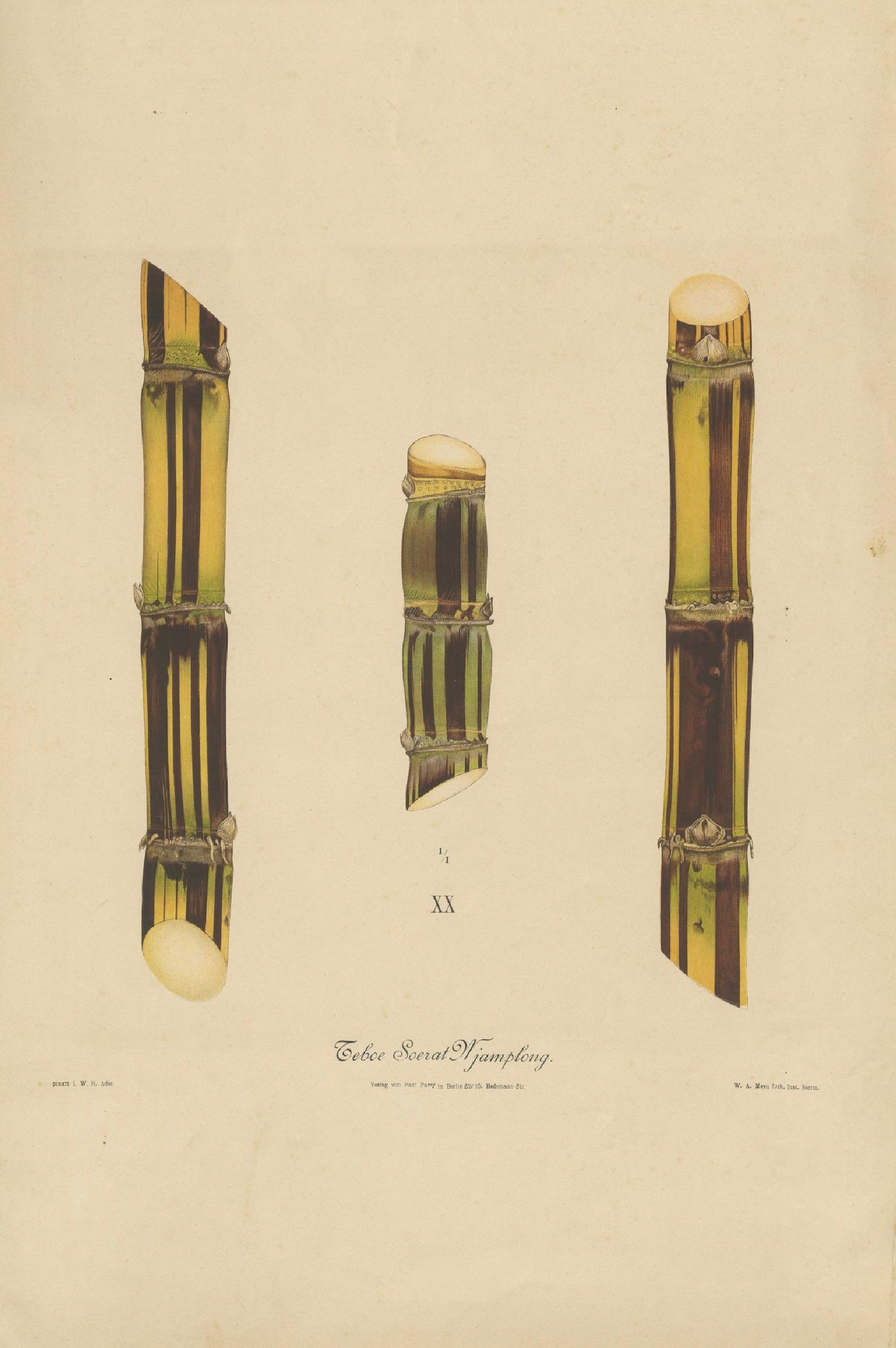
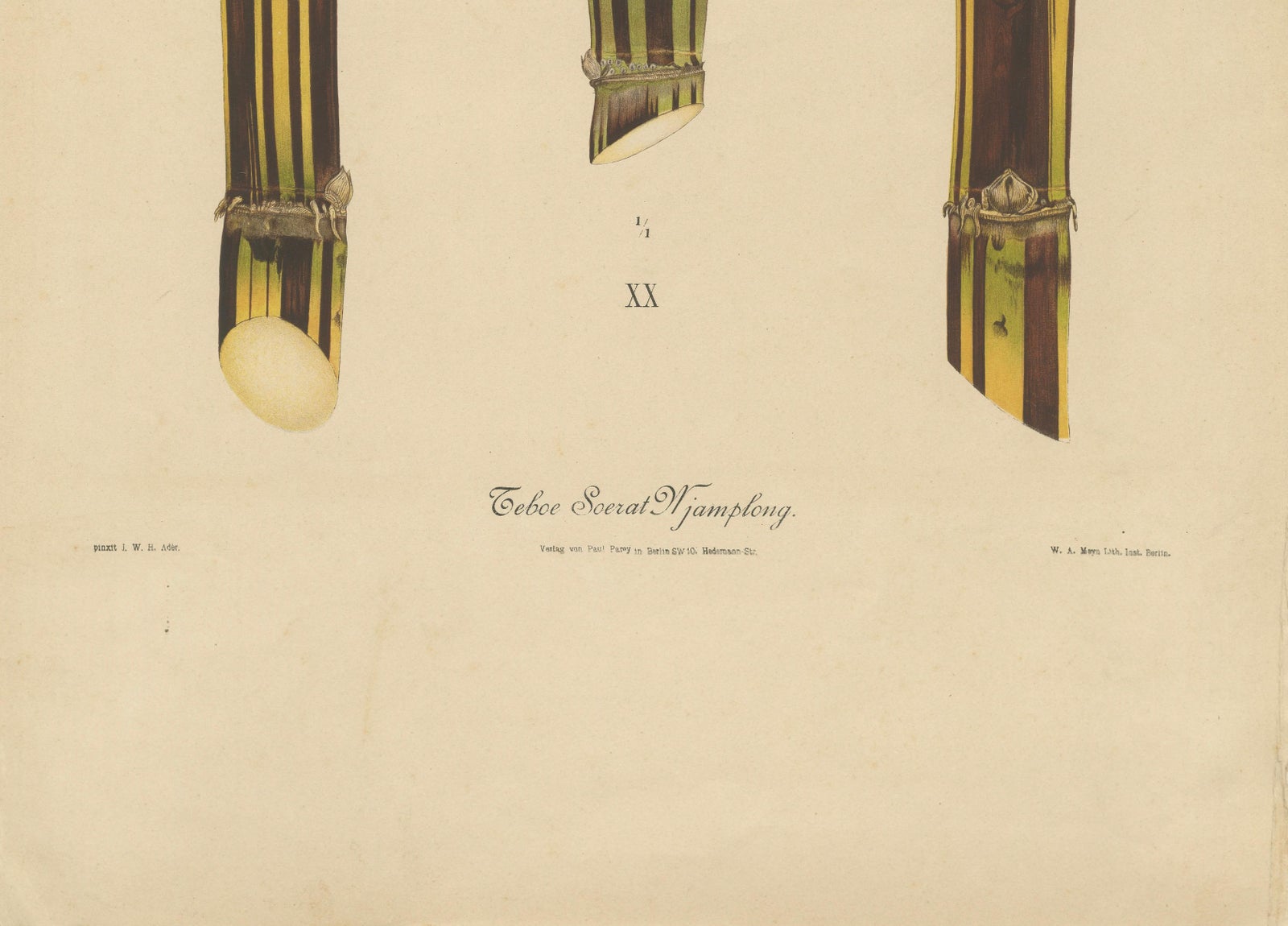
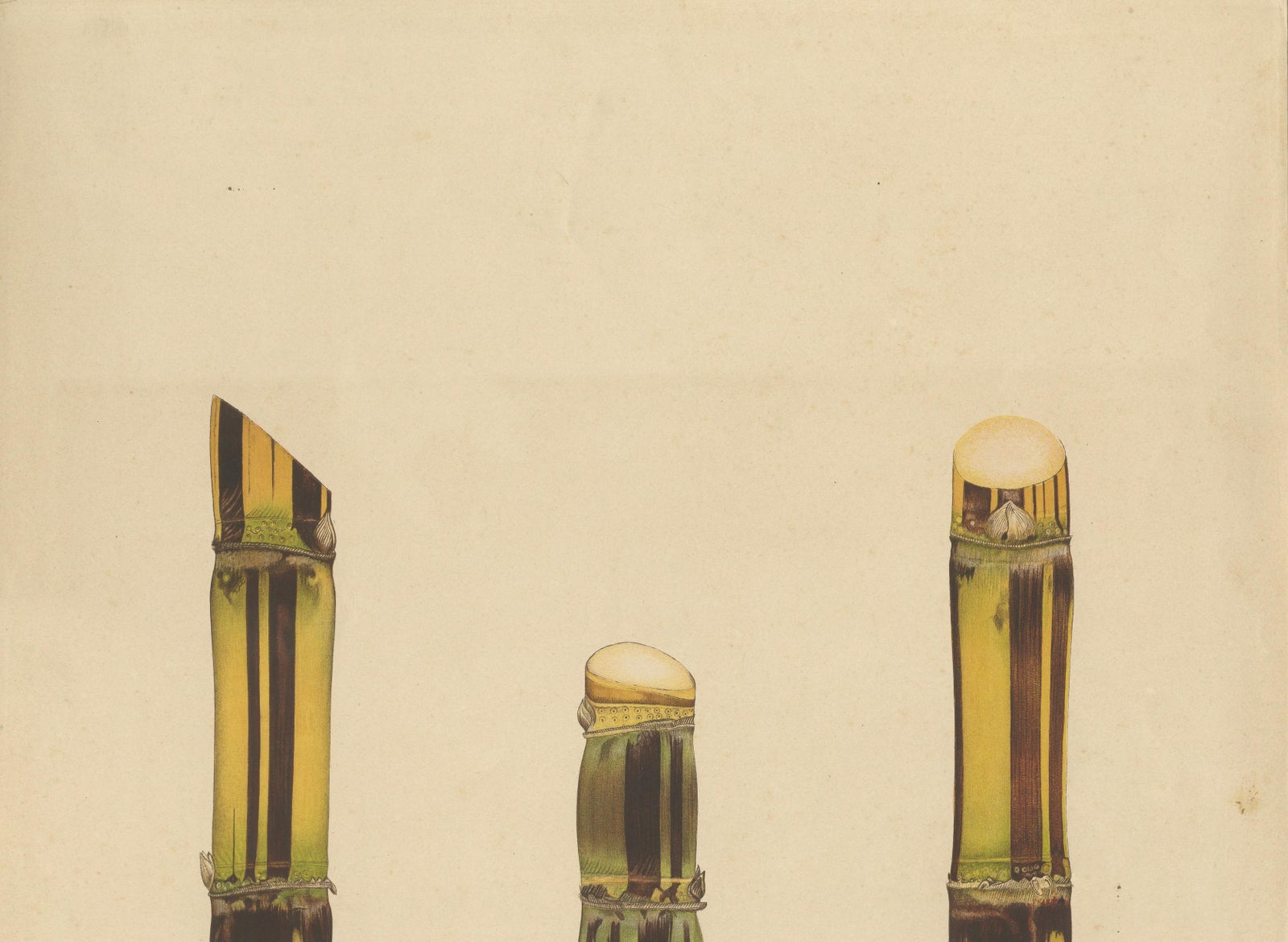
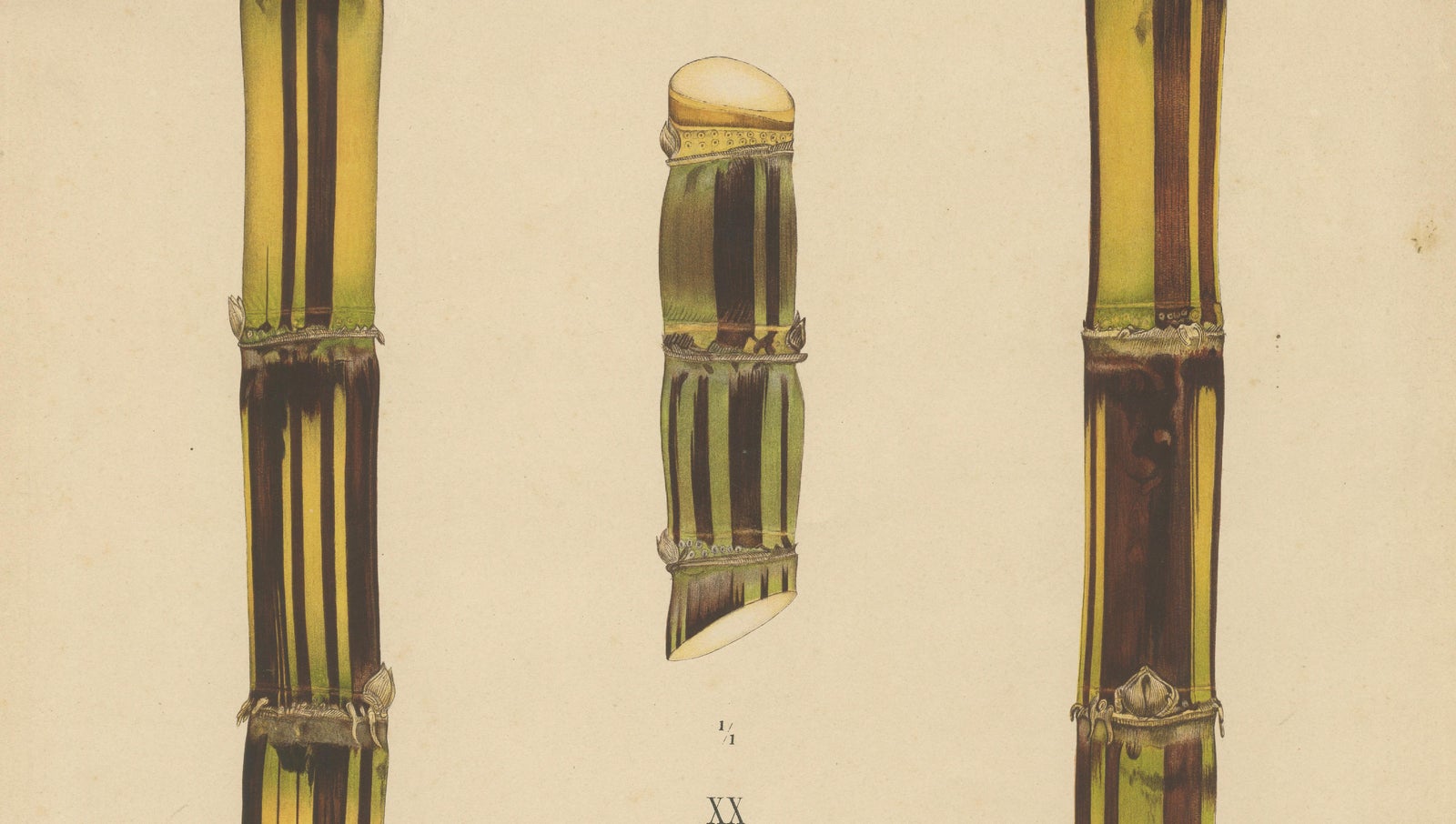
This large chromolithograph illustrates Teboe Soerat Njaplong, a distinct sugarcane variety shown through multiple cut and segmented cane forms arranged in a balanced vertical composition. The plate was published in Berlin in 1892 as part of Friedrich Soltwedel’s important botanical atlas Formen und Farben von Saccharum officinarum L. und verwandten Arten, documenting cultivated sugarcane types from Java and the wider Dutch East Indies.
Unlike plates depicting complete plants, this composition focuses on the physical structure of the cane itself, presenting variations in cut angle, node formation, and surface coloration. The contrast between the tall, elongated canes and the smaller central segment creates a strong visual rhythm that feels almost sculptural. The palette of olive greens, warm yellows, and darker brown accents gives the image depth while remaining calm and refined.
The plate was produced using chromolithography by W. A. Meyn, one of the leading Berlin lithographic workshops of the late nineteenth century. The technique allows for subtle tonal layering and precise surface detail, qualities that are clearly visible in the rendering of the cane’s fibrous texture and growth nodes. Originally intended for agricultural and scientific reference, the plate today reads as a striking piece of graphic wall art with strong architectural presence.
This example works particularly well as a standalone decorative print or as part of a larger grouping of sugarcane plates. Its clean background and vertical emphasis make it suitable for both classic interiors and contemporary spaces where restrained color and form are preferred.
Condition report
Original chromolithograph on paper. Light overall toning consistent with age, with minor scattered spotting and faint edge wear, primarily confined to the margins. A small area of edge wear visible at the lower right margin. Image area remains clean and well preserved. Plate margins visible.
Framing tips
This print benefits from a frame that emphasizes height and structure. A slim black or dark walnut frame combined with an ivory or parchment-colored mat works particularly well. For a more modern look, a narrow natural oak frame with a soft off-white mat will enhance the subtle green and ochre tones without overpowering the image. Allow generous margins for maximum visual impact.
Technique: Chromolithograph
Maker: W. A. Meyn after Friedrich Soltwedel, Berlin, 1892