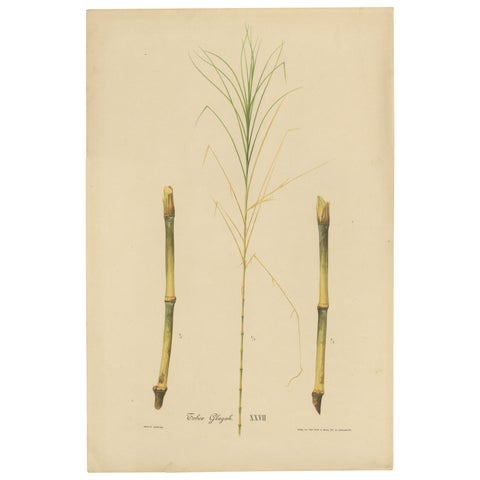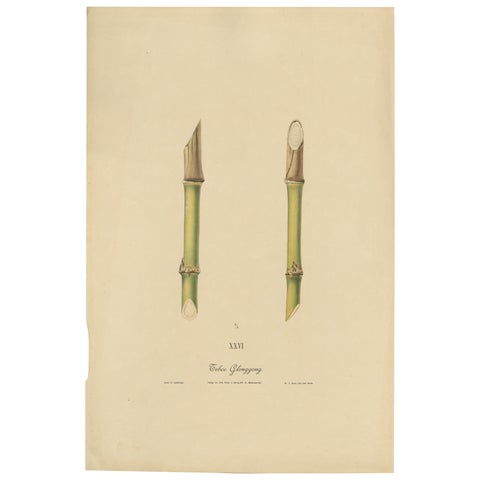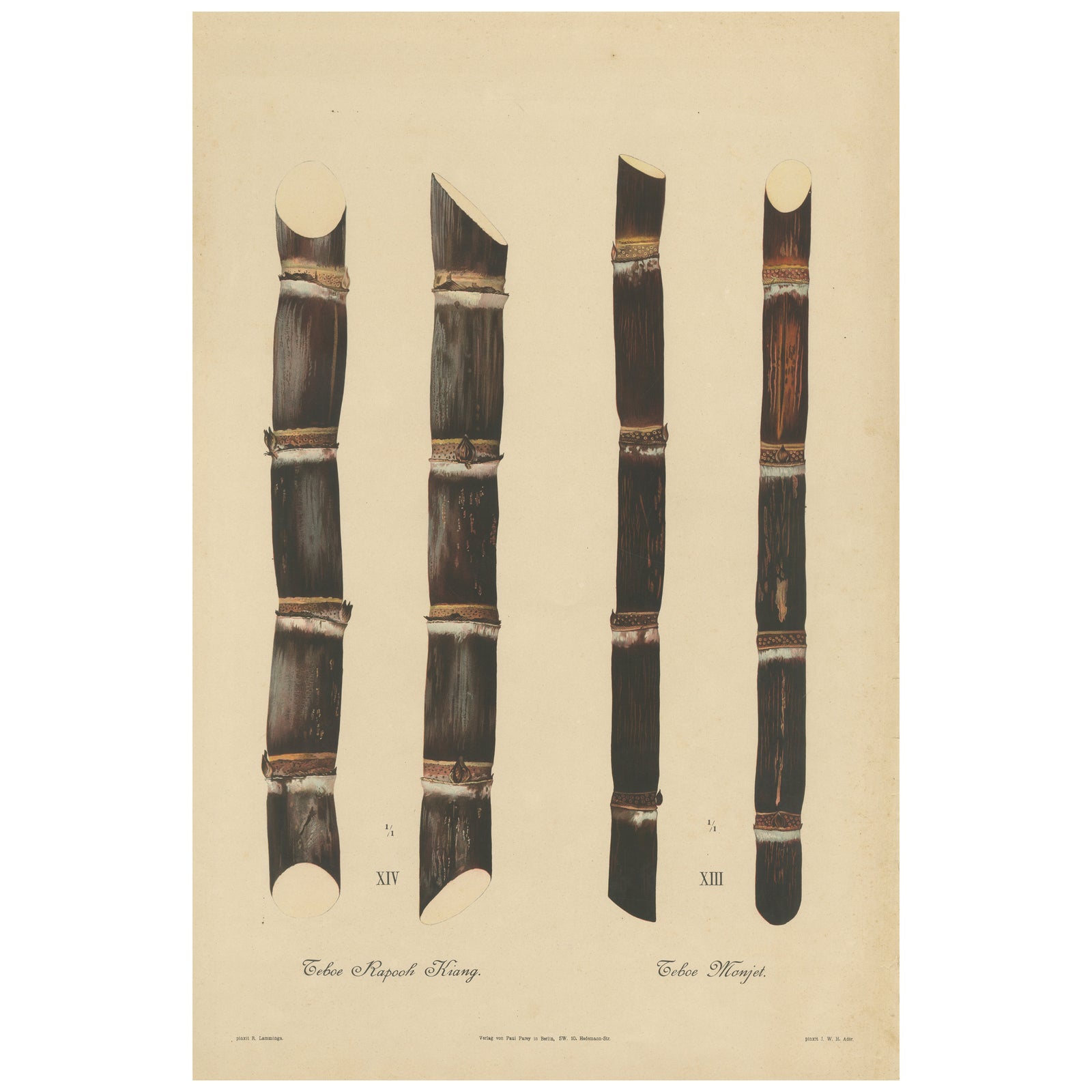
Close-ups
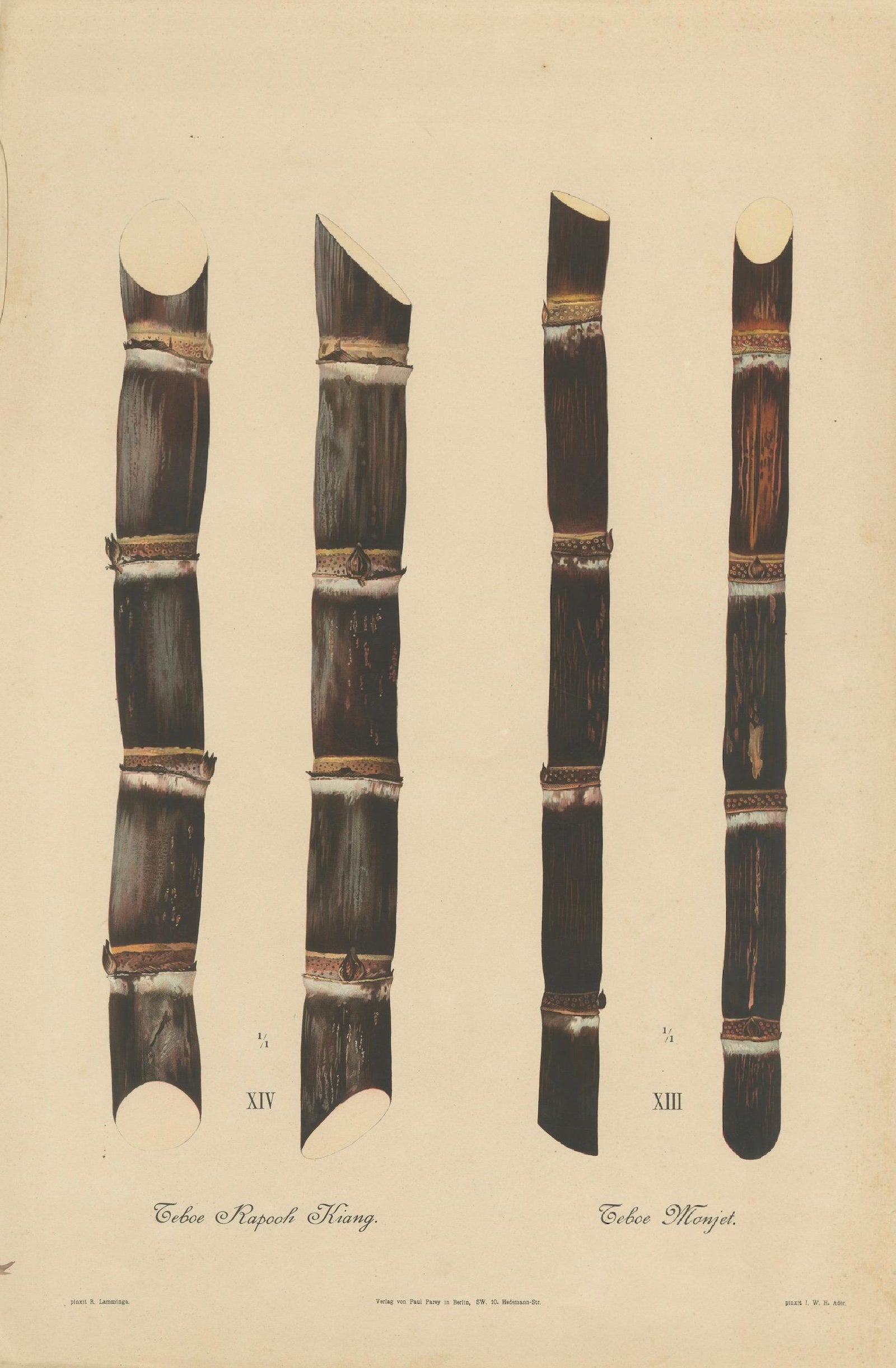
Framed and on the wall
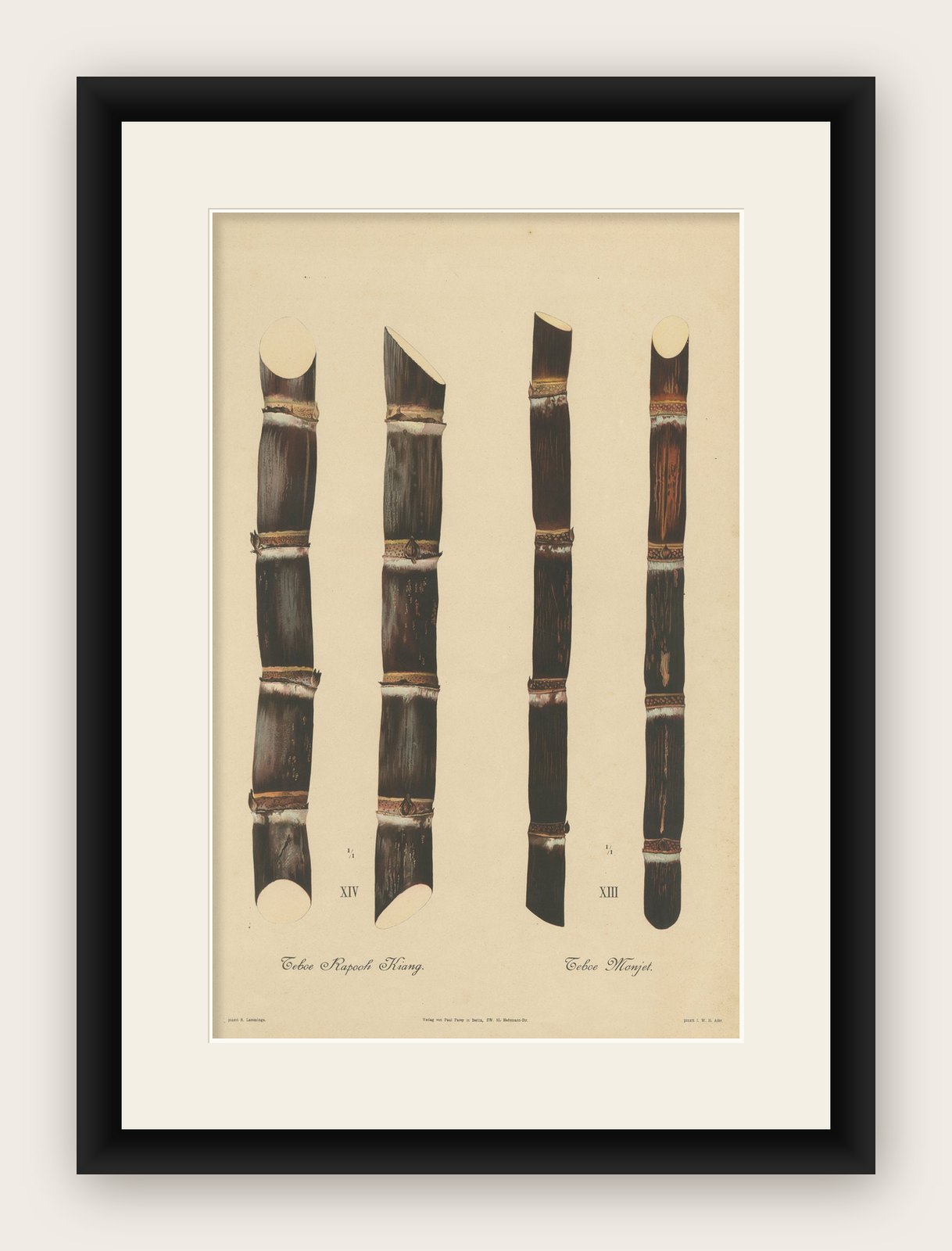
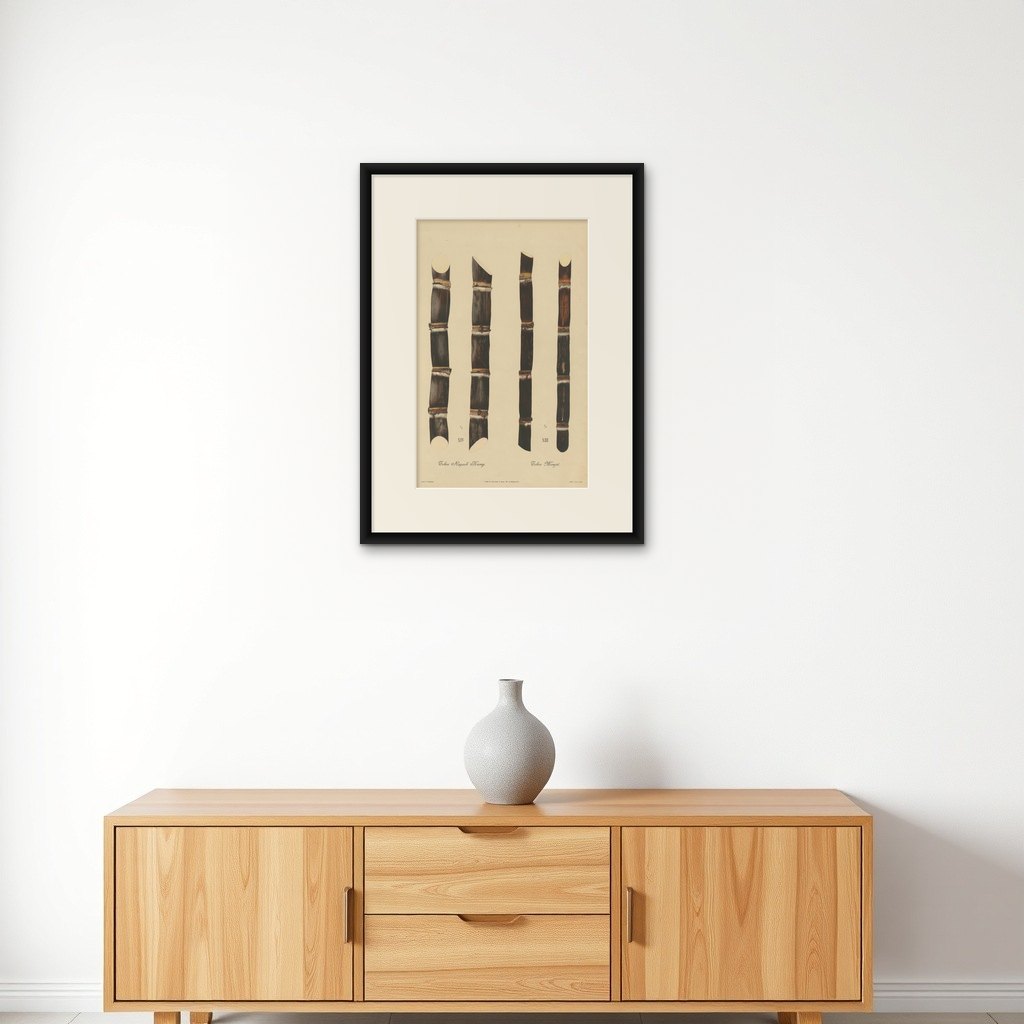

Frame and rooms are illustrations of how the print could look, drawn to its real size; it is sold unframed unless the description says otherwise.
Flora and Fauna
Antique Sugarcane Chromolithograph, Teboe Monjet and Teboe Rapooh Kiang, 1892
£750
$1,000 · €895
Original print, not a reproduction
Ships worldwide from the Netherlands, insured and tracked. 14-day returns.
- Date
- 1892
- Sheet size
- 23.6 × 15.7 in (60 × 40 cm)
- Condition
- Good. One plate in very good condition for its age. Light, even age toning and minor surface marks consistent with atlas plates. Slight marginal wear. Colors remain well preserved. Plate mark visible. No significant tears or losses.
- Island
- Java
- Collection
- Flora and Fauna
- Period
- Netherlands Indies, 1850 and after
- Stock no.
- f_48058192
- Color
- Printed color
What the condition grades mean
- Excellent
- Bright and clean, with no faults worth mentioning.
- Very good
- Only light signs of age, such as faint toning.
- Good
- Normal signs of age for a sheet of this period: toning, some foxing, small marks or neat old repairs.
- Fair
- Clear faults such as staining, tears or repairs, priced to match.
Every fault we see is written in the condition note, and the whole sheet is shown uncropped in the photos.
Antique Sugarcane Chromolithograph, Teboe Monjet and Teboe Rapooh Kiang, 1892
Description
This large chromolithographic plate illustrates two distinct sugarcane varieties cultivated in Java and was published in Berlin in 1892 as part of Friedrich Soltwedel’s botanical study Formen und Farben von Saccharum officinarum L. und verwandten Arten. Produced by W. A. Meyn, the plate exemplifies the refined quality of late nineteenth-century agricultural illustration, combining careful scientific documentation with strong visual presence.
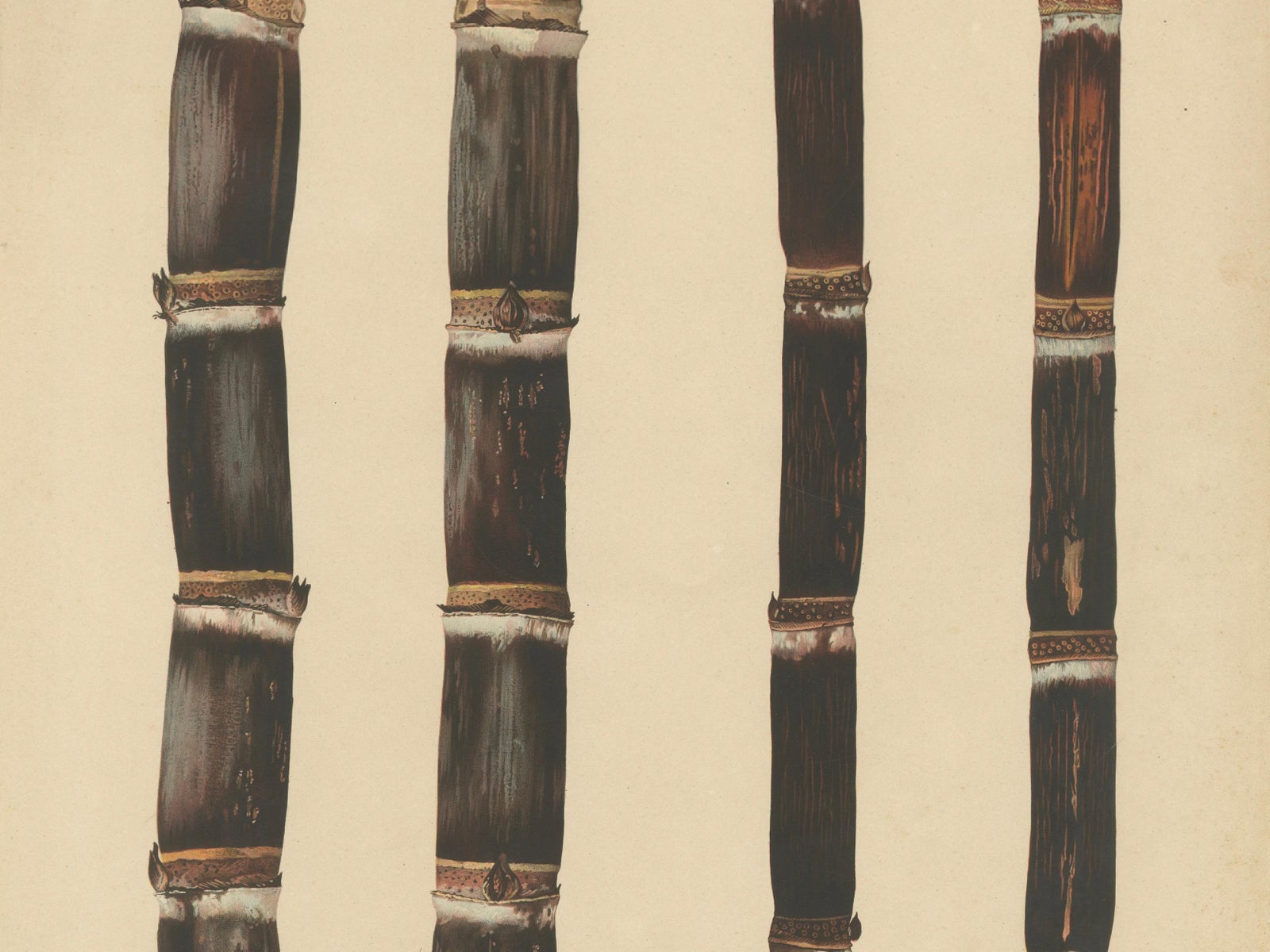
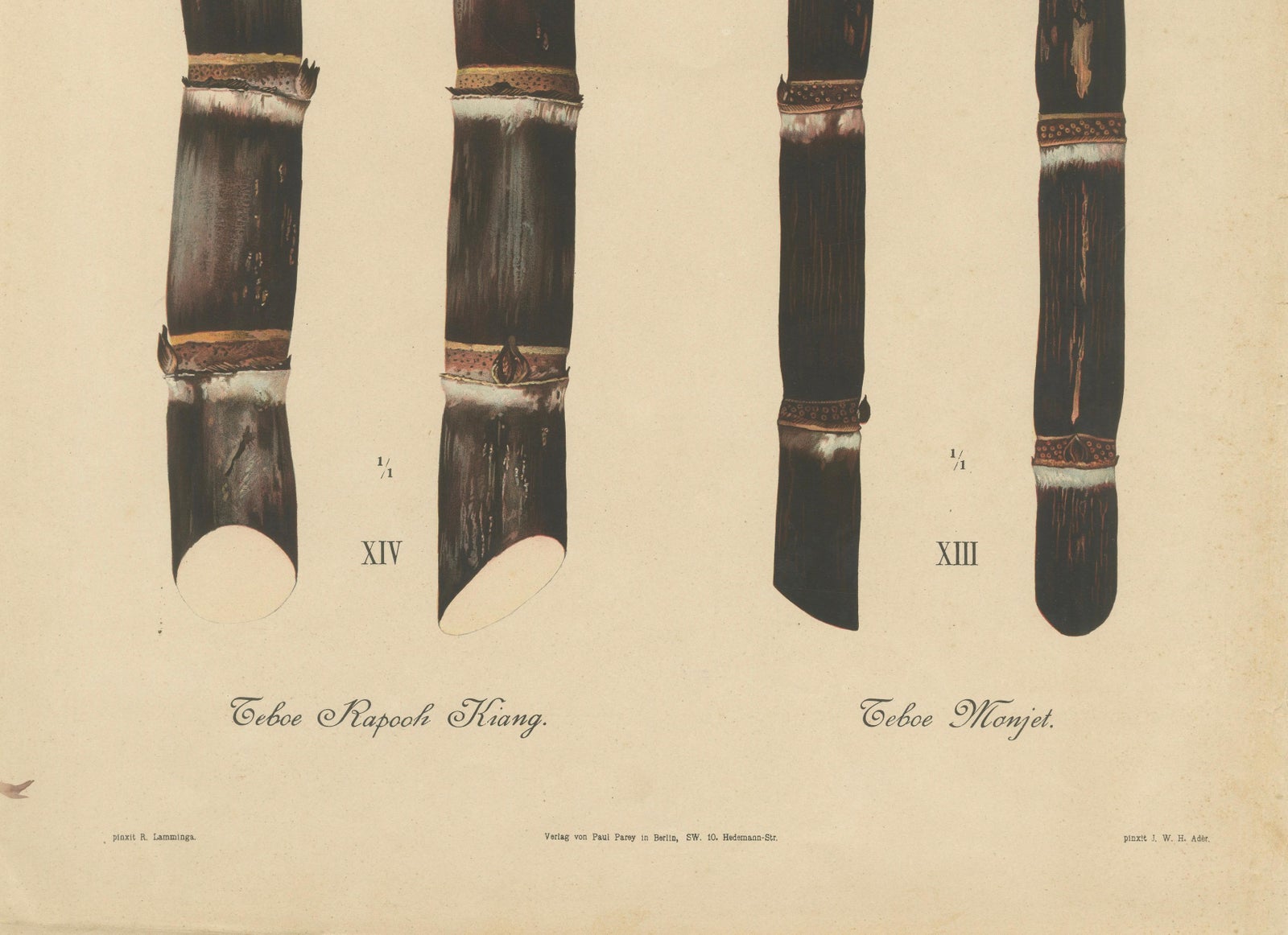
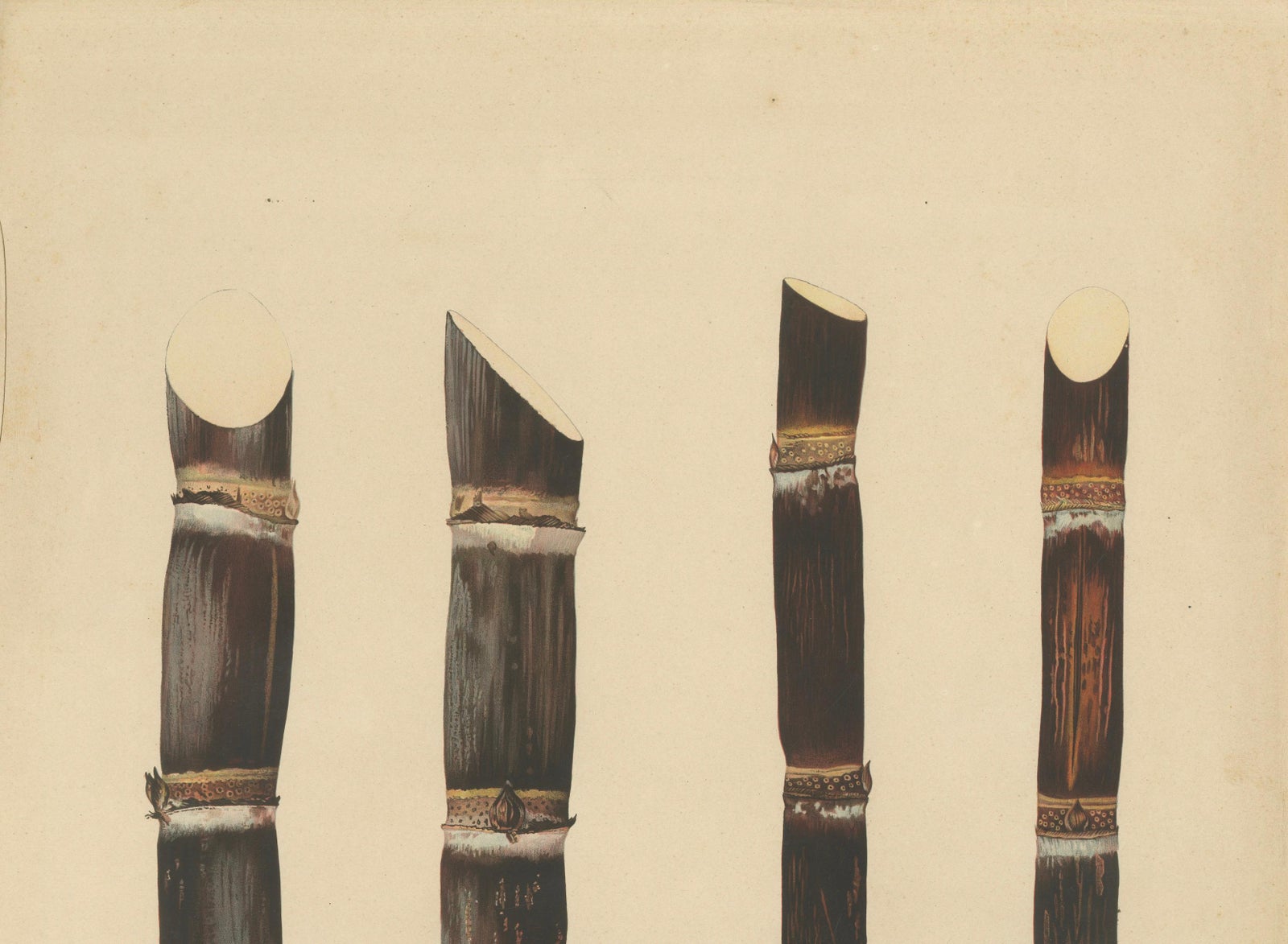
The sheet contains Plates XIII and XIV, depicting Teboe Monjet and Teboe Rapooh Kiang. Teboe Monjet is shown as a slender, dark cane with pronounced nodes and a deep brown-black surface, while Teboe Rapooh Kiang appears thicker and more massive, with subtle tonal variations across its segments. Both varieties are presented in full height against a plain background, emphasizing structural differences, surface texture, and color.
These images were created during a period of systematic botanical research in the Dutch East Indies, when sugarcane cultivation was central to plantation agriculture and colonial economic policy. Soltwedel’s atlas of plates was issued separately from the accompanying text volume and is now increasingly scarce, especially in well-preserved condition.
With its tall vertical format and dark, dramatic color palette, this plate has strong decorative impact and is well suited for collectors of botanical or colonial material as well as for interior designers seeking large-scale historical imagery with depth and character. Companion plates from the same series depicting additional Javanese sugarcane varieties are also available; a combined offer can be arranged.
Condition report
One plate in very good condition for its age. Light, even age toning and minor surface marks consistent with atlas plates. Slight marginal wear. Colors remain well preserved. Plate mark visible. No significant tears or losses.
Framing suggestions
Best framed vertically. A dark walnut, ebonized, or muted antique gold frame with an ivory or parchment mat creates a refined, museum-style presentation. Wide matting is recommended to emphasize scale and protect the original margins.
Technique: Chromolithography
Maker: W. A. Meyn after F. Soltwedel, Berlin, 1892