Close-ups
Framed and on the wall
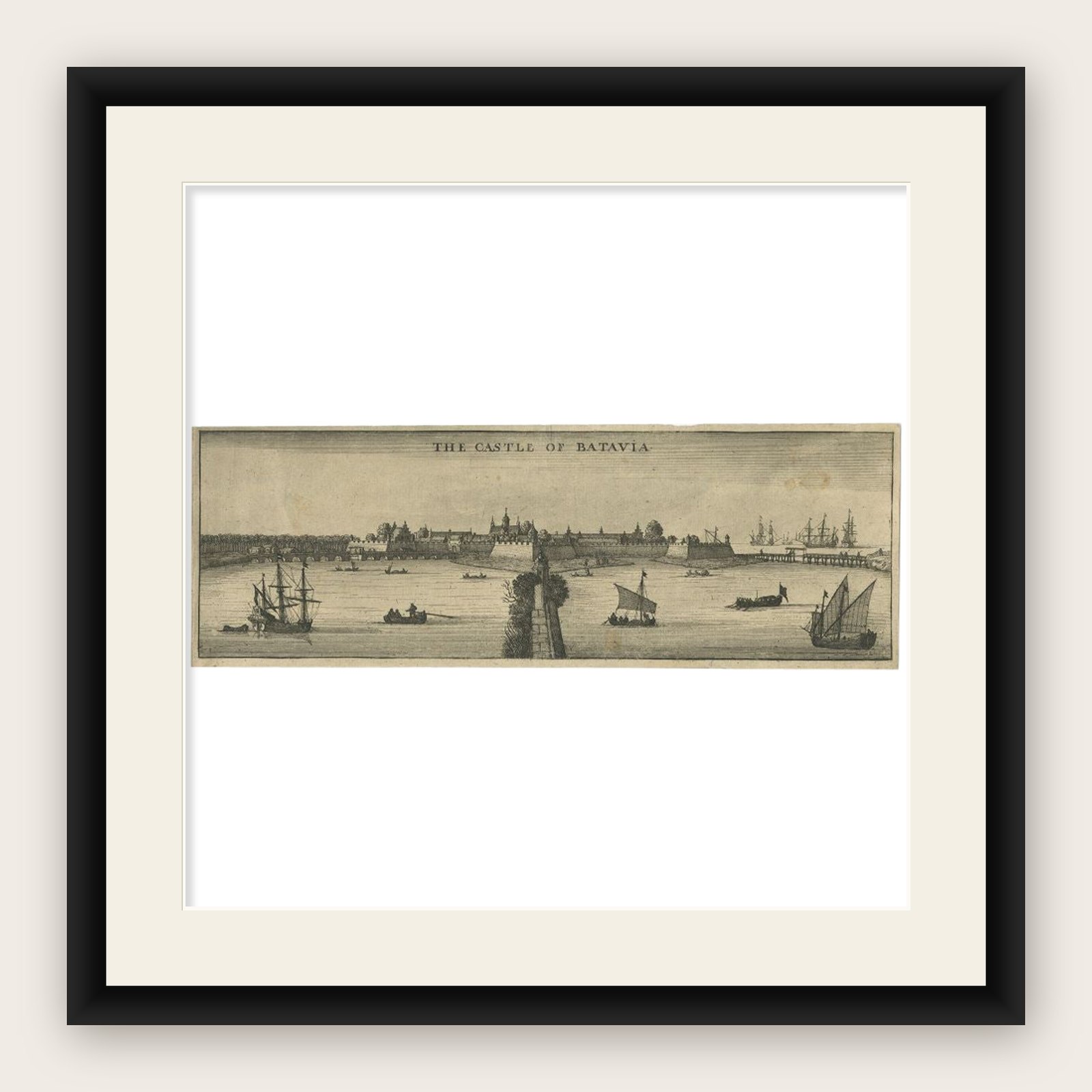

Frame and rooms are illustrations of how the print could look, drawn to its real size; it is sold unframed unless the description says otherwise.
The Company
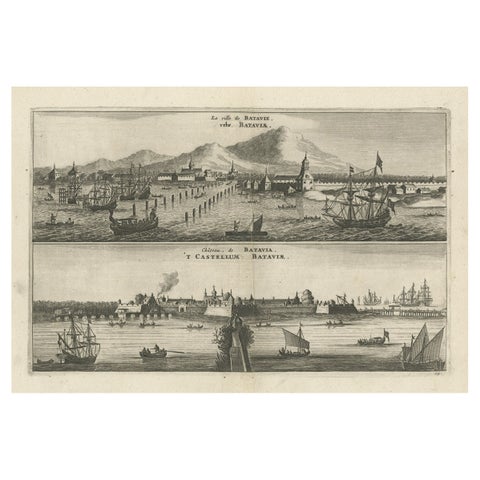
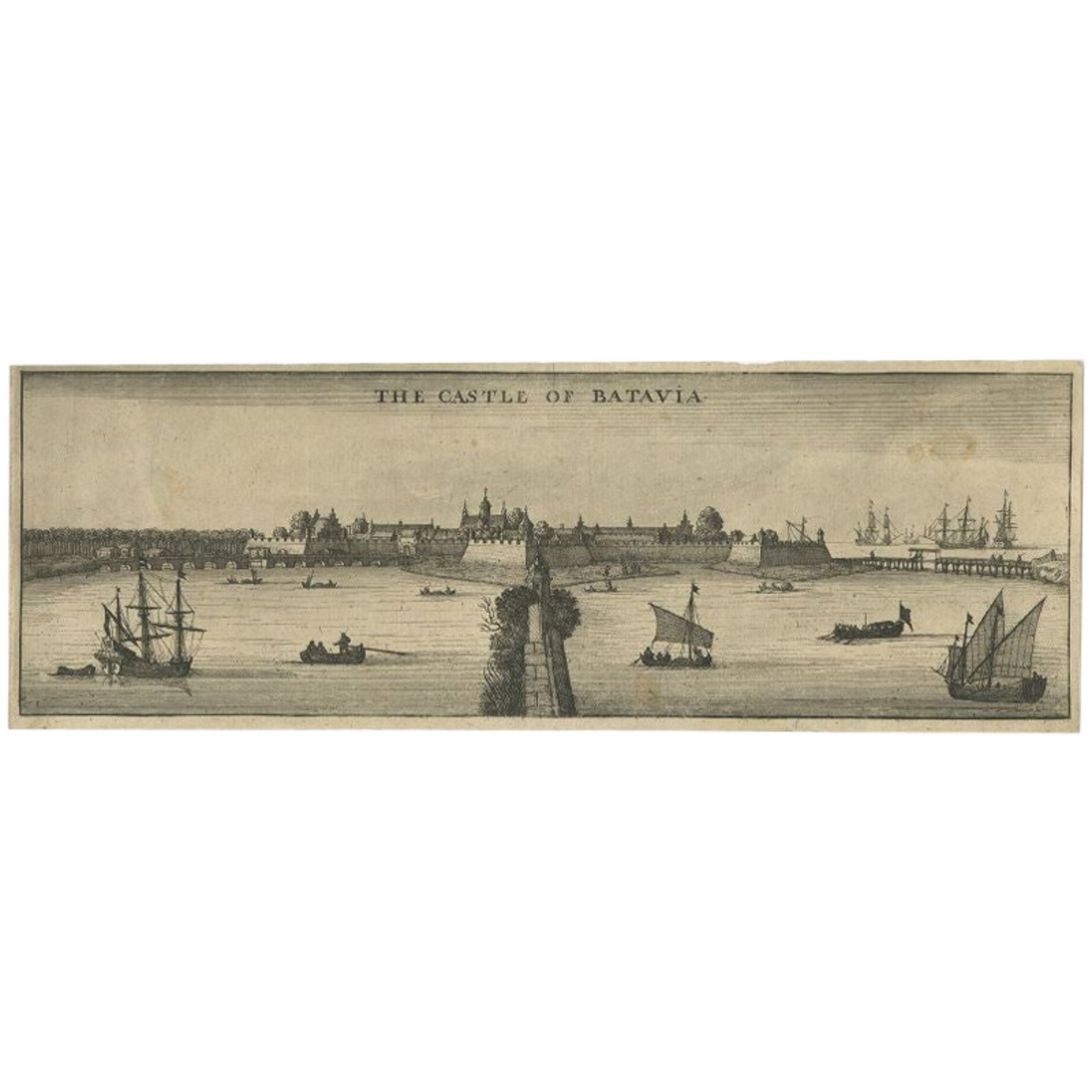
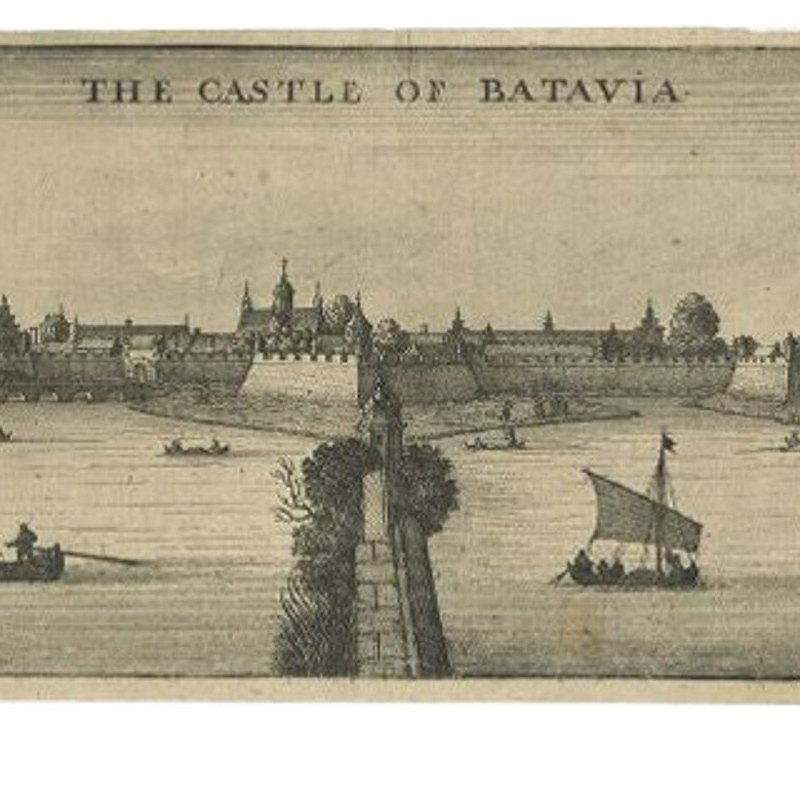
Antique Print of the Castle of Batavia in the East-Indies 'Indonesia', 1669
Batavia is now Jakarta.
$325
€290 · £245
Original print, not a reproduction
Ships worldwide from the Netherlands, insured and tracked. 14-day returns.
- Date
- 1669
- Sheet size
- 4.1 × 12.2 in (10.5 × 31 cm)
- Condition
- Fair. /good, age-related toning. Narrow margins, minor soiling. Blank verso. Please study image carefully.
- Island
- Java
- Place names
- Batavia is now Jakarta
- Collection
- The Company
- Period
- The spice race, before 1700
- Stock no.
- f_29244382
What the condition grades mean
- Excellent
- Bright and clean, with no faults worth mentioning.
- Very good
- Only light signs of age, such as faint toning.
- Good
- Normal signs of age for a sheet of this period: toning, some foxing, small marks or neat old repairs.
- Fair
- Clear faults such as staining, tears or repairs, priced to match.
Every fault we see is written in the condition note, and the whole sheet is shown uncropped in the photos.
Antique print titled 'The Castle of Batavia'. Old print of the Castle of Batavia (Jakarta), Indonesia. This print originates from 'An embassy from the East-India company of the United Provinces, to the Grand Tartar Cham, emperour of China (..)' by J. Nieuhof, translated by John Ogilby. The engravings in Nieuhof's original Dutch edition were based on illustrations done by artists in China and contained around 150 illustrations. Ogilby had many of them copied for his English translation, although he included around a third fewer pictures. The titles of the illustrations were changed into English and the artists, such as Wenceslaus Hollar, who did the copying, added their own signatures in place of the original artists'. This was standard practice for the time.There are also around twenty-five illustrations in Ogilby's that were not included in the Dutch editions such as the Manchu lady. Some of these illustrations were sourced from the works of Athanasius Kircher.
Artists and Engravers: Johan / Jan / Johannes Nieuhof / Nieuhoff / Neuhof (1618-1672) was a Dutch traveler who wrote about his journeys to Brazil, China and India. The most famous of these was a trip of 2,400 km from Canton to Peking in 1655-1657 as part of a Dutch envoy, which enabled him to become an authoritative Western writer on China. Johan Nieuhof was born in Uelsen, Germany, of which his father (originally from Zwolle) was mayor. Nieuhof left for Brazil in 1640 as a reserve officer-candidate, from then on, barring two short family visits in 1658 and 1671, he spent all the rest of his life abroad. After an adventurous career in the service of the Dutch East India Company (or VOC), between 1660 and 1667 he occupied posts in India and on Ceylon, he then lived in Batavia until 1670. He then disappeared without trace on Madagascar, traveling in a sloop from which he had landed to seek drinking water.
Image size: 20 x 10 cm.